12 V portable fridges and coolers: compressor vs thermoelectric
How compressor, thermoelectric and absorption car fridges differ, how much power they really use, and how to protect your vehicle battery on trips and at camp.
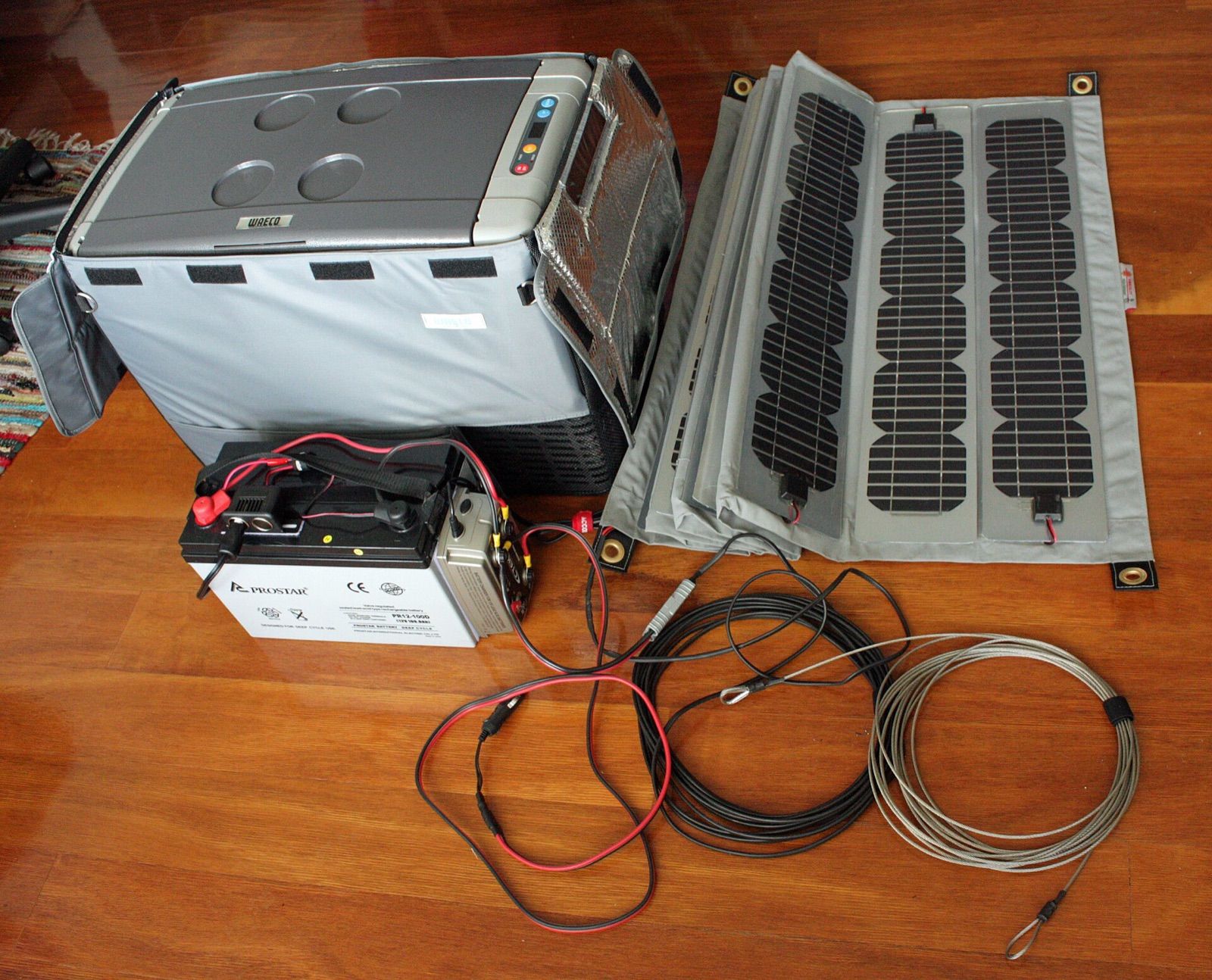
A 12 V fridge or electric cooler means no more soggy sandwiches floating in melted ice on a road trip or camping weekend. But the category covers very different technologies, from simple electric cool boxes to true portable fridges that can freeze, and they differ hugely in performance and power use. Choose the wrong one and you'll either have warm drinks or a flat car battery. This guide explains the types, how to estimate power use and how to protect your battery.
The three main types
Thermoelectric coolers use a Peltier element, a solid-state device that moves heat from one side to the other when current flows. They're light, simple and relatively inexpensive, and many can also keep food warm by reversing the current. Their limitation is that they cool only to a certain amount below the surrounding temperature, often around 15–20 °C below. On a 35 °C day in a hot car, that's not fridge-cold. They also typically run continuously, drawing power all the time they're switched on.
Compressor fridges work like a household fridge, with a small compressor and refrigerant. They can hold a set temperature largely regardless of the weather, within their rated range, and most can run as a freezer. The compressor cycles on and off as needed, so average power use is often lower than a thermoelectric cooler's despite much better cooling. They're heavier and cost more.
Absorption fridges, often called three-way fridges, run on 12 V, mains power or gas. They're silent and common in caravans and motorhomes, but on 12 V they're relatively power-hungry and are usually intended to run only while the engine is charging. Gas operation must only be used in an installation designed and ventilated for it, never inside a closed car or tent.
| Thermoelectric | Compressor | Absorption (three-way) | |
|---|---|---|---|
| Cooling | Limited, relative to surroundings | To a set temperature; can freeze | Good on gas or mains; weaker on 12 V |
| Power use on 12 V | Continuous, moderate | Lowest on average, cycles | High |
| Freezing | No | Usually yes | Small freezer compartment on some |
| Noise | Fan hum | Compressor and fan when running | Silent |
| Best for | Short trips, drinks, day use | Multi-day trips, camping, overlanding | Caravans and motorhomes |
A good passive cool box with ice packs is still a sensible choice for day trips, and uses no power at all.
Size and layout
Capacity is given in litres. As a rough guide, small units of around 15–25 L suit drinks and lunches for a day; 35–50 L suits a couple or small family for a weekend; larger units suit long trips. Check:
- External dimensions, and whether it fits your boot, with the lid able to open;
- Usable space, since the compressor compartment often takes a step out of the interior;
- Single or dual zone, which allows a fridge and freezer section at different temperatures;
- Weight when full, and handles or wheels;
- Lid hinges, removable or reversible to suit how the fridge is loaded.
How much power it uses
A 12 V compressor fridge typically draws several amps while the compressor runs, then nothing while it rests. What matters is the daily total, which depends on:
- the size and insulation of the fridge;
- the set temperature, especially freezer use;
- the temperature around it;
- how often it's opened and how warm the food was when loaded.
In mild conditions, a mid-sized compressor fridge might use in the region of 15–40 amp-hours a day at 12 V, roughly 180–500 Wh, and more in hot weather or as a freezer. A thermoelectric cooler drawing around 4 A continuously uses about 100 Ah a day, which will flatten a typical car battery within a day.
Rough estimate: daily amp-hours ≈ average current (A) × 24. Watt-hours ≈ amp-hours × 12.
Use the maker's stated consumption at a stated ambient temperature as a guide, and compare fridges only on figures measured the same way.
Protecting your battery
A car's starting battery isn't designed to be run down and recharged repeatedly, and if it's flat you can't start the engine. Several safeguards help:
- Low-voltage cut-off. Most compressor fridges switch off automatically when the battery voltage falls to a set level, often with low, medium and high settings. Use the highest setting when running from the starting battery, so enough charge remains to start the engine. Lower settings are for a dedicated auxiliary battery.
- Know your socket. Some 12 V sockets switch off with the ignition; others stay live. A live socket lets the fridge run while parked, and drain the battery.
- Use a second power source for overnight or multi-day use: an auxiliary battery charged from the vehicle through a DC-DC charger or isolator, or a portable power station. Our guide to portable power stations and solar panels explains how to size one.
- Solar can top up an auxiliary battery or power station at camp.
- Keep the starting battery healthy at home with a maintainer; see our guide to car battery chargers and maintainers.
Many units also include a mains adapter, so you can pre-cool the fridge at home.
Wiring and connections
The ordinary 12 V accessory socket is convenient but not ideal for heavy, continuous loads. Plugs can work loose on rough roads, and thin wiring causes voltage drop, which can trigger the low-voltage cut-off early or reduce performance. For regular use:
- Consider a dedicated, correctly fused circuit with heavier cable, installed by an auto electrician.
- Use more secure connectors where the fridge supports them.
- Don't use extension leads or splitters that aren't rated for the current.
Getting the best from a car fridge
- Pre-cool the fridge and load food that's already cold.
- Keep it out of direct sun and leave space around the vents; compressor fridges need airflow to get rid of heat.
- An insulated cover helps in hot weather.
- Open it as little as possible, and pack it full; a full fridge holds its temperature better.
- Use a thermometer. For food safety, fridge food should be kept at 4 °C or colder and frozen food at −18 °C or colder.
Securing it safely
A full fridge can weigh 20–30 kg or more. In sudden braking or a collision, an unsecured load becomes a dangerous projectile. Use proper tie-down points or a mounting slide, and never carry it loose on a seat. If you'll be driving off-road, check the maker's tilt rating.
The short version
- Thermoelectric for short trips and drinks; compressor for real refrigeration and multi-day use.
- Check the daily power use, not just the running current.
- Set the low-voltage cut-off high when running from the starting battery.
- For overnight use, add an auxiliary battery or power station.
- Pre-cool, keep it shaded and ventilated, and secure it.
Bloiq is reader-supported. Some links may earn us a commission; it never affects what we write. How we make money.
Cover photo: Stephan Ridgway from Brisbane, Australia, CC BY 2.0, via Wikimedia Commons