Car floor mats and cargo liners: materials, fit and pedal safety
Carpet, rubber and thermoplastic mats compared, custom versus universal fit, cargo liners for pets and gear, and how to fit mats so they never interfere with the pedals.
Floor mats are one of the simplest upgrades for a car, and in a snowy climate one of the most useful: a good set stops meltwater, salt and grit from soaking into the carpet and helps protect the car's resale value. They also carry a real safety risk if they're the wrong shape or aren't secured, because a mat that slides forward can interfere with the pedals. This guide covers the materials, the types of fit and how to install mats safely.
Why mats matter
- Protection: carpet that stays wet can develop mould, smells and, in time, corrosion of the floor underneath.
- Salt: winter slush leaves white salt stains that are hard to remove from carpet.
- Wear: the driver's heel wears through carpet over time, especially under the pedals.
- Resale: a clean, dry interior carpet is one of the things buyers notice.
Materials compared
| Material | Strengths | Drawbacks | Best for |
|---|---|---|---|
| Carpet | Looks and feels like the original interior; quiet | Absorbs water and salt; harder to clean | Mild, dry climates; summer use |
| Rubber | Flexible, heavy so it stays put; ridges hold water; durable | Can be heavy and have a strong smell when new; lower-grade rubber may stiffen in deep cold | All-round use, snowy winters |
| Thermoplastic (TPE) liners | Moulded, often precisely shaped with high edges; light; easy to rinse | Can be slippery when wet; firmer feel; can look utilitarian | Snow, mud and salt; families and pets |
| EVA honeycomb | Light; the honeycomb traps dirt and water | Cells need rinsing out; fit and durability vary | Dirt-trapping on a budget |
| Vinyl/PVC | Inexpensive | Can crack in cold and slide easily; may smell | Occasional or temporary use |
In Canadian winters, the key features are raised edges or a deep lip, and channels that hold meltwater until you can empty it, rather than letting it slop over the edge onto the carpet.
Custom, semi-custom and universal fit
- Custom (vehicle-specific) mats and liners are made for a particular make, model, year and body style, often from 3D measurements. They cover the footwell up the sides, fit around the seat rails and centre console and use the car's own retention points. They're the most protective and the safest option for the driver's side.
- Semi-custom mats are shaped for a group of similar vehicles. Coverage is better than universal, but gaps are common.
- Universal, trim-to-fit mats are cut to size by the owner. They're the least expensive, but they rarely use the car's retention hooks, and a poorly trimmed driver's mat can slide into the pedals.
Details to check: the exact model year and body style (hybrid, electric and different trim levels sometimes have different floors), front and rear coverage, a one-piece rear mat that covers the centre hump, a third row if you have one, and whether the product fits your car's retention hooks or posts.
Pedal safety: fitting mats correctly
Floor mats that slide forward, curl up or are too thick can trap the accelerator pedal or stop the brake pedal travelling fully. Safety regulators have linked incompatible and unsecured mats to cases of unintended acceleration. The rules are simple:
- Use mats designed for your vehicle, especially on the driver's side.
- Secure the driver's mat with the car's retention hooks, clips or posts every time it goes back in.
- Never stack mats. Remove the original mat before fitting a new one; a new mat on top of an old one raises the surface and can foul the pedals.
- Check pedal travel after fitting: with the engine off, press the accelerator and brake fully to the floor and make sure nothing touches or catches.
- Don't fit a mat upside down or in the wrong footwell, and don't use a rear mat in the front.
- Trim universal mats well clear of the pedals, and don't use them on the driver's side if they can't be secured.
- Don't use tyre shine or silicone dressings on mats; they make the surface slippery underfoot.
Rule of thumb: one mat per footwell, secured by the car's own hooks, with full pedal travel checked. If a driver's mat won't stay put, don't use it.
Cargo liners and boot mats
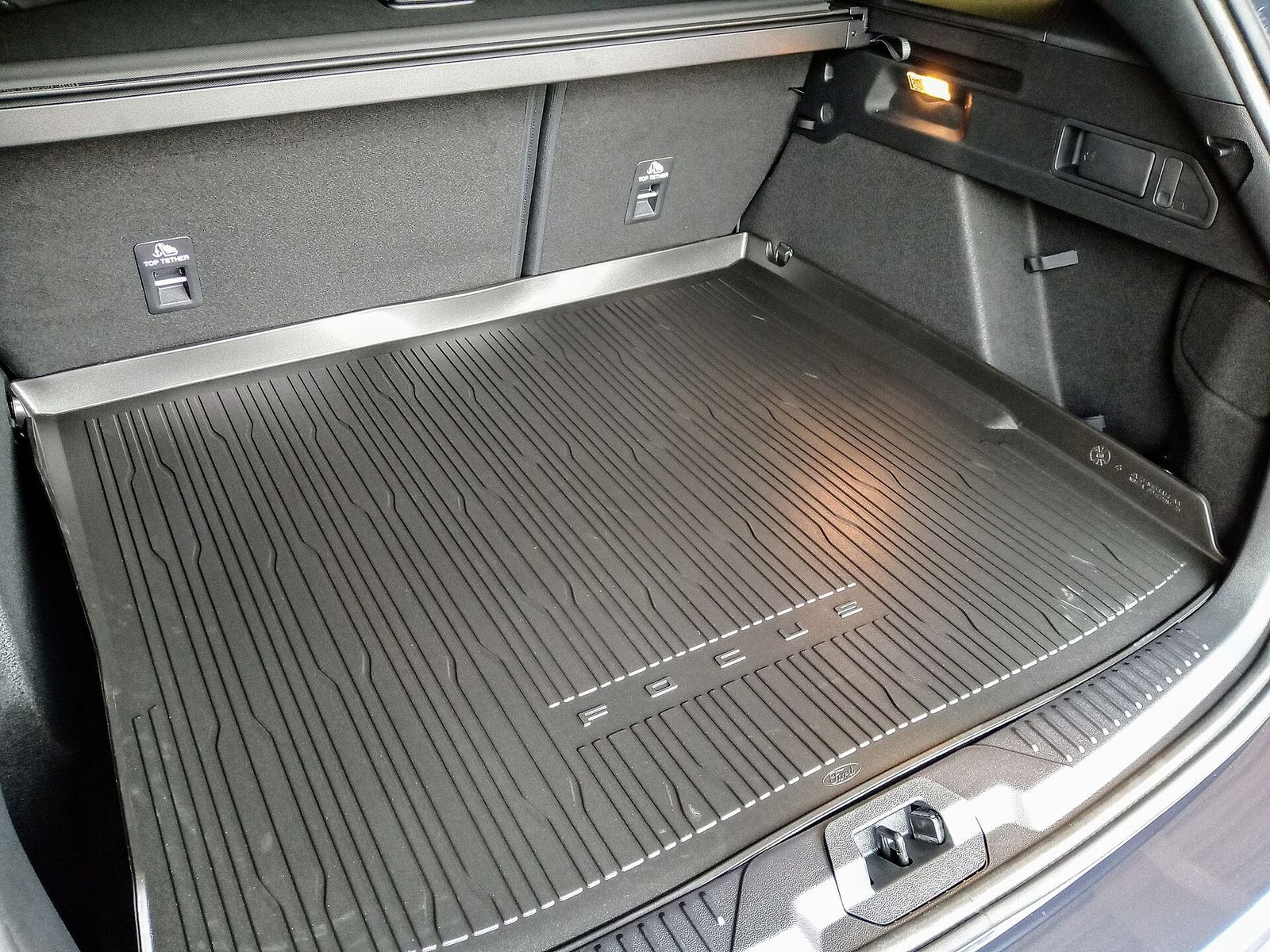
A cargo liner protects the boot or cargo area from spills, mud, sports gear and pets.
- Raised sides (a "tray") contain liquids; a flat mat only protects the floor.
- Rear-seat-back coverage is useful if you often fold the seats down; some liners have hinged sections.
- Bumper protector flaps fold out over the rear bumper to protect paint when loading, or when a dog jumps in and out.
- Underfloor access: make sure you can still reach the spare wheel, tyre repair kit or storage compartments.
- Adjustable load floors: some cars have two floor heights; check which one a liner is designed for.
- Grip: a textured or rubberised surface stops loads sliding around, though heavy items should still be tied down or placed against the seat backs.
Cleaning and care
- Rubber and TPE: shake out, rinse with a hose and mild soap, and let dry before refitting. Avoid dressings that make them slippery.
- Carpet: vacuum regularly; for salt stains, use a carpet cleaner or a diluted vinegar solution, and let the mat dry fully. Our car vacuums guide covers the tools.
- Empty meltwater from deep liners before it spills; in winter it's easier to do before the water freezes.
- New-product smell: some rubber and plastic mats have an odour at first; airing them out before fitting helps.
- Check the carpet underneath occasionally; water that gets under a mat can sit there unnoticed.
Winter tips
- Knock snow off boots before getting in; a small brush in the door pocket helps.
- Check under the mats in spring for dampness and salt, and clean the carpet before switching back to carpet mats.
- Fit liners in autumn along with your winter tyres, and see our winter car kit checklist for everything else.
The short version
- For snow and salt, choose rubber or thermoplastic mats with raised edges.
- Custom-fit mats give the best coverage and are the safest choice for the driver's side.
- Secure the driver's mat, never stack mats, and check full pedal travel.
- A cargo liner with raised sides and a bumper flap suits pets and outdoor gear.
- Keep mats clean and free of slippery dressings.
Bloiq is reader-supported. Some links may earn us a commission; it never affects what we write. How we make money.
Cover photo: Matchboxler, CC BY-SA 4.0, via Wikimedia Commons