Brake pads: ceramic, semi-metallic and organic compared, plus rotors
How ceramic, semi-metallic and organic brake pads differ in noise, dust, bite and rotor wear, what to know about rotors, and the signs that it's time to replace them.
Brake pads are a wear part, so sooner or later every driver has to choose replacements. The shelf offers ceramic, semi-metallic, organic and "low-metallic" pads, each promising less dust, more bite or a longer life, and the rotors they press against come plain, drilled or slotted. This guide explains what actually differs between the types, which one suits which car and driver, and how to tell when pads and rotors need replacing.
How disc brakes work
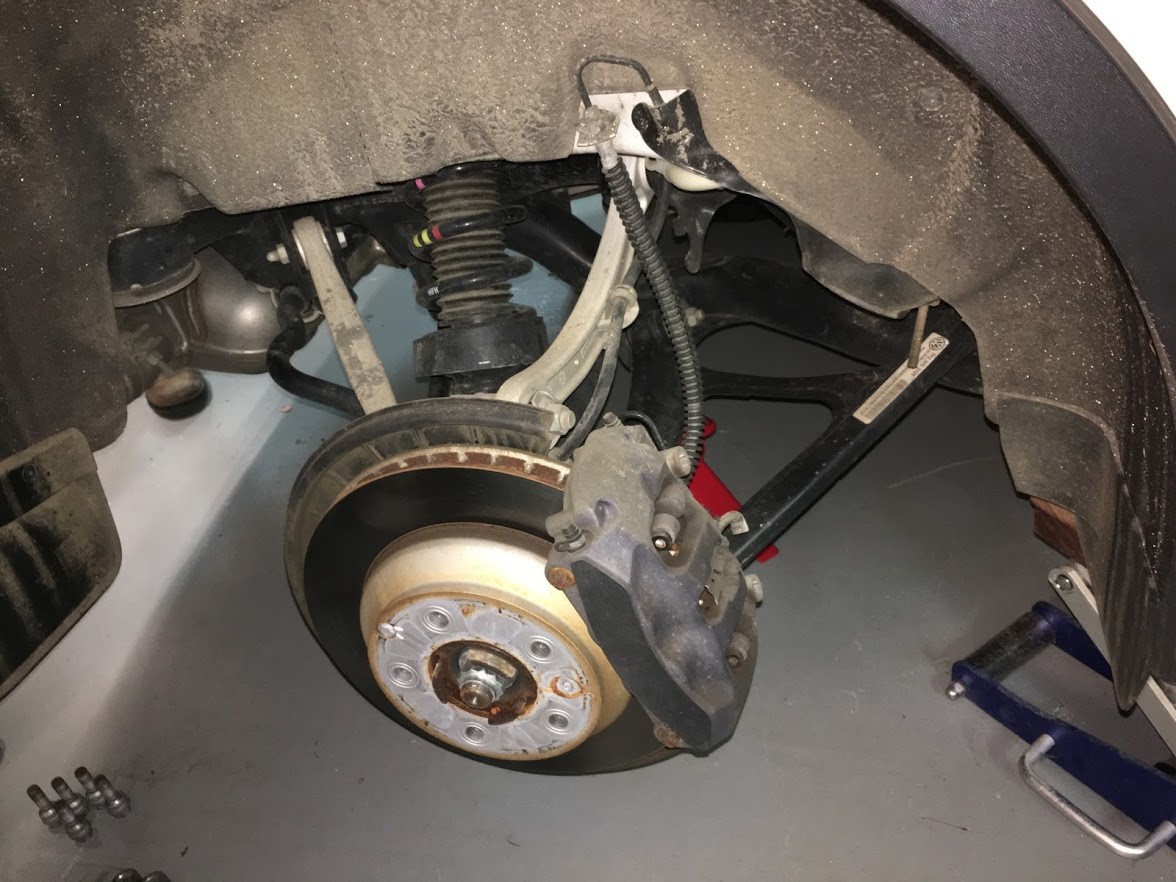
When you press the pedal, hydraulic pressure pushes pistons in the caliper, which squeeze two pads against a spinning rotor (also called a brake disc). Friction turns the car's movement into heat, and the rotor has to absorb and shed that heat. Most cars have discs at the front and either discs or drums at the rear. The front brakes do most of the work during a stop, so front pads usually wear out first.
Each pad is a steel backing plate with a block of friction material bonded to it. "Ceramic", "semi-metallic" and "organic" describe that material's recipe. Formulations vary a lot between makers, so treat the categories below as tendencies rather than rules.
The three main pad types compared
| Organic (NAO) | Semi-metallic | Ceramic | |
|---|---|---|---|
| Noise | Quiet | Noisiest | Quietest |
| Dust | Moderate, dark | Most, dark | Least, light-coloured |
| Bite when cold | Good | Can need some warmth | Good |
| Heat tolerance | Lowest; can fade | Highest | Good for road use |
| Rotor wear | Gentle | Hardest on rotors | Gentle |
| Pad life | Shortest | Medium | Often longest |
| Typical use | Light cars, gentle driving | Towing, heavy vehicles, hard use | Everyday cars and commuting |
Organic pads, also called non-asbestos organic (NAO), use fibres such as glass, rubber and aramid bound in resin. They are soft, quiet and kind to rotors, but wear faster and can fade when very hot, for example on long mountain descents.
Semi-metallic pads contain a large share of steel fibres and other metals, which conduct heat away from the friction surface. They cope well with repeated hard stops, towing and heavy vehicles, but are noisier, dustier and harder on rotors.
Ceramic pads use ceramic fibres and fillers, often with a little metal. They are quiet, produce a fine light-coloured dust that is less noticeable on wheels, and usually last a long time without being hard on rotors. They suit most everyday driving; for sustained heavy braking, a pad designed for that job is a better choice.
Low-metallic pads are organic pads with some metal added for better heat transfer and bite. They are common as original equipment on many European cars, which is one reason those cars often have dusty front wheels.
Which pad suits your car
- Start with what the car came with. Carmakers tune brake systems around a pad type. Fitting the same type keeps the pedal feel and the balance between front and rear brakes close to what the engineers intended.
- Everyday commuting and family cars: ceramic or a quality pad matching the original type.
- Towing, heavy loads, large SUVs and pickups, mountain driving: semi-metallic or a pad rated for severe duty.
- Small, light cars driven gently: organic pads are adequate and inexpensive, though you'll replace them more often.
- Track days: dedicated performance pads, which are often noisy and work poorly when cold on the road.
Hybrids and electric cars do much of their slowing with regenerative braking, so their pads can last a very long time, but their rotors can corrode through lack of use. Have them checked at every service.
Reading the box: standards and codes
A few markings help you judge a pad beyond the marketing:
- ECE R90 (Europe and many other countries): replacement pads and rotors must be approved under this regulation, which tests them against the original parts. Look for an approval mark on the box or the part.
- Edge codes (North America): a two-letter friction code printed on the pad's edge, under SAE J866. The first letter rates friction when cold, the second when hot; letters later in the alphabet mean more friction. Many passenger-car pads are around "EE" to "FF". The code says nothing about wear, noise or overall stopping performance, so treat it as a rough guide.
- The LeafMark symbol (US): laws in some states limit copper and other metals in brake pads, and the symbol shows which level a pad meets. Most pads sold today are low-copper.
Rotors: plain, drilled, slotted and vented
Rotors wear too, just more slowly. Most cars use vented rotors at the front, two discs joined by internal vanes that pump cooling air, and often solid rotors at the rear.
- Plain (blank) rotors are what nearly all road cars use. They are quiet, durable and give the pads the most contact area.
- Slotted rotors have grooves that help clear gas, water and pad debris. They can add bite but wear pads faster and may be noisier.
- Drilled rotors shed water and look sporty, but the holes can lead to cracking under repeated hard use. Most of the benefit on a road car is appearance.
- Coated rotors have a corrosion-resistant finish on the parts the pads don't touch, which keeps the hub area and vanes from rusting.
Every rotor has a minimum thickness, usually stamped on it ("MIN TH" or similar); below that, it must be replaced. A vibrating steering wheel or pulsing pedal when braking is often blamed on a "warped rotor", but it's usually caused by uneven thickness or uneven pad deposits. Rotors above minimum thickness can sometimes be resurfaced, though replacement is often the practical option.
Replace pads in axle sets, both sides together, and rotors in pairs. New pads on badly worn or grooved rotors wear faster and can be noisy.
When to replace pads and rotors
Pad life varies enormously: city traffic and hilly routes wear pads much faster than motorway driving. Rather than counting kilometres, watch for these signs:
- Thin friction material. New pads typically have around 10–12 mm of material; most workshops recommend replacement at around 3 mm. You can often see the outer pad through the wheel spokes.
- A squeal when braking that stops when you release the pedal: many pads have a small metal wear indicator that touches the rotor when the pad is nearly worn.
- A dashboard warning: many cars have electronic wear sensors that light a warning lamp. The sensor usually needs replacing with the pads.
- Grinding or scraping: metal on metal. Stop driving as soon as you safely can and have the brakes inspected; it damages rotors quickly and reduces braking.
- Vibration, pulling to one side, a soft or sinking pedal, or longer stopping distances: have the system checked. Pulling can mean a sticking caliper; a soft pedal can mean air or a problem in the hydraulics.
Rule of thumb: check pad thickness and rotor condition at every tyre change or service, and replace pads at about 3 mm. Brake fluid absorbs moisture over time, so change it at the interval your manual gives (often every two years).
Fitting new pads safely
Brakes are safety-critical. If you're not confident, have a qualified mechanic do the work. If you do it yourself:
- Support the car properly. Never work under a car held only by a jack; use axle stands on firm, level ground.
- Keep friction surfaces clean. Don't get grease or brake fluid on pads or rotors, and don't blow brake dust around with compressed air; use a brake cleaner and a damp cloth.
- Electronic parking brakes often need a service mode, set through the dashboard or a diagnostic tool, before the rear pistons can be retracted. Our guide to OBD2 scanners explains what such tools can do.
- Torque wheel nuts and caliper bolts to the figures in the manual using a torque wrench.
- Pump the pedal several times before driving to bring the pistons back against the pads, and check the fluid level.
- Bed in the pads following the pad maker's procedure, usually a series of moderate stops that lay a thin, even layer of pad material on the rotor.
The short version
- Match the pad type the car came with, unless your driving has changed.
- Choose ceramic for quiet, clean everyday driving; semi-metallic for towing, heavy vehicles and hard use; organic for light cars on a budget.
- Look for ECE R90 approval in Europe, or check the edge code in North America.
- Stick with plain vented rotors unless you have a specific reason not to.
- Replace pads at about 3 mm, always in axle sets, and replace rotors at their stamped minimum thickness.
- Never ignore grinding, pulling or a soft pedal, and change brake fluid at the interval in your manual.
For cleaning brake dust off wheels, see our guide to washing a car at home.
Bloiq is reader-supported. Some links may earn us a commission; it never affects what we write. How we make money.
Cover photo: PCI-Support-Bernhard, CC BY-SA 4.0, via Wikimedia Commons