Home / Travel / Canada · Where to stay
Where to stay in Québec City: Old Québec, Saint-Roch, Montcalm and more
Inside the walls or just outside? How Old Québec's Upper and Lower Town, Saint-Roch, Saint-Jean-Baptiste, Montcalm and Sainte-Foy compare, and who each suits.
This guide contains affiliate links, marked as such. If you book through them, Bloiq may earn a commission at no extra cost to you.
Québec City's historic centre is compact, and almost everything most visitors want to see lies inside or just outside its walls. The complication is the cliff. The old town is split between an Upper Town on top of Cap Diamant and a Lower Town at the river's edge, and the neighbourhoods beyond the walls sit on the same two levels. Where you stay decides how many hills and stairs you climb each day, how quiet your nights are and whether you'll want a car. This guide compares the main areas.
The quick answer
- First visit, postcard setting: Old Québec's Upper Town.
- Cobbled lanes, boutique inns and the river: Petit-Champlain and the Old Port, in the Lower Town.
- Big hotels, nightlife and easy parking garages: Parliament Hill and Grande Allée.
- Local shops and cafés, a few minutes from the walls: Saint-Jean-Baptiste.
- Restaurants, craft breweries and better value: Saint-Roch.
- Calm, leafy and close to the Plains of Abraham: Montcalm.
- Road trip with a car: Sainte-Foy.
Old Québec, Upper Town: inside the walls
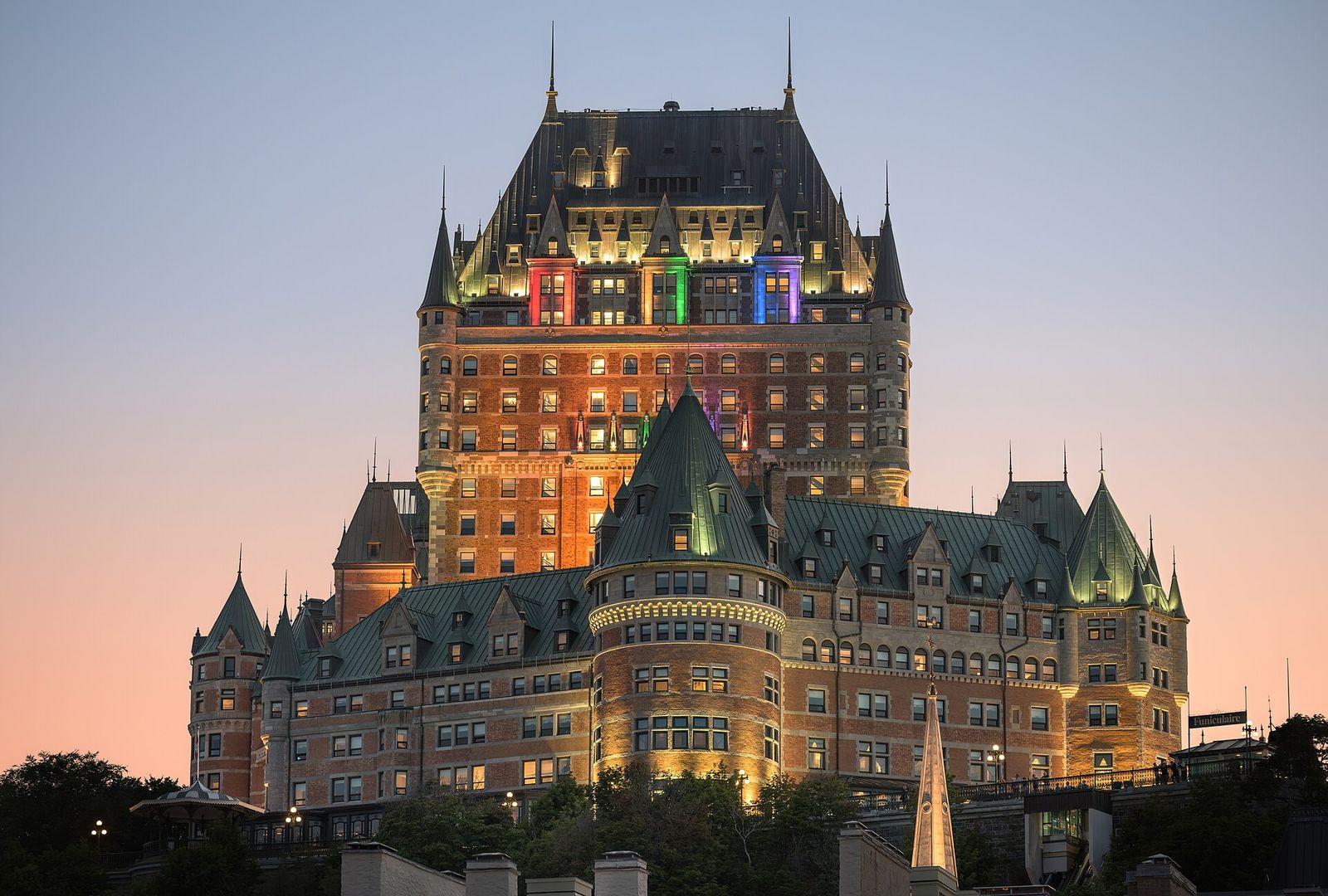
The Upper Town (Haute-Ville) is the fortified heart of the city and part of a UNESCO World Heritage Site. Within a few blocks you have Dufferin Terrace, the Citadelle, the city gates, rue Saint-Louis and rue Saint-Jean, and the Château Frontenac, the hotel that dominates the skyline. Accommodation ranges from that landmark to small inns in old stone houses.
Good for: first-time visitors, short stays, and winter trips when you'd like a short walk back to the room. Consider: it's the most expensive and most crowded area in summer and during the Winter Carnival. Streets are narrow, parking is scarce and costly, and many historic buildings have stairs but no lift.
Old Québec, Lower Town: Petit-Champlain and the Old Port
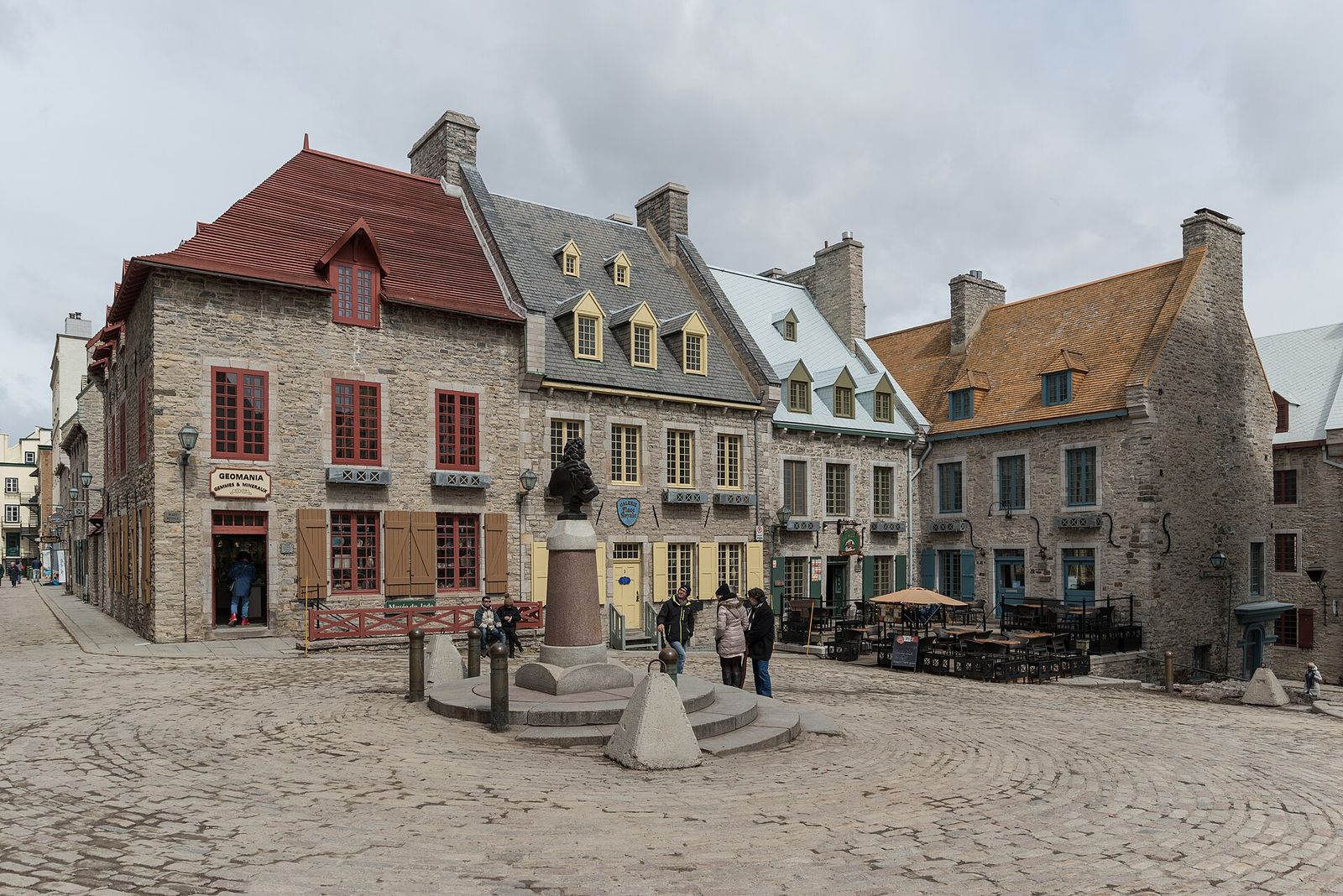
Below the cliff, the Lower Town (Basse-Ville) holds the Petit-Champlain quarter, Place Royale, the Musée de la civilisation and the Old Port (Vieux-Port), with rue Saint-Paul's galleries and antique shops. Many of its hotels are boutique properties in converted warehouses and merchants' houses. The train and intercity bus station, the Gare du Palais, is a short, flat walk from the Old Port.
Good for: couples, atmosphere, cruise passengers, and arrivals by train. Consider: every visit to the Upper Town means the funicular, the Breakneck Stairs or a steep street. Petit-Champlain is packed by day in high season, though it quietens in the evening.
Parliament Hill and Grande Allée: just outside the gates
Step through the Saint-Louis Gate and you're on Parliament Hill, on the same level as the Upper Town. The Parliament Building, the convention centre and most of the city's large, modern hotels are here, and Grande Allée is lined with restaurant terraces and bars. The Plains of Abraham begin a block to the south.
Good for: families who want larger rooms, pools and indoor parking; conference visitors; festival-goers. Consider: the buildings are modern, not historic, and Grande Allée is loud late on summer weekends.
Saint-Jean-Baptiste: the local main street
Beyond the Saint-Jean Gate, rue Saint-Jean carries on through the old faubourg of Saint-Jean-Baptiste. It's a neighbourhood high street of grocers, bakeries, record shops, pubs and small restaurants, with colourful houses on the steep side streets. Places to stay are mainly small hotels, guesthouses and apartments.
Good for: travellers who want everyday city life and lower prices within a 10-minute walk of the walls. Consider: there are few large hotels, the side streets drop sharply towards Saint-Roch, and parking is limited.
Saint-Roch: restaurants and nightlife on the lower level
Saint-Roch is the city's old commercial district, at the foot of the cliff north-west of the old town. It has been revived by technology firms, artists and restaurateurs, and rue Saint-Joseph Est is now one of the best streets in the city for dining, coffee and craft beer. Hotels here are newer and usually cost less than those inside the walls.
Good for: food lovers, younger travellers, repeat visitors and anyone watching the budget. It's flat and close to the Gare du Palais. Consider: Old Québec is a 15–20 minute walk away and it's uphill, by a steep street, a staircase or the public lift to Saint-Jean-Baptiste. The area is urban, not picturesque, and a few blocks are still a little gritty.
Montcalm: arts, cafés and the Plains
West of Parliament Hill, Montcalm is a prosperous residential district centred on avenue Cartier, a short street of cafés, food shops and restaurants. The Musée national des beaux-arts du Québec and the Plains of Abraham are on its doorstep. Accommodation is mostly bed-and-breakfasts, a few small hotels and apartments.
Good for: longer stays, runners and cross-country skiers, and travellers who prefer a quiet evening. Consider: it's a 20–25 minute walk or a short bus ride to the old town, and the choice of hotels is small.
Sainte-Foy and beyond: staying with a car
Sainte-Foy, about 15 minutes' drive west of the centre, is where the highways, the bridges, Université Laval, the shopping centres and the aquarium are. Its chain hotels usually include parking and often have pools, and the airport is close by.
Good for: road trips, families on a budget, and visitors using the city as a base for Montmorency Falls, Île d'Orléans, Jacques-Cartier National Park or the ski hills. Consider: there's no old-town atmosphere, and you'll drive or take a bus to the sights and pay for parking when you get there.
Two other options: Limoilou, across the Saint-Charles River, is a residential district with a lively café street and suits travellers who like to live as locals do. Lévis, on the opposite shore, has the best views of the skyline and is linked to the Lower Town by a short ferry crossing.
Getting around
- On foot: the old town and the neighbourhoods around it are walkable, but the climb between the two levels is real. The funicular and the stairs link Petit-Champlain with Dufferin Terrace.
- Buses: there's no metro. Frequent bus routes connect Sainte-Foy, Montcalm, Parliament Hill, Place D'Youville at the edge of the old town, and Saint-Roch.
- From the airport: Jean Lesage International Airport is roughly 20–30 minutes from the old town by taxi or ride-hailing. Public bus service is limited, so check the current options.
- By train: trains from Montréal arrive at the Gare du Palais in the Lower Town; some also stop in Sainte-Foy.
- By car: you won't need one in the old town. If you arrive with one, ask about hotel parking before you book. In winter, overnight street parking can be banned during snow clearing, so check the current rules and the signs. Winter tyres are compulsory in the province during the cold months; rental cars there are normally equipped, and our guide to winter tyres explains the differences.
Practical tips before you book
- Book early for peak dates: the Winter Carnival (usually late January to mid-February), the summer music festival in July, autumn colour weekends and the Christmas and New Year period.
- Pick your level. Check on a map whether the hotel is on top of the cliff or below it; two addresses 300 metres apart can be separated by a long staircase.
- Winter: it's very cold, and pavements and stairs are icy. Bring warm boots with good grip, and consider staying inside or right beside the walls to keep walks short.
- Lifts and accessibility: ask directly, since old buildings often have steps at the entrance and no lift.
- Taxes: sales taxes and a provincial lodging tax are added to the room rate. Check the total price when you book.
- Apartments: short-term rentals in Quebec must be registered with the province. Check the current rules and look for the registration number in the listing.
- Language: French is the everyday language, though English is widely spoken in hotels and restaurants. A "bonjour" goes a long way.
Choose the Upper Town for a first, short visit, the Lower Town or Saint-Roch for food and character, and Parliament Hill or Sainte-Foy if you're travelling with a car. If you're combining cities, see our guide to where to stay in Montreal.
Bloiq is reader-supported. Some links may earn us a commission; it never affects what we write. How we make money.
Cover photo: DXR, CC BY-SA 4.0, via Wikimedia Commons