Home / Travel / Italy · Where to stay
Where to stay in Naples and on the Amalfi Coast: areas compared
Naples' historic centre, Chiaia or Vomero, or Sorrento, Positano, Amalfi and Ravello? How each base compares, who it suits, and how to split your nights.
This guide contains affiliate links, marked as such. If you book through them, Bloiq may earn a commission at no extra cost to you.
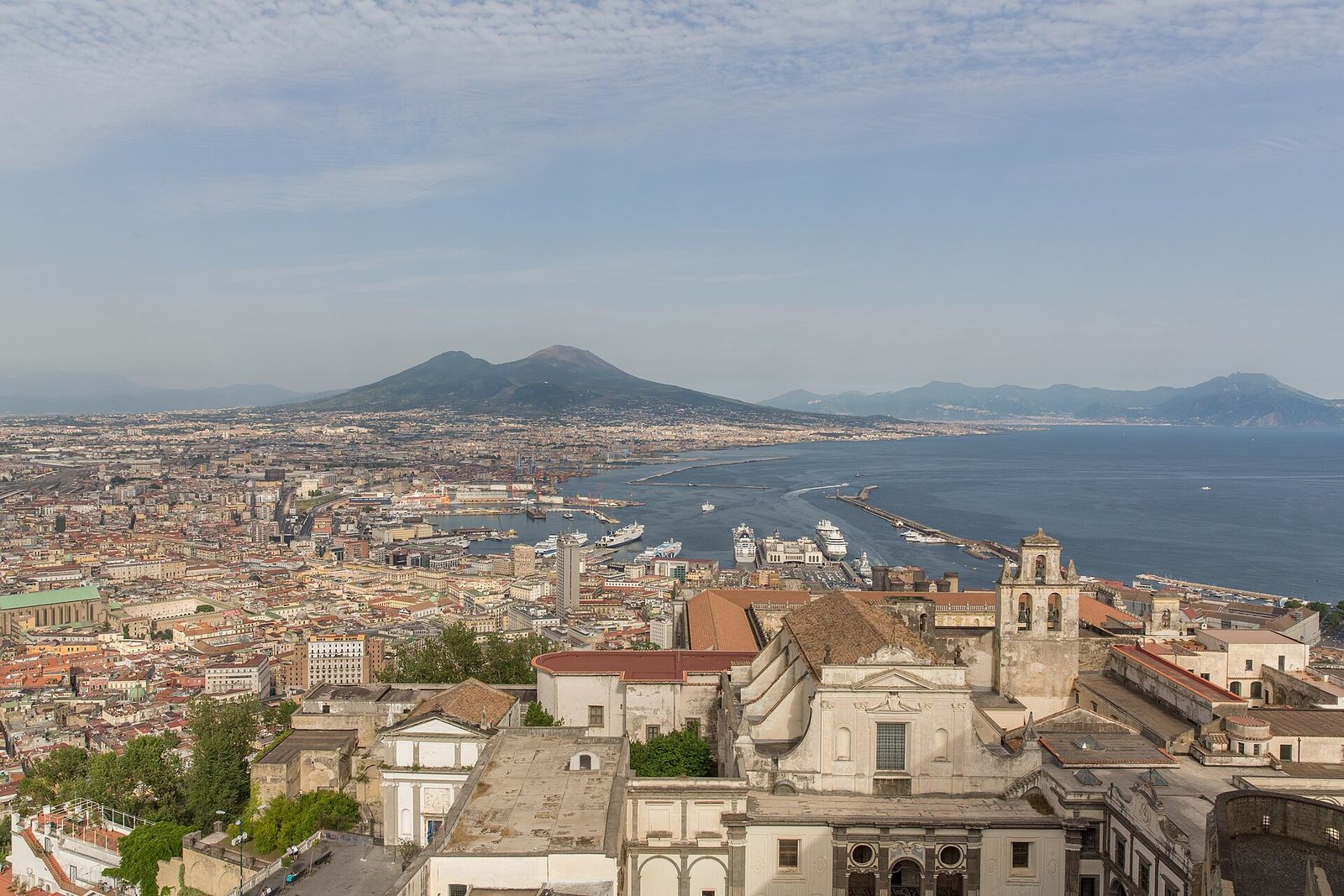
Naples and the Amalfi Coast are only a couple of hours apart, but they make very different bases. Naples is a big, loud, endlessly interesting city, famous for pizza, baroque churches and the Roman sites on its doorstep; the coast is a string of cliffside towns where the views are extraordinary and every journey is slow. Many travellers split their nights between the two. Here's how the main areas compare and how to combine them.
The quick answer
- City, food and history: Naples' historic centre.
- Naples with sea views and calmer evenings: Chiaia and the seafront.
- One base for Pompeii, Capri and the coast, with a train to Naples: Sorrento.
- The postcard view and a beach: Positano.
- Car-free travel by bus and ferry: Amalfi.
- Quiet evenings, gardens and music: Ravello.
- Quieter and often better value: Praiano, Minori, Maiori or Salerno.
For a week, a common plan is two or three nights in Naples, then four or five in Sorrento or on the coast.
Naples: the historic centre
The historic centre (Centro Storico), a UNESCO World Heritage Site since 1995, is a dense grid of narrow streets that still follows the plan of the ancient Greek city. Spaccanapoli and Via dei Tribunali are lined with churches, pizzerias, pastry shops and the nativity-figure workshops of San Gregorio Armeno. The National Archaeological Museum, which holds many of the finds from Pompeii and Herculaneum, is a short walk north.
Good for: food lovers, history and anyone who wants to feel the city's energy. Consider: it's noisy and crowded, scooters share the lanes with pedestrians, and many old buildings have stairs and no lift. Check whether your room faces a busy street.
Naples: Toledo and the Spanish Quarter
Via Toledo, one of the city's main shopping streets, runs north from near Piazza del Plebiscito and the Royal Palace towards Piazza Dante, with metro Line 1 stations along the way, including Toledo, known for its striking artwork. On its western side, the Spanish Quarter (Quartieri Spagnoli) is a steep grid of narrow lanes laid out for Spanish troops in the 16th century, now full of street life, trattorias and small guesthouses.
Good for: a central base between the old town, the seafront and the ferry port. Consider: the Spanish Quarter's lanes are lively late into the night and awkward with luggage.
Naples: Chiaia, the seafront and Vomero
Chiaia is the city's most elegant district, with smart shopping streets, galleries, wine bars and the Villa Comunale park along the water. The seafront promenade runs past Castel dell'Ovo and the hotels of Via Partenope, which look across the bay to Vesuvius. Above it, Vomero is a residential hilltop district reached by funicular, with Castel Sant'Elmo, the Certosa di San Martino and sweeping views over the city.
Good for: couples, families and first-time visitors who want a calmer side of Naples. Consider: seafront hotels are among the city's most expensive, Chiaia's bars get busy at weekends, and from Vomero you'll take a funicular or the metro down to the old town.
Sorrento: the practical base
Sorrento sits on cliffs above the Bay of Naples, on the opposite side of the peninsula from the Amalfi Coast. It's larger and flatter than the coast towns, with a busy centre around Piazza Tasso, a wide range of hotels and the best transport links in the area: the Circumvesuviana local train to Naples (a little over an hour, stopping near Pompeii and Herculaneum), ferries to Capri and Naples, and buses over the hills to Positano and Amalfi.
Good for: families, first-time visitors, and anyone combining Pompeii, Capri and the Amalfi Coast from one base. Consider: it's busy and more resort-like, the beaches are mostly small bathing platforms, and Positano is roughly an hour away by bus, longer in summer traffic.
Positano
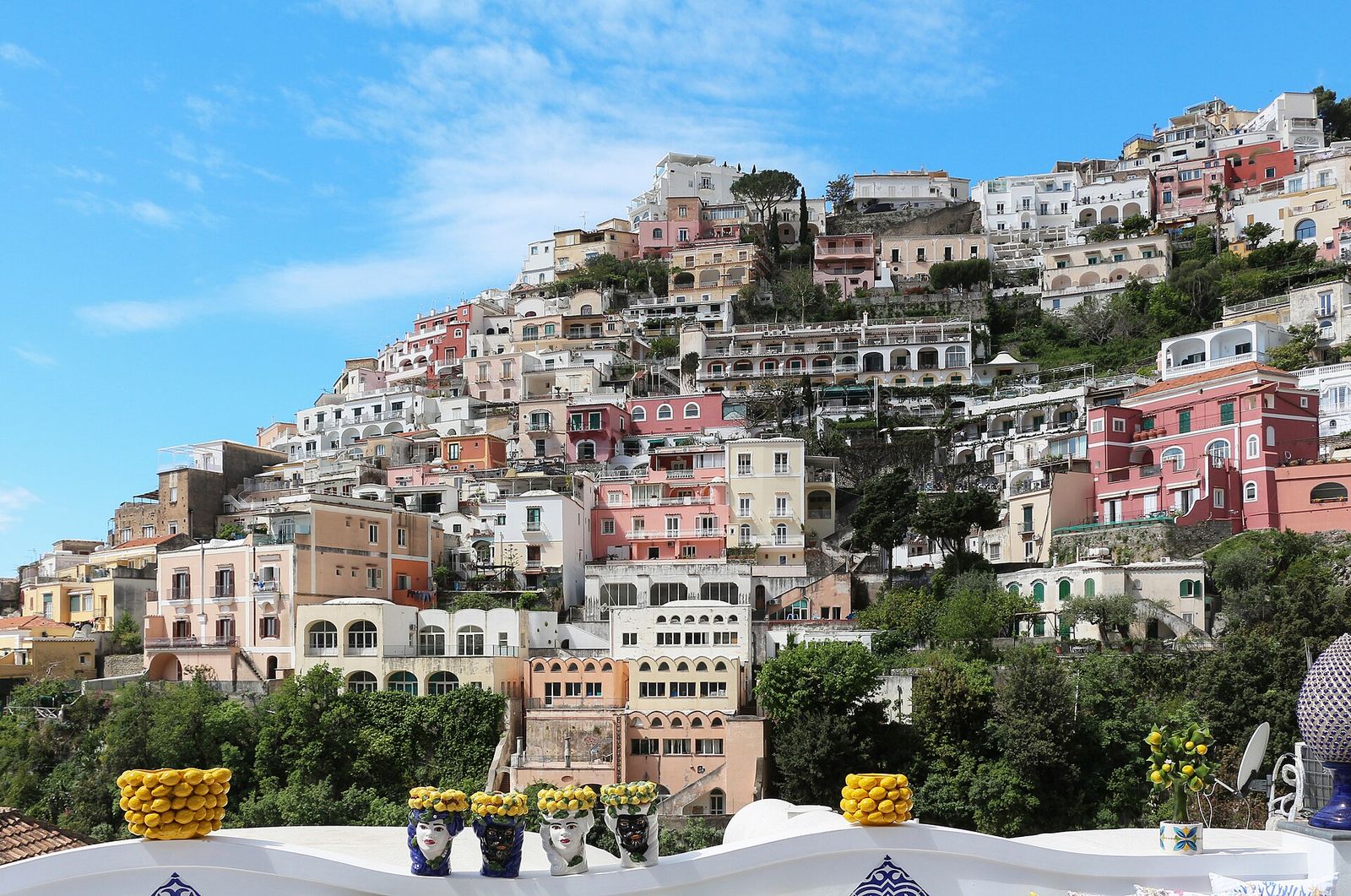
Positano is the image most people have of the Amalfi Coast: pastel houses stacked up a steep hillside above the Spiaggia Grande, with the smaller Fornillo beach a short walk away. It has boutiques, terrace restaurants and some of the coast's best-known hotels.
Good for: couples, honeymoons and travellers who want the view from their balcony. Consider: the town is built on stairs, prices are high, parking is scarce, and the lanes fill with day visitors in summer. Many hotels close in winter.
Amalfi and Atrani
Amalfi is the coast's transport hub: buses along the coast and up to Ravello leave from its seafront, and ferries call at its harbour from spring to autumn. Its centre, around the Cathedral of Saint Andrew, is fairly flat by local standards. Tiny Atrani, a short walk east, is quieter, with a small square and beach.
Good for: travellers without a car who want to explore the whole coast. Consider: by day, Amalfi is crowded with tour groups and traffic; evenings are calmer once the day visitors leave.
Ravello
Ravello sits on a ridge more than 300 metres above the sea, between Amalfi and Minori. The gardens of Villa Rufolo and Villa Cimbrone have some of the widest views on the coast, and a long-running summer music festival holds concerts on a stage above the sea.
Good for: couples, music lovers and anyone who prefers quiet evenings. Consider: there's no beach, and you'll rely on buses or taxis for the winding road down to Amalfi.
Praiano, Minori, Maiori and Salerno
- Praiano, between Positano and Amalfi, is spread out along the coast road, with sunset views towards Positano and a few small coves. It's quieter than its famous neighbour.
- Minori and Maiori, east of Amalfi, are relaxed resort towns with flatter seafronts. Maiori has the longest beach on the coast, and Minori has the remains of a Roman villa. Both suit families.
- Salerno, at the eastern end, is a working city with a long seafront promenade, fast trains to Naples and Rome, ferries to Amalfi and Positano in season, and generally more affordable hotels than the coast.
Getting around
- Arriving: Naples airport is close to the city, and shuttle buses link it with the central station and the port. Direct buses also run from the airport to Sorrento; check the current timetables.
- In Naples: walk the centre and use the metro, funiculars and buses for the rest. There's no need for a car in the city, and driving there is stressful.
- Naples to the coast: take the Circumvesuviana to Sorrento and then a bus; a fast train to Salerno and then a ferry or bus; or, in season, a ferry from the Molo Beverello pier in Naples. Private transfers are the easiest option with heavy luggage.
- Along the coast: buses are frequent but crowded in summer, and ferries, which typically run from spring to autumn, are often the most relaxing way between towns. Driving the coast road is spectacular but slow, parking is scarce, and in recent summers non-resident cars have been restricted at peak times. Check the current rules, and see our Amalfi Coast road trip for the stops along the way.
Practical booking tips
- Count the steps. On the coast, many hotels are reached by long flights of stairs from the road or harbour. Ask how far it is from the nearest bus stop and whether there's help with luggage.
- Check the season. Many coast hotels and restaurants close roughly from November to March, and ferry services shrink or stop.
- Book early for May to September, especially in Positano and Ravello.
- City tax: Naples and the coast towns charge a per-person, per-night tourist tax, usually paid at the hotel. Check the current rate when you book.
- Air conditioning is worth having in July and August.
- Pompeii has introduced visitor limits and timed entry at busy times, so book ahead on the official site.
- Combining with Rome: high-speed trains link the two cities; see our guides to where to stay in Rome and the Rome 3-day itinerary.
Spend a few nights in Naples for the city, then base yourself in Sorrento for convenience or on the coast for the views, and let the ferries do the driving.
Bloiq is reader-supported. Some links may earn us a commission; it never affects what we write. How we make money.
Cover photo: Ekrem Canli, CC BY-SA 4.0, via Wikimedia Commons