Home / Travel / Italy · Road trips
Amalfi Coast road trip: the best stops from Sorrento to Salerno
Plan the Amalfi Coast drive from Sorrento to Salerno: Positano, Amalfi, Ravello, Atrani and Vietri, plus when to drive and when to take the bus or ferry.
This guide contains affiliate links, marked as such. If you book through them, Bloiq may earn a commission at no extra cost to you.
The road along the Amalfi Coast, south of Naples, is one of Europe's most famous drives: a narrow two-lane road carved into the cliffs, high above the sea, linking a string of towns that are a UNESCO World Heritage Site. It's spectacular and, in summer, slow and stressful. This guide runs through the best stops from Sorrento to Salerno and how to see them without spending the whole day in traffic.
The quick comparison
- Sorrento: the western gateway, with the best train link to Naples. Good for a base with more space and services.
- Positano: the classic view. Best for photographs, the beach and a slow lunch.
- Amalfi: history and the cathedral. Best as a transport hub for buses and ferries.
- Ravello: gardens and views high above the sea. Best for a quieter half day.
- Atrani, Vietri sul Mare and Salerno: a tiny village, ceramics and a seafront city. Best for the eastern end and onward trains.
- Time to allow: the whole stretch is only about 60 km, but plan on two or three days to enjoy it. Driving it end to end in one go takes a few hours with photo stops, longer in summer.
Getting there and around
Naples airport is the usual arrival point. Trains run from Naples to Sorrento along the Bay of Naples, and Salerno, at the other end, is on the main railway line with fast connections to Naples and Rome. Between the towns you have three options: drive, take the public buses that run along the coast road, or use the ferries that link Salerno, Amalfi, Positano and Sorrento, typically from spring to autumn. Ferries are often the most relaxing way to hop between towns in summer, and give the best view of the coast.
Sorrento
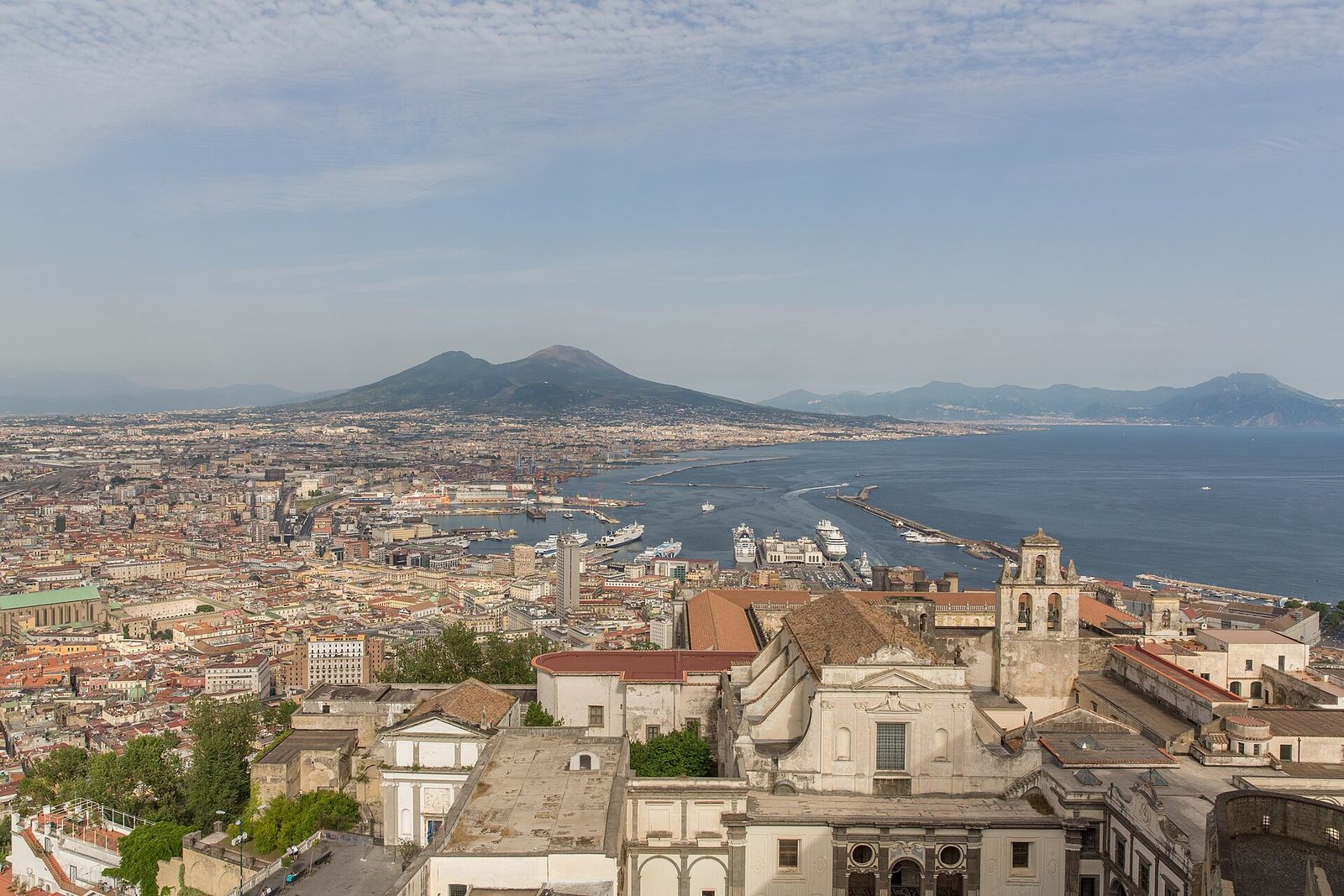
Sorrento sits on cliffs above the Bay of Naples, with views towards Vesuvius. Walk down to Marina Grande, the old fishing harbour, for a waterside meal, then head over the hills of the peninsula to the Amalfi side.
Allow: an evening, or a full day if you're based here.
Positano
The first big stop is Positano, where pastel houses tumble down the hillside to the beach. Stop at a legal pull-out above town for the classic photo, then walk down the steep lanes and stairways to the Spiaggia Grande and the church with its tiled dome. Parking is very limited and expensive, so it's one of the best places to arrive by ferry or bus instead.
Allow: half a day.
Amalfi
Next comes Amalfi, the town that gave the coast its name. In the Middle Ages it was the centre of a powerful maritime republic trading across the Mediterranean. Climb the broad stairway to the Cathedral of Saint Andrew, with its striped, glittering facade, and visit the cloister beside it. Amalfi also has a long history of papermaking, and the lanes behind the piazza lead up towards the old mills.
Allow: two to three hours.
Ravello
From Amalfi, a winding road climbs to Ravello, several hundred metres above the sea. Visit the gardens of Villa Rufolo, where summer concerts are held on a stage above the coast, then walk on to Villa Cimbrone, whose Terrace of Infinity is lined with marble busts looking out over the sea. Ravello is quieter in the evening once day visitors leave.
Allow: half a day.
Atrani, Vietri sul Mare and Salerno
Tiny Atrani sits just around the corner from Amalfi, close enough to walk, with a small square and beach. Further east, Vietri sul Mare is known for its colourful ceramics, with tiled shopfronts and a majolica church dome. The drive ends in Salerno, a working city with a long seafront promenade and more affordable hotels.
Allow: an hour for Atrani, an hour or two for Vietri, and an evening in Salerno.
Driving tips
- Take it slowly. The road is narrow, with blind bends, sheer drops and large buses that need the whole width. Pull in and let them pass, and sound your horn briefly before blind corners where locals do.
- Parking is scarce and car parks in the towns fill early. Budget for paid parking and don't block driveways or bus stops.
- Check traffic rules. In recent summers, the authorities have limited non-resident cars on the coast road at peak times, and many town centres are restricted traffic zones with camera enforcement. Check the current rules before you go.
- Consider leaving the car. Many visitors drive to a base, then use buses and ferries between towns.
- Go in spring or early autumn. Summer traffic is heavy, and some hotels, restaurants and ferries close or reduce services in winter.
Nearby alternatives
- The Path of the Gods: a well-known hiking trail high above the coast, ending above Positano.
- Capri: a ferry ride from Sorrento, Positano or Amalfi.
- Pompeii: an easy stop on the train line between Naples and Sorrento.
Practical booking tips
Book accommodation early for May to September, and check how far your hotel is from the road or harbour: many are reached by long flights of steps. If you're combining the coast with a city break, our Rome 3-day itinerary and guide to where to stay in Rome cover the other half of a classic Italian trip.
Base yourself in one or two towns, travel between them by ferry when you can, and save the driving for quieter mornings.
Bloiq is reader-supported. Some links may earn us a commission; it never affects what we write. How we make money.
Cover photo: Bernard Gagnon, CC BY 4.0, via Wikimedia Commons


_04.jpg)