Home / Travel · Where to stay
Where to stay in Hanoi: the Old Quarter, French Quarter, West Lake and more
From the busy Old Quarter to leafy West Lake, Hanoi's areas feel very different. Compare the Old Quarter, French Quarter, Ba Dinh, West Lake and the west.
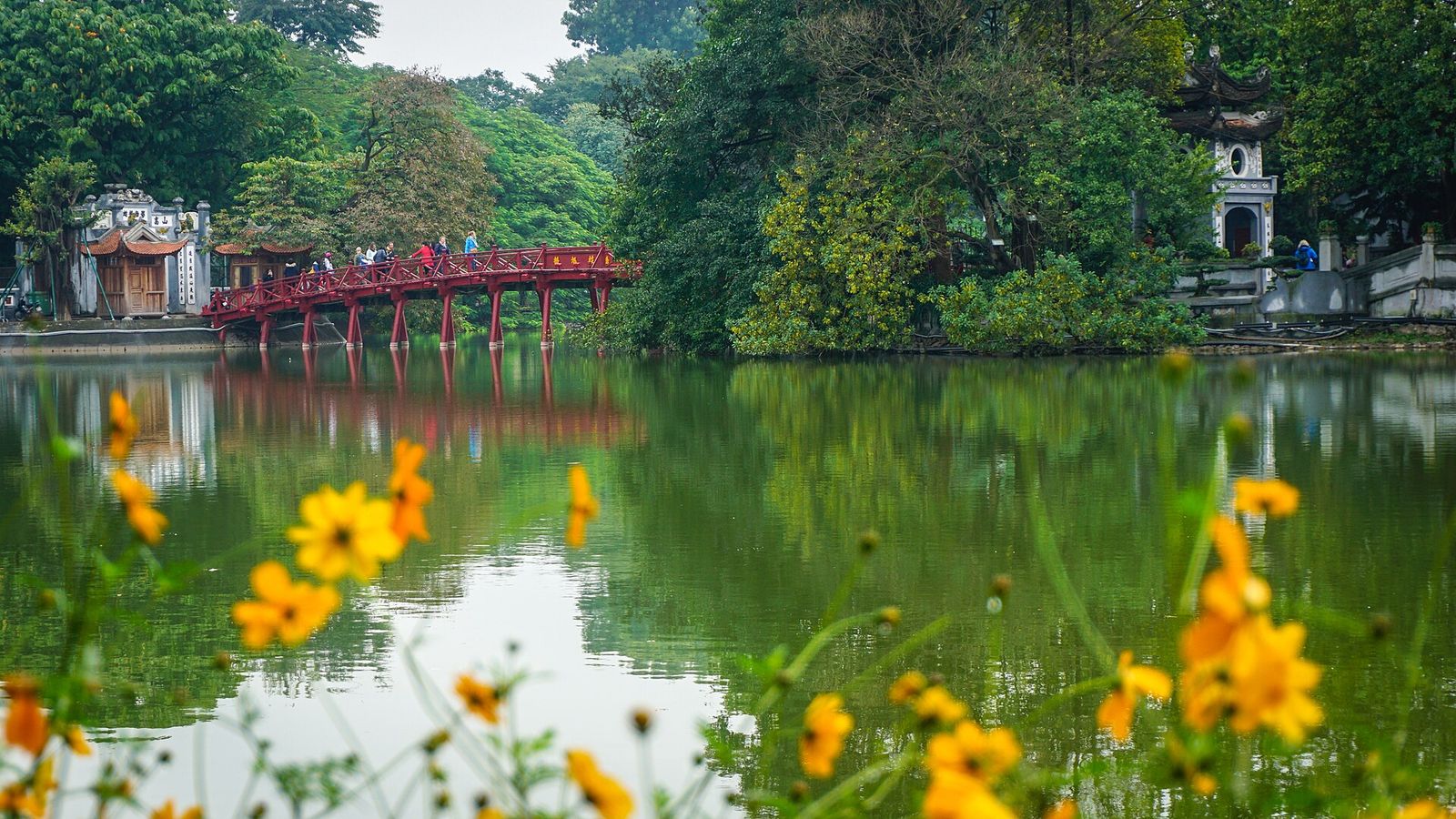
Hanoi is a city of lakes, temples, colonial boulevards and narrow streets crowded with motorbikes and street food. Most of what visitors come for lies within a few kilometres of Hoan Kiem Lake, but traffic is heavy and walking can be slow, so where you stay shapes your days. The big choice is between the energy of the Old Quarter and the calm of the areas around it. Here's how the main districts compare.
The quick answer
- First visit, street food and the most atmosphere: the Old Quarter.
- Colonial streets, museums and more comfort: the French Quarter.
- History, wide avenues and quieter nights: Ba Dinh.
- Cafés, lakeside walks and longer stays: West Lake and Truc Bach.
- Business, conferences and modern towers: the western districts around Cau Giay and My Dinh.
| Area | Feel | Distance to Hoan Kiem Lake | Best for |
|---|---|---|---|
| Old Quarter | Busy, historic | 0–10 minutes' walk | First visits, food |
| French Quarter | Elegant, calmer | 5–20 minutes' walk | Comfort, couples |
| Ba Dinh | Stately, quiet | 10–20 minutes by taxi | History, families |
| West Lake and Truc Bach | Relaxed, residential | 15–25 minutes by taxi | Longer stays |
| Cau Giay and My Dinh | Modern, spread out | 30 minutes or more by taxi | Business |
The Old Quarter: busy and full of life
North of Hoan Kiem Lake, the Old Quarter is a dense tangle of streets traditionally known as the 36 streets, after the guilds of craftsmen and traders who once gathered here. Many street names still begin with Hang, meaning goods, followed by what was sold there. Narrow tube houses, temples tucked between shops, and pavements turned into kitchens and plastic-stool cafés give it a character found nowhere else. Dong Xuan Market sits at its northern edge, and on weekend evenings a night market runs through the centre of the quarter.
Good for: first-time visitors, food lovers and budget travellers, with every kind of guesthouse and small hotel. Consider: it's noisy from early morning to late at night, pavements are often blocked by parked motorbikes, and rooms are typically small, some without windows. Tube houses are narrow and tall, so check whether there's a lift.
Around Hoan Kiem Lake
The lake is the city's heart. A red wooden bridge, The Huc, leads to Ngoc Son Temple on a small island, and according to legend the lake is where a 15th-century king returned a magic sword to a golden turtle. On weekend evenings the streets around the lake close to traffic and fill with families, games and street performers. The water puppet theatre, a traditional Vietnamese art form, is on the north-eastern shore, and St Joseph's Cathedral, a neo-Gothic church from the 1880s, is a few minutes' walk west.
Hotels facing the lake are among the most sought-after in the city. A room in the streets just off it gives you the same easy walking with a little less noise.
The French Quarter: boulevards and museums
South and east of the lake, the French Quarter was laid out in the colonial era with wide, tree-shaded streets, villas and grand public buildings. The Opera House, completed in 1911, anchors the district, and the National Museum of Vietnamese History, the Vietnamese Women's Museum and the Hoa Lo Prison relic site are all within walking distance. Many of the city's upscale hotels and several embassies are here.
Good for: couples, travellers who want more space and calm, and anyone who prefers a short walk into the Old Quarter to sleeping in it. Consider: it's quieter in the evenings, with fewer street-food stalls on the doorstep, and rooms generally cost more.
Ba Dinh: the political and historic centre
West of the Old Quarter, Ba Dinh is the city's administrative heart, built around Ba Dinh Square, where Vietnam's independence was declared in 1945. The Ho Chi Minh Mausoleum, the grounds of the Presidential Palace with Ho Chi Minh's stilt house, and the One Pillar Pagoda are here. The Imperial Citadel of Thang Long, a UNESCO World Heritage Site, and the Temple of Literature, home to what is regarded as the country's first national university, are close by.
Good for: history lovers, families and travellers who want quieter streets. Consider: evenings are calm, with less choice of restaurants, and you'll take taxis to the Old Quarter. The mausoleum has strict rules on dress and behaviour, opens only on certain mornings and closes for maintenance for a period most years, so check before you go.
West Lake and Truc Bach: lakeside and relaxed
West Lake, the largest lake in the city, is ringed by a long path that is popular for walking and cycling. Its eastern shore, in the Tay Ho district, is a favourite with long-term residents from abroad, with cafés, international restaurants, bars and boutique hotels in the lanes off Xuan Dieu and Quang An streets. Tran Quoc Pagoda, which according to tradition dates from the 6th century, stands on a small island off the causeway that separates West Lake from Truc Bach, a smaller lake to the south-east with quiet residential streets and local eateries.
Good for: longer stays, families, repeat visitors and anyone who wants calm after a day in the centre. Consider: the area is spread out, and the Old Quarter is a taxi ride away, slower at rush hour.
The western districts: Cau Giay and My Dinh
The newer districts to the west have high-rise hotels, office towers, shopping malls and the National Convention Centre. The Vietnam Museum of Ethnology, one of the best museums in the country, is in Cau Giay. The city's two urban rail lines so far serve this side of town.
Good for: business travellers, conference visitors and those on longer stays. Consider: it has little of Hanoi's historic character, and the Old Quarter can be 30 minutes to an hour away in traffic.
Getting around
- From the airport: Noi Bai International Airport is about 25–30 km north of the centre, typically 45–60 minutes by taxi or ride-hailing car, longer at rush hour. Public buses, including a dedicated airport service, run to the Old Quarter and the main railway station; check the current routes.
- Ride-hailing apps are widely used for cars and motorbike taxis and show the fare before you travel. Use the airport's official taxi ranks if you prefer a metered taxi.
- Walking: the centre is walkable, but pavements are often obstructed. To cross a busy street, walk slowly and steadily so motorbikes can steer around you, and don't stop or run suddenly.
- Metro: the two lines open so far mainly serve the western districts, and an underground extension towards the main station is under construction.
- Cyclos: pedal rickshaws are a pleasant way to tour the Old Quarter. Agree the fare and the route before you set off.
Practical tips before you book
- Choose a quiet room. In the Old Quarter, ask for a room at the back or on a higher floor, away from the street.
- Plan for the seasons. Summers are hot, humid and rainy, roughly from May to September. Winters are cool, grey and damp, in buildings that often lack heating. Autumn and spring are usually the most pleasant.
- Watch for Tet. Around Lunar New Year, in late January or February, many family-run businesses close for several days and transport is very busy.
- Expect to show your passport at check-in. Hotels must register their guests with the local authorities.
- Check the air quality if you're sensitive to pollution. It can be poor, particularly in late autumn and winter.
- Plan day trips from your base. Ha Long Bay and the Trang An landscape near Ninh Binh, both UNESCO World Heritage Sites, are popular trips of roughly two to three hours each way by road. Many visitors stay a night on a cruise or in Ninh Binh rather than rushing.
- Check the current entry rules, including whether you need an e-visa, before you fly.
Stay in the Old Quarter for atmosphere, the French Quarter for comfort, and West Lake for a slower pace. For more of South-East Asia, see our guides to where to stay in Bangkok and where to stay in Singapore.
Bloiq is reader-supported. Some links may earn us a commission; it never affects what we write. How we make money.
Cover photo: katiebordner, CC BY 2.0, via Wikimedia Commons
.jpg)