Home / Travel · Where to stay
Where to stay in Bangkok: riverside, Sukhumvit, Old Town and more
Bangkok's traffic and heat make location matter. Compare the riverside, Sukhumvit, Silom, Siam, the Old Town, Khao San and Chinatown, and learn how to get around.
This guide contains affiliate links, marked as such. If you book through them, Bloiq may earn a commission at no extra cost to you.
Bangkok is huge, hot and famous for its traffic, so where you stay decides how much of each day you spend in taxis. The good news is that the elevated BTS Skytrain, the MRT subway and the boats on the Chao Phraya River bypass the roads entirely. The best base is almost always one within a short walk of a station or a pier on a route that serves your plans. Here's how the main areas compare.
The quick answer
- Views, calm and a touch of luxury: the riverside.
- Restaurants, nightlife and easy transport: Sukhumvit.
- Business, parks and rooftop bars: Silom and Sathorn.
- Shopping malls and the most central interchange: Siam.
- Temples and palaces on foot: the Old Town (Rattanakosin).
- Budget stays and backpacker nightlife: the Khao San Road area.
- Street food and old shophouses: Chinatown.
Riverside: the city's front porch
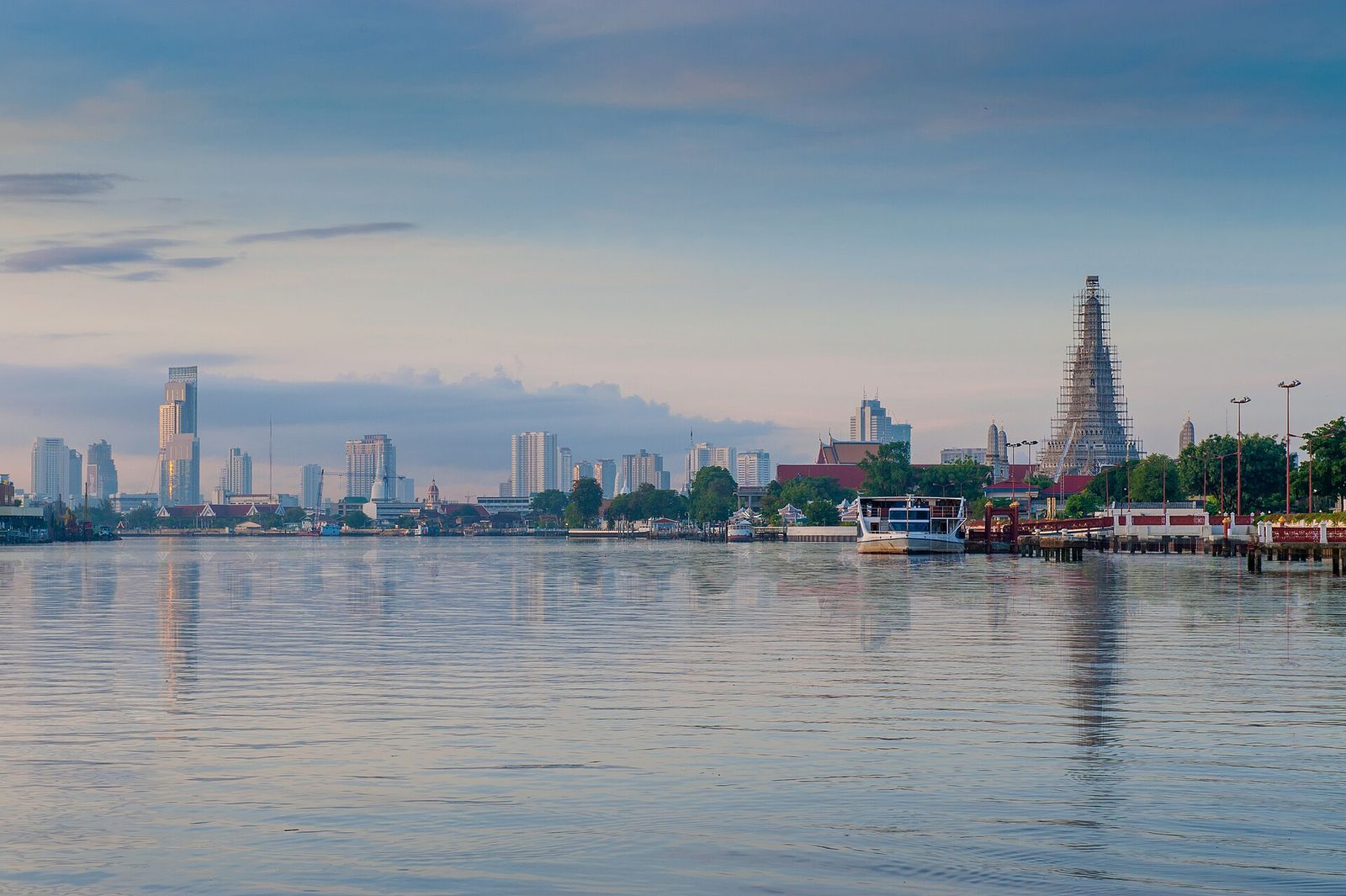
Many of Bangkok's grandest hotels line the Chao Phraya, on both the Charoen Krung side and the opposite Thonburi bank, with large shopping complexes nearby. Hotel shuttle boats and public river boats connect with the BTS at Saphan Taksin, and the river takes you north to the Grand Palace and Wat Arun without touching a road.
Good for: couples, special occasions and anyone who wants a calm retreat with a view. Consider: the riverside hotels are mostly at the top end, and some on the Thonburi side depend on shuttle boats, which have set schedules. Away from the piers and the Skytrain, road journeys can be slow.
Sukhumvit: the all-rounder
Sukhumvit Road runs east from the centre for many kilometres, with the BTS Skytrain above it and the MRT crossing at Asok. Its side streets (sois) hold thousands of hotels, restaurants, bars and malls. The character changes as you go east: Nana and Asok are busy and brash, Phrom Phong has malls and a large park, and Thong Lo and Ekkamai have more upmarket restaurants and bars.
Good for: first-time visitors who want choice, nightlife and dependable transport; families (towards Phrom Phong); and longer stays. Consider: parts of Nana and Asok have red-light nightlife that some travellers prefer to avoid, and the road itself is noisy and congested. The Old Town is a long trip, usually a train and then a boat or taxi.
Silom and Sathorn: business and green space
Silom and Sathorn form Bangkok's main business district, with office towers, many mid-range and upmarket hotels, rooftop bars and a strong street-food scene at lunchtime. Lumphini Park, the city's best-known green space, is at the north-eastern end, and both the BTS and MRT serve the area.
Good for: business travellers, runners who want a park nearby, and anyone who wants good transport with slightly calmer evenings than Sukhumvit. Consider: parts of the district feel corporate and quiet at weekends, while the streets around the Patpong night market are loud and touristy at night.
Siam: malls and the central interchange
Siam is Bangkok's shopping centre in every sense, a cluster of enormous malls around the one station where both BTS lines meet. Walkways link the malls and stations above street level, and the Jim Thompson House museum is nearby.
Good for: shoppers, families and short stays where convenience matters most. Air-conditioned skywalks make it easier to cope with heat and rain. Consider: it's modern and commercial, with little old-city character, and the historic sights are a train and boat or taxi ride away.
Old Town (Rattanakosin): temples and palaces
The historic island of Rattanakosin holds the Grand Palace, Wat Pho with its reclining Buddha, and views across the river to Wat Arun. The streets are lower-rise and quieter than modern Bangkok, with boutique guesthouses and small hotels in restored buildings. An MRT extension now reaches the area, with a station close to Wat Pho.
Good for: culture-focused trips, photographers and anyone who wants to reach the temples early, before the heat and the tour groups. Consider: there's no Skytrain here, evenings are quiet, and reaching Sukhumvit or Siam means a boat, the MRT or a taxi. Temple visits require covered shoulders and knees.
Khao San Road area: cheap and cheerful, with trade-offs
Khao San Road, in Banglamphu just north of the Old Town, is the classic backpacker strip: budget guesthouses, bars, street food and travel agencies. Neighbouring streets such as Soi Rambuttri and Phra Athit Road are calmer, with river access from a nearby pier.
Good for: budget travellers and social travellers who want nightlife on the doorstep and the Old Town within walking distance. Consider: Khao San itself is very loud until late, and it's far from any Skytrain station. Many guesthouses are basic, so check reviews for cleanliness and air conditioning. If you want the location without the noise, stay a few streets away.
Chinatown: food and atmosphere
Centred on Yaowarat Road, Bangkok's Chinatown is a dense district of shophouses, gold shops, temples and markets, and after dark its streets fill with food stalls. Nearby Talat Noi, by the river, has old warehouses, street art and cafés. The MRT reaches Chinatown, and river piers are close.
Good for: food lovers, photographers and travellers who want atmosphere and a central, characterful base. Consider: it's crowded, hot and noisy, pavements are narrow, and hotels range from stylish conversions to very basic.
Getting around
- Airports: Suvarnabhumi, the main international airport, is linked to the city by the Airport Rail Link, which connects with the BTS at Phaya Thai and with the MRT near Makkasan. Don Mueang, used mainly by low-cost airlines, is served by a suburban rail line, buses and taxis. Allow extra time by road during rush hours.
- BTS Skytrain and MRT: fast, frequent and air-conditioned. They are separate systems with separate fares and gates, so check which tickets and cards each one accepts.
- River boats: express boats on the Chao Phraya, marked by coloured flags for different services, run between the Sathorn pier by Saphan Taksin and the Old Town. Small cross-river ferries link the two banks.
- Canal boats: on the Saen Saep canal, commuter boats run quickly between the Old Town fringe and central Bangkok. They're basic but effective.
- Taxis and tuk-tuks: ask metered taxis to use the meter, agree a price before a tuk-tuk ride, and consider a ride-hailing app for fixed fares.
Practical tips before you book
- Stay within a short walk of a station or pier. In Bangkok's heat, even ten minutes on foot can feel like a lot.
- Plan around the seasons. The cooler, drier months are roughly November to February; March to May are the hottest; and the rainy season, roughly June to October, brings heavy downpours that can flood streets for a while.
- Look for a pool, good air conditioning and blackout curtains. They make a real difference to a Bangkok stay.
- Be wary of anyone telling you the Grand Palace or a temple is closed and offering an alternative tour. It's a long-running scam; check at the official entrance.
- Check the current entry rules before you travel, including any online arrival forms, as Thailand's requirements have changed in recent years.
Choose the riverside for calm, Sukhumvit or Silom for convenience, and the Old Town or Chinatown if temples and street food are the reason you came.
Bloiq is reader-supported. Some links may earn us a commission; it never affects what we write. How we make money.
Cover photo: Preecha.MJ, CC BY-SA 4.0, via Wikimedia Commons