Home / Travel / Spain · Itineraries
Seville in 3 days: the Alcázar, the cathedral, Triana and Córdoba
A three-day Seville plan grouped by area: the Alcázar and cathedral, Plaza de España and Triana, then the old centre, with an easy day-trip option to Córdoba.
Seville rewards a slow pace. Its great monuments sit within a few minutes' walk of each other, but the city runs late, the summer heat is serious, and much of the pleasure lies in long lunches, shaded squares and evening walks by the river. This plan groups each day by area, keeps the big sights in the cooler morning hours, and offers Córdoba as an alternative third day if you'd like to see a second Andalusian city.
It suits first-time visitors who enjoy walking. The centre is flat, which makes Seville one of the easier Spanish cities on foot. For a base that keeps everything within reach, see our guide to where to stay in Seville.
Before you start: how the city fits together
- Santa Cruz is the old quarter of narrow lanes and small squares beside the cathedral and the Real Alcázar.
- The Centro spreads north from the cathedral through Plaza Nueva, Calle Sierpes and the Encarnación to the Alameda de Hércules.
- El Arenal lies between the cathedral and the Guadalquivir river, with the Torre del Oro on the riverbank.
- Triana is across the river, reached by the Isabel II bridge, and has its own character and long ceramic tradition.
- The María Luisa Park and Plaza de España are a short walk south of the old town.
The cathedral, the Alcázar and the Archivo de Indias together form a UNESCO World Heritage Site, inscribed in 1987, so the core of the first day sits within one compact block.
Day 1: the Real Alcázar, the cathedral and Santa Cruz
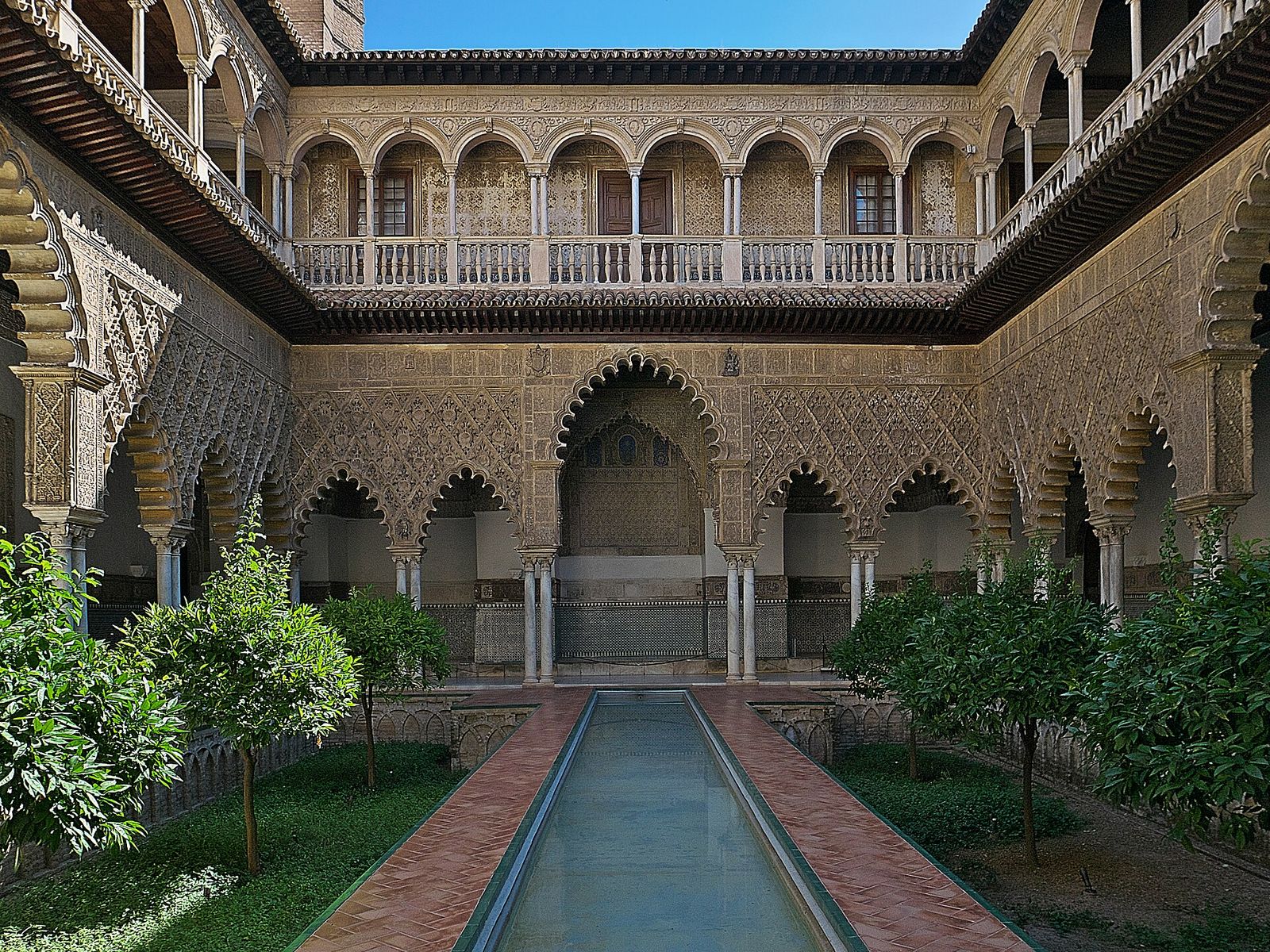
Morning. Start at the Real Alcázar, the royal palace that grew over many centuries on the site of an earlier Islamic fortress. Its heart is the 14th-century palace of Pedro I, built in the Mudéjar style by craftsmen trained in Islamic decoration: carved stucco, tiled dadoes and wooden ceilings around courtyards such as the Patio de las Doncellas. Allow two to three hours, including the gardens, which are a shaded maze of fountains, pavilions and orange trees. It is still a royal residence, and the upper rooms are shown separately on guided visits.
Afternoon. After lunch, visit the cathedral, one of the largest Gothic churches in the world, built on the site of the city's great mosque. Inside, look for the enormous gilded main altarpiece and the monument holding remains attributed to Christopher Columbus. The bell tower, the Giralda, began as the mosque's minaret; it is climbed by a series of ramps rather than stairs, and the top gives the best view over the old town. The Patio de los Naranjos, the courtyard of orange trees, also survives from the mosque. The cathedral is a place of worship, so check visiting times around services.
Evening. Wander the lanes of Santa Cruz as the heat eases: Plaza de Santa Cruz, the tiny Callejón del Agua along the Alcázar wall and the tiled courtyards glimpsed through iron gates. Many tapas bars here and around the cathedral start serving dinner late by northern European standards.
Day 2: Plaza de España, the river and Triana
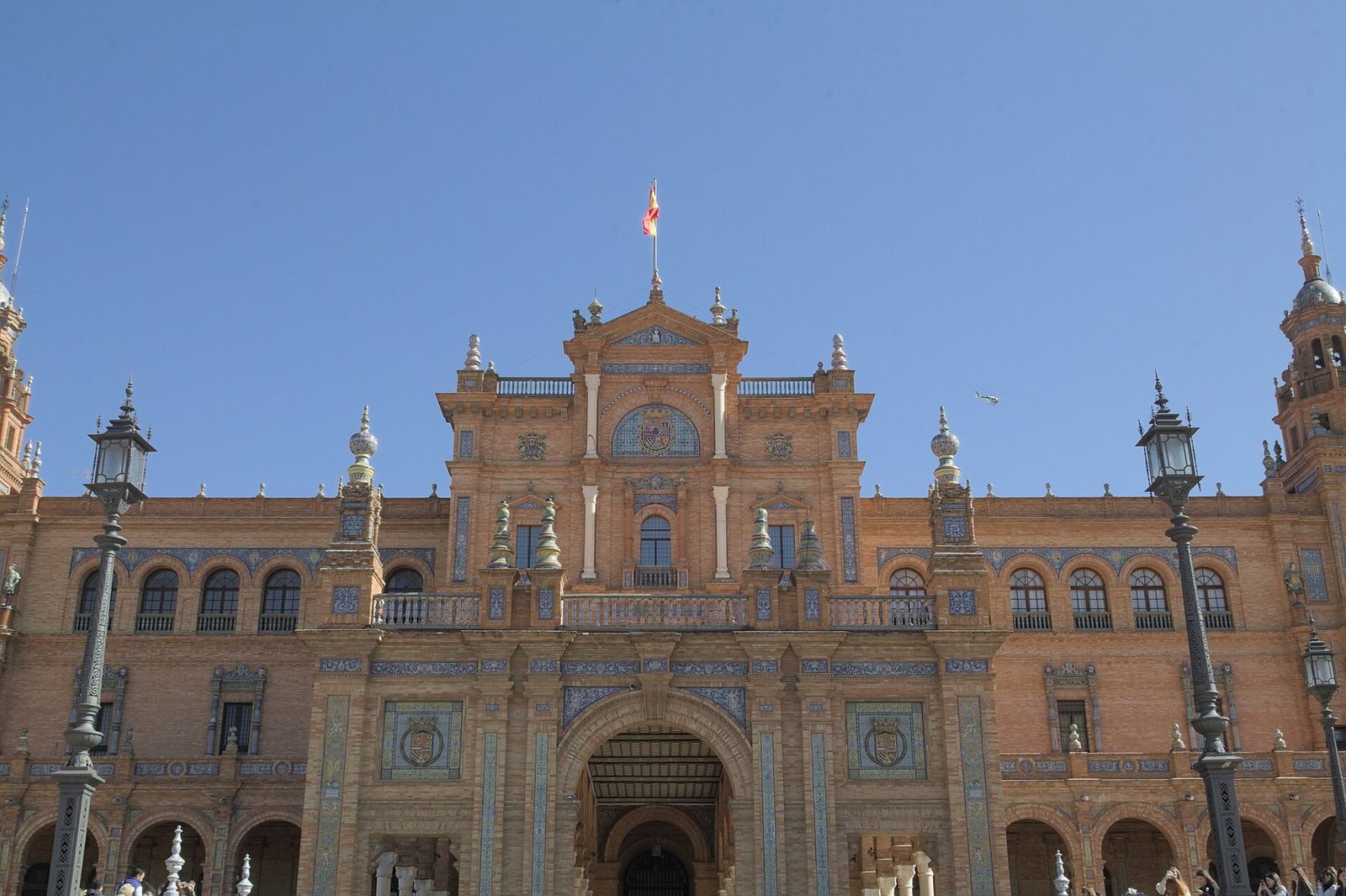
Morning. Walk south to the María Luisa Park and the Plaza de España, a vast semicircular building with towers, bridges over a canal, and tiled alcoves for each Spanish province. Both were created for the Ibero-American Exposition of 1929. Go early for soft light and quieter benches. The park's pavilions also hold the city's archaeological and folk-arts museums.
Afternoon. Follow the river north past the Torre del Oro, a 13th-century watchtower that now holds a small naval museum, and the Maestranza bullring. Cross the Isabel II bridge into Triana. The Triana market, right by the bridge, stands on the site of the Castillo de San Jorge, once the seat of the Inquisition, whose remains can be visited as a museum. Then explore the streets around Calle Alfarería and Calle Antillano Campos, home to Triana's ceramics workshops and the Triana Ceramics Centre in a former factory.
Evening. Calle Betis, along the Triana riverbank, has the classic view back across the Guadalquivir to the Torre del Oro and the Giralda. Triana is also one of the traditional homes of flamenco. For a performance, book a seat at a dedicated venue (a tablao) in Triana or Santa Cruz rather than relying on chance.
Day 3, option A: the old centre and the Alameda
Morning. Start at the Casa de Pilatos, a 16th-century noble palace mixing Mudéjar, Gothic and Renaissance styles, with superb tiles and a quiet garden. Continue to the Metropol Parasol at Plaza de la Encarnación, the huge wooden canopy locals call Las Setas (the mushrooms), with Roman remains in its basement and a walkway on top.
Afternoon. Art lovers should head to the Museo de Bellas Artes, housed in a former convent and strong on the Seville school, especially Murillo and Zurbarán. Alternatively, visit the Palacio de las Dueñas, a palace with courtyards, gardens and a family art collection, or the riverside Hospital de la Caridad, a baroque charity hospital with notable paintings.
Evening. Walk north to the Alameda de Hércules, a long tree-lined square with Roman columns at one end and a relaxed, local evening scene of cafés and bars.
Day 3, option B: a day trip to Córdoba
Córdoba is roughly 45 minutes to an hour away by high-speed train, which makes it one of the easiest day trips in Spain. The draw is the Mosque-Cathedral (the Mezquita), begun in the 8th century, with its forest of columns and red-and-white striped arches, and a cathedral built in its centre after the Christian conquest. It is part of the UNESCO-listed historic centre of Córdoba.
Around it, wander the whitewashed lanes of the old town, cross the Roman bridge over the Guadalquivir, and visit the Alcázar de los Reyes Cristianos and its terraced gardens. In May, Córdoba's courtyard festival opens many private flower-filled patios to visitors. If you have more time, the ruins of the caliphal city of Medina Azahara, a few kilometres outside the centre, are a UNESCO site of their own and best reached by tour bus or taxi.
What to book ahead
- The Alcázar and the cathedral: both sell timed tickets online, and in spring and autumn the best slots go early. Check the official sites for current entry arrangements and any reduced-access hours.
- Upper rooms of the Alcázar: visits to the royal apartments run in small groups and are booked separately.
- Córdoba's Mosque-Cathedral and the trains: book the high-speed train and a timed entry together, leaving a margin for queues.
- Flamenco: popular venues fill on weekends and during festivals; reserve a seat.
- Semana Santa and the April Fair: Holy Week and the Feria de Abril are the city's great spring events. Rooms sell out months ahead, and processions change how you move around the centre.
Rule of thumb: in Seville, sightsee from opening time until early afternoon, rest through the hottest hours, and go out again in the evening. Locals do the same.
Adapting the plan
- Summer heat: from June to September, afternoon temperatures in Seville can be extreme, often well above 35°C. Move outdoor walks to the morning and evening, carry water, and spend the afternoon indoors or resting.
- Rain: rare but possible in winter. Swap the park for the Bellas Artes, the Casa de Pilatos and the Archivo de Indias.
- With children: the María Luisa Park has space to run around, rowing boats are sometimes available on the Plaza de España canal, and the Metropol Parasol walkway is a hit.
- Slower pace: the centre is flat and has many shady benches. Taxis and the city's buses cover the longer stretches, and a single tram line runs through the centre past the cathedral.
- Four days or more: do both versions of day three, or add Cádiz or Jerez, both reachable by train.
Practical booking tips
- Where to base yourself: Santa Cruz and the Centro put days one and three on your doorstep; Triana suits travellers who prefer a more local feel. Our where to stay in Seville guide compares the neighbourhoods and explains how to choose a room that copes with the summer heat.
- Air conditioning: essential from late spring to early autumn. Check for it before you book.
- Arriving: the airport is about 10 km from the centre, with an airport bus and taxis. Santa Justa station handles high-speed trains to Córdoba and Madrid.
- Mealtimes: lunch often runs from about 2 pm and dinner from 9 pm. Plan around them rather than fighting them.
- Combining with Madrid? See our three days in Madrid itinerary and day trips from Madrid.
Bloiq is reader-supported. Some links may earn us a commission; it never affects what we write. How we make money.
Cover photo: Jl FilpoC, CC BY-SA 4.0, via Wikimedia Commons