Home / Travel · Where to stay
Where to stay in Dubrovnik: the Old Town walls vs Ploče, Lapad and Gruž
Inside Dubrovnik's Old Town walls or outside them? How the Old Town, Pile, Ploče, Lapad, Babin Kuk and Gruž compare, with tips on steps, buses, ferries and summer.
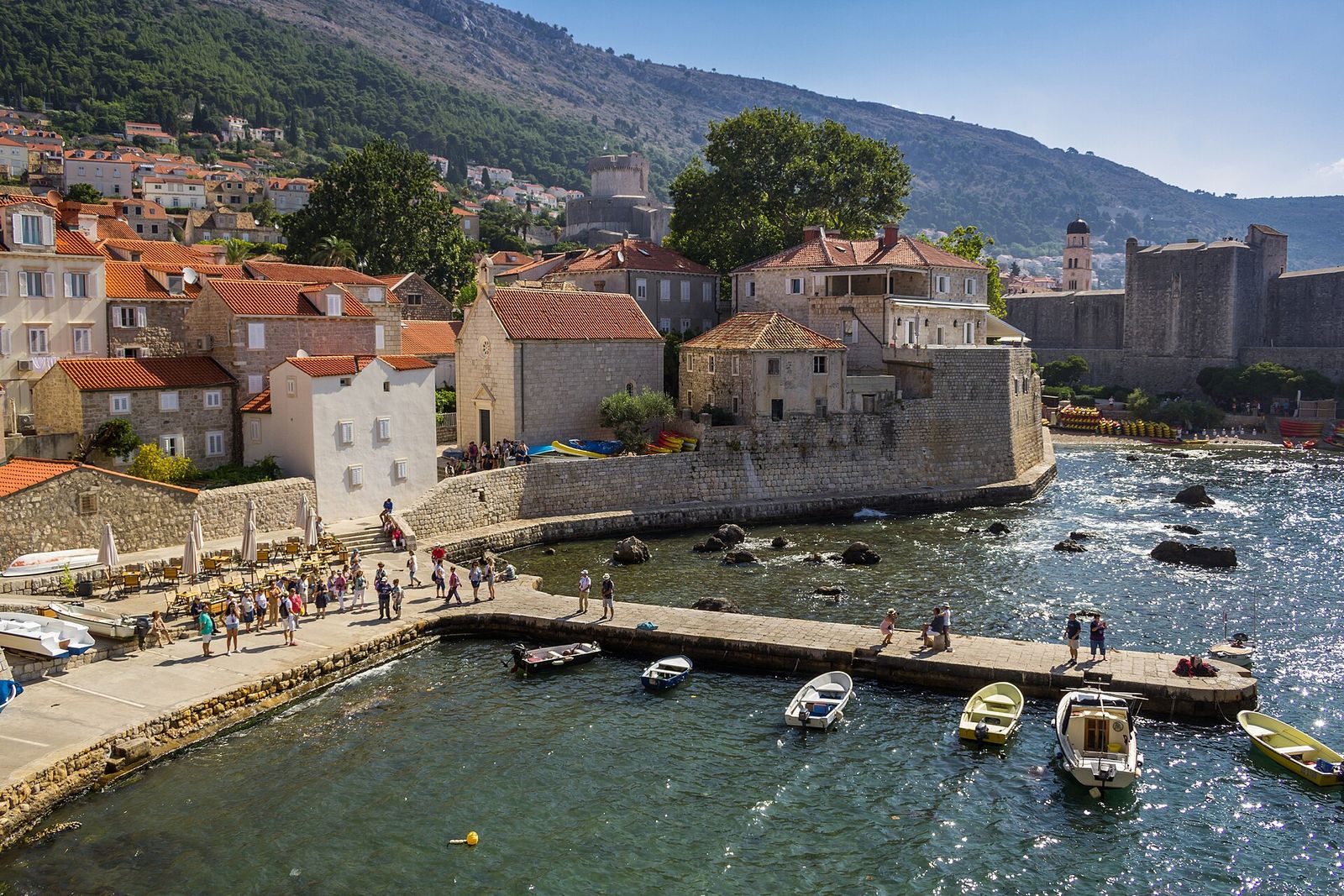
Dubrovnik's walled Old Town is one of the most beautiful places in Europe to wake up, but it is small, car-free, built on steps and very busy in summer. Outside the walls, the city stretches along a steep coast to the Lapad peninsula and the port of Gruž, and each area trades atmosphere for space, beaches or transport in a different way. Here's how the main areas compare, and who each one suits.
The quick answer
- Once-in-a-lifetime atmosphere, everything on foot: inside the Old Town walls.
- Next to the Old Town, with the main bus stop: Pile.
- Views of the walls and a beach close by: Ploče.
- Families, beaches and space: Lapad.
- Resort hotels and swimming: Babin Kuk.
- Ferries, the bus station and lower prices: Gruž.
Inside the Old Town walls
The Old Town (Grad) is enclosed by almost 2 km of medieval walls and is a UNESCO World Heritage Site, inscribed in 1979. Its main street, the Stradun, runs dead straight on polished limestone from the Pile Gate to the old harbour, past the Onofrio fountain, the Franciscan monastery and the Rector's Palace. On either side, narrow lanes climb in long flights of steps. Accommodation is mostly in apartments and small guesthouses in old stone houses, with a few hotels.
Good for: couples and first-time visitors who want to see the walls and squares early in the morning and late in the evening, when day visitors have gone. Consider: there are no cars, so you'll carry luggage over paving and up steps, often many of them. Rooms in old houses can be small, with steep internal stairs. Some lanes have bars and terraces open late, and church bells ring early. It's the most expensive area and books up first.
Pile: right outside the west gate
Pile is the area just outside the main gate, where city buses from the rest of Dubrovnik and the airport stop. Fort Lovrijenac stands on its own rock above the sea here, and the streets behind climb steeply into residential neighbourhoods with guesthouses and apartments.
Good for: travellers who want the Old Town a few minutes away without hauling bags through it, and anyone planning to use buses. Consider: the area around the gate is busy and noisy by day, and "close to Pile" can mean a long staircase up the hill. Check the route from the bus stop to the door.
Ploče: views back to the walls
East of the Old Town, beyond the Ploče Gate, Ploče climbs the hillside along the road towards Cavtat. Its terraces and hotels give the classic view of the walls and the old harbour across the water. Banje beach is just below, the lower station of the cable car up Mount Srđ is nearby, and the Old Town is a short walk away.
Good for: couples, views and upmarket hotels with sea access. Consider: it's steep, and many places are reached by steps from the road. Beyond the first few hundred metres, the walk back into town is downhill there and uphill home.
Lapad: beaches, promenades and families
Lapad is a green peninsula about 3–4 km west of the Old Town, with a long pedestrian promenade lined with cafés and restaurants that leads to a sheltered bay and beach. It has many mid-range and larger hotels, as well as apartments in residential streets, and it's flatter than most of Dubrovnik. Frequent city buses connect it with Pile in roughly 15–20 minutes.
Good for: families, longer stays and anyone who wants to swim every day. Consider: you'll take the bus or a taxi to the Old Town and back, and evenings are calmer. Check how far your room is from the nearest bus stop.
Babin Kuk: resort hotels at the tip
At the northern tip of the Lapad peninsula, Babin Kuk is a cluster of large resort hotels with pools, pine woods and pebble beaches, including the popular Copacabana beach. It's quiet and self-contained.
Good for: beach holidays and families who want facilities on site. Consider: it's the farthest from the Old Town, typically 25–30 minutes by bus, and has little of the city's character.
Gruž: the port and the practical choice
Gruž is Dubrovnik's working port, on the bay between Lapad and the mainland. The ferry and catamaran terminal for the islands and the coast, the cruise-ship berths and the main bus station are all here, along with a morning produce market and a growing number of bars and restaurants. Apartments and guesthouses here tend to cost less than near the walls.
Good for: island-hoppers, travellers arriving or leaving by bus or boat, and budget stays. Consider: it's a port first, with traffic and few sights. The Old Town is about 3 km away, a bus ride or a longish walk.
How the areas compare
| Area | To the Old Town | Beach nearby | Best for |
|---|---|---|---|
| Old Town | You're in it | Small rocky spots | Atmosphere |
| Pile | 2–5 min walk | Small coves | Buses, convenience |
| Ploče | 5–15 min walk | Banje beach | Views of the walls |
| Lapad | 15–20 min bus | Lapad bay | Families, longer stays |
| Babin Kuk | 25–30 min bus | Several | Resort holidays |
| Gruž | 10–15 min bus | No | Ferries, budget |
Getting around
- From the airport: Dubrovnik airport is at Čilipi, about 20 km south of the city. Airport buses run to Pile and the main bus station in Gruž, timed around flights; taxis and transfers are also available.
- City buses: a frequent bus network links Pile with Lapad, Babin Kuk, Gruž and Ploče. Tickets are sold at kiosks and on board, and day tickets are available; check the current options.
- Walking: comfortable shoes with good grip are essential. The Old Town's limestone is slippery, especially when wet, and much of the city is stairs.
- Driving: you don't need a car in the city. Parking near the Old Town is very limited and costly. Hire a car only for trips further afield.
- Boats: small boats run from the old harbour to the island of Lokrum and along the coast to Cavtat. Ferries and catamarans from Gruž serve the Elafiti islands, Mljet, Korčula and the coast towards Split, mainly in summer.
Rule of thumb: stay inside the walls for atmosphere, in Ploče or Pile for the walls on your doorstep, and in Lapad or Babin Kuk if a beach matters more than the old streets.
Practical tips before you book
- Count the steps. Ask how many stairs lie between the nearest road or bus stop and your door. In Dubrovnik that's often the deciding factor.
- Summer is peak season. July and August, when the Dubrovnik Summer Festival fills the Old Town with theatre and music, are the busiest and hottest months. May, June, September and October are calmer and still warm.
- Air conditioning: worth checking from June to September, especially in old stone houses.
- Old Town rules: the city has local rules on behaviour in the historic centre, such as on walking around in swimwear away from the beach. Check the current rules before you go.
- Tourist tax: Croatia's tourist tax is charged per person, per night, usually through your accommodation. Check the current rate when you book.
- Day trips across borders: Kotor in Montenegro and Mostar in Bosnia and Herzegovina are popular day trips, but they involve border crossings and passport checks. Check the current entry rules before you go.
- Consider Cavtat: if Dubrovnik is fully booked, the small harbour town of Cavtat, near the airport, is a quieter base with buses and summer boats to the city.
Choose the Old Town for the experience, Ploče or Pile for the views and convenience, and Lapad, Babin Kuk or Gruž for space, beaches and boats, and Dubrovnik will feel far less crowded than its reputation.
Bloiq is reader-supported. Some links may earn us a commission; it never affects what we write. How we make money.
Cover photo: Zysko serhii, CC BY-SA 4.0, via Wikimedia Commons