Home / Travel / France · Where to stay
Where to stay in Nice: Vieux Nice, the Promenade, Port and Cimiez
How Vieux Nice, the Promenade des Anglais, the Carré d'Or, the Port, the station area and Cimiez compare, plus how to plan Riviera day trips by train and bus.
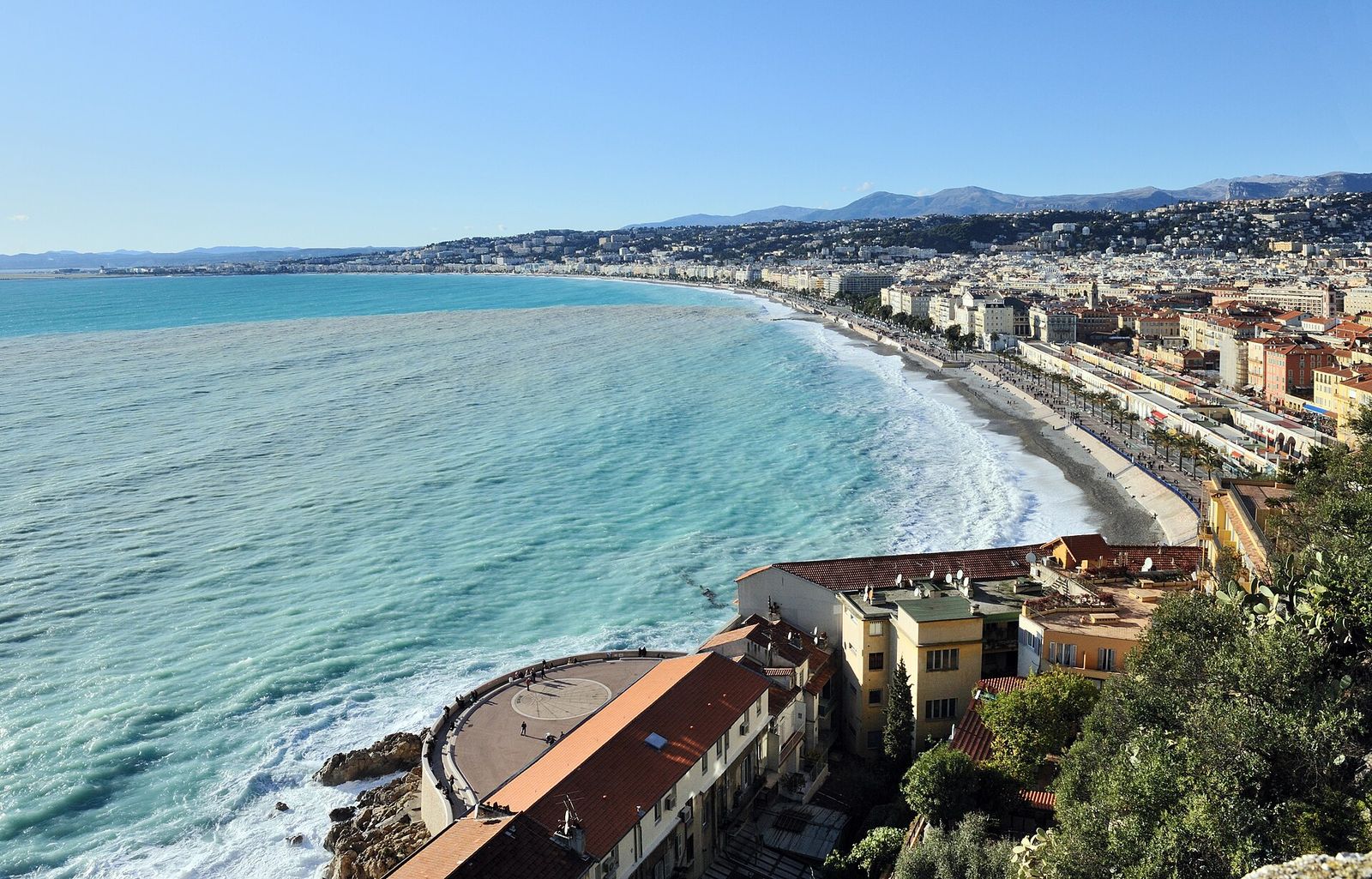
Nice is the natural base for the French Riviera: it has the region's main airport, a lively old town, a long seafront, and trains and buses that reach Monaco, Antibes and the hill villages in under an hour. But its neighbourhoods feel very different, from the tight lanes of Vieux Nice to the hilltop villas of Cimiez, and the right one depends on whether you want the sea, the old town or easy day trips. Here's how the main areas compare.
The quick answer
- First visit, want character and everything on foot: Vieux Nice (the old town).
- Sea views and a classic Riviera stay: the Promenade des Anglais.
- Elegant streets between the sea and the centre: the Carré d'Or.
- Restaurants, a local feel and the eastern day trips: the Port and Place Garibaldi.
- Lots of day trips by train and lower prices: around Nice-Ville station and Avenue Jean-Médecin.
- Quiet, green and museums nearby: Cimiez.
Vieux Nice: the old town
Vieux Nice is a dense tangle of narrow lanes, tall ochre and pink houses, baroque churches and small squares squeezed between the sea and the Colline du Château. The Cours Saleya, its long market square, holds a flower and food market most mornings, with an antiques market on Mondays. Place Rossetti, in front of the cathedral of Sainte-Réparate, is lined with cafés, and socca, the local chickpea pancake, is sold from street stalls.
Good for: first-time visitors, couples and anyone who wants to step out into the old streets each morning. Consider: most lanes are pedestrian, so taxis stop at the edge and you may wheel luggage over paving. Many buildings are old, with stairs and no lift, and rooms can be small and dark. Bars around the Cours Saleya and Rue de la Préfecture stay busy late.
The Promenade des Anglais: the seafront
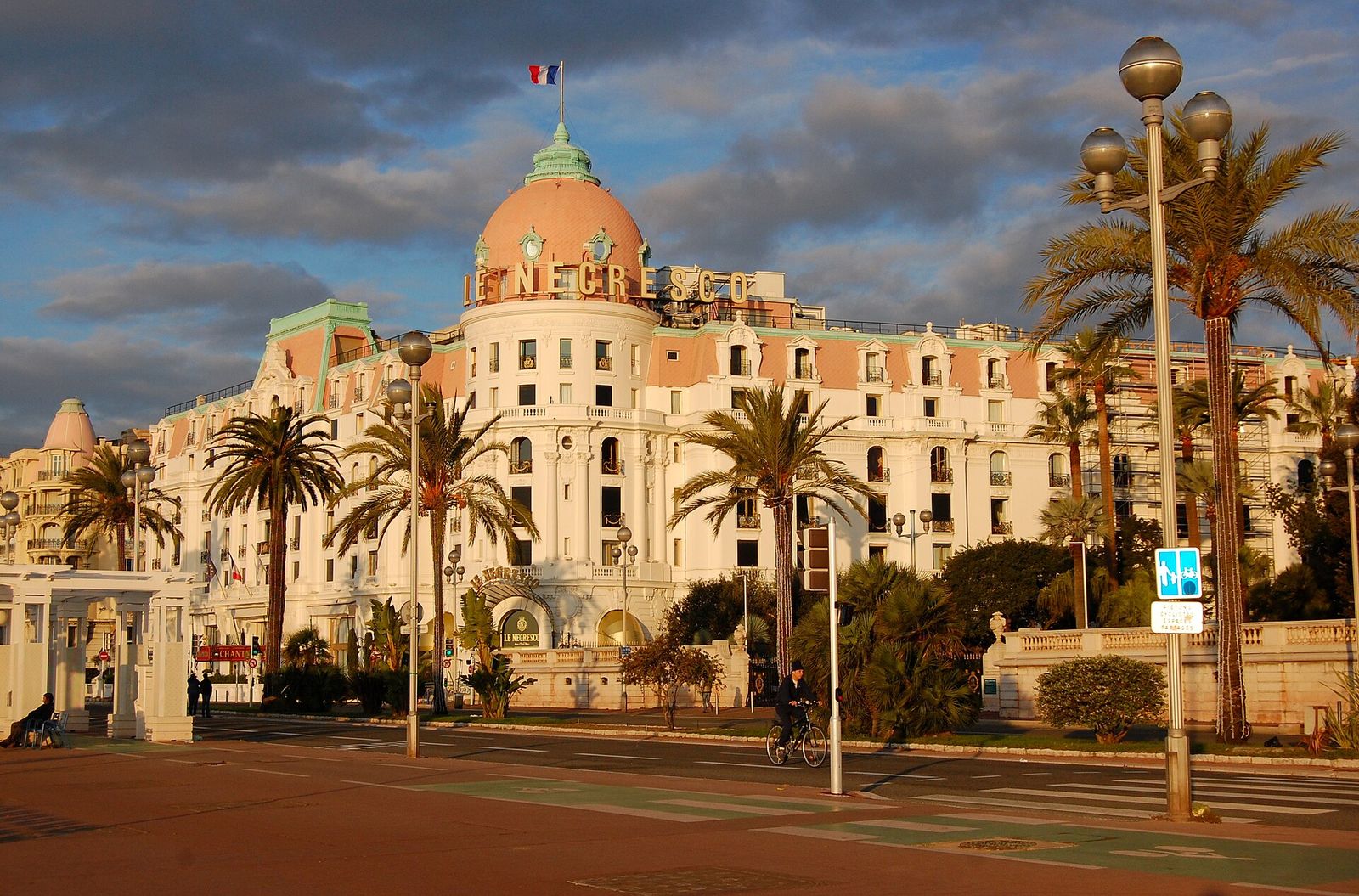
The Promenade des Anglais runs for about 7 km along the Baie des Anges, from the old town almost to the airport, with a wide walkway, cycle path and blue chairs facing the sea. Its Belle Époque and Art Deco hotels include the Hotel Negresco, with its pink dome. The beaches are pebbles rather than sand, and some stretches are private beach clubs while others are free public beach.
Good for: sea views, beach days and a classic Riviera atmosphere. Consider: the road along the Promenade is busy, so ask for a sea-view room on a higher floor or a quieter side room. The western end is a long walk from the old town; the stretch between Place Masséna and the Negresco is the most central.
The Carré d'Or: the elegant centre
Just behind the Promenade, between the Negresco and Place Masséna, the Carré d'Or (Golden Square) is a grid of 19th- and early 20th-century apartment buildings, designer shops and restaurants. It's a minute or two from the beach and about ten minutes' walk from the old town. Place Masséna, with its red façades and chequered paving, and the Promenade du Paillon, a long park with fountains, link it to Vieux Nice.
Good for: couples and travellers who want comfort and convenience without the old town's bustle. Consider: it's polished rather than full of character, and rooms on the main shopping streets can be noisy.
The Port and Place Garibaldi: local and foodie
East of the Colline du Château, Port Lympia is a harbour of coloured houses and fishing boats, with ferries to Corsica. The streets around it and around Place Garibaldi, a grand arcaded square at the edge of the old town, are full of restaurants, wine bars and antique shops, with a more local crowd than the old town. Behind the port, the wooded hill of Mont Boron has walking trails and views.
Good for: food lovers, repeat visitors and anyone heading east to Villefranche, Èze and Monaco. Consider: fewer beaches right on the doorstep, and the walk to the Promenade takes 15–20 minutes, though tram line 2 links the Port with the centre and the airport.
Around the station and Avenue Jean-Médecin: practical
North of Place Masséna, Avenue Jean-Médecin is the main shopping street, served by tram line 1, and leads up to Nice-Ville, the main railway station. The quarter between the station and the sea, including the Musiciens area, has many mid-range hotels and good-value apartments. The Libération market, north of the station, is a favourite with locals.
Good for: day-trippers, budget-conscious travellers and short stays. Consider: the streets right by the station are less attractive and feel busy, and you're 15–20 minutes' walk from the beach. Look at the exact street before you book.
Cimiez: hilltop villas and museums
Cimiez sits on a hill north of the centre, where Queen Victoria and other wealthy winter visitors once stayed in grand hotels, many of them now apartments. Today it's a quiet residential area of villas and gardens. It has the Matisse Museum, the remains of the Roman town of Cemenelum and its amphitheatre, and the monastery of Cimiez with its rose and olive gardens. The National Marc Chagall Museum stands at the foot of the hill.
Good for: slow trips, art lovers and anyone who prefers calm. Consider: it's residential, with few restaurants, and you'll rely on buses or taxis to reach the sea, about 20–30 minutes away.
How the areas compare
| Area | Atmosphere | Beach on foot | Best for |
|---|---|---|---|
| Vieux Nice | Historic, lively | Yes | First visits, couples |
| Promenade des Anglais | Seafront, classic | Yes | Sea views |
| Carré d'Or | Elegant, central | Yes | Comfort, convenience |
| Port and Garibaldi | Local, foodie | Short walk | Eastern day trips |
| Station area | Practical, busy | 15–20 min | Budget, train trips |
| Cimiez | Green, quiet | No | Museums, calm |
Getting around and Riviera day trips
- From the airport: tram line 2 runs from the airport into the centre and on to the Port. Taxis are also available, and the airport is only about 7 km from the centre.
- In the city: two main tram lines and a dense bus network cover most of Nice. The centre is walkable, though Cimiez and Mont Boron are steep.
- East by train: regional trains from Nice-Ville run along the coast to Villefranche-sur-Mer (about 10 minutes), Monaco (about 20–25 minutes) and Menton (about 35–40 minutes). Riquier station, near the Port, is on the same line.
- West by train: the same coastal line reaches Antibes in about 20–30 minutes and Cannes in about 30–40 minutes.
- Hill villages: Èze village is reached by bus along the corniche roads, or by train to Èze-sur-Mer and a steep path uphill. Saint-Paul-de-Vence is reached by bus from the centre. Check current timetables, as they change by season.
- Driving: a car helps for the hinterland, but parking in Nice and the coastal towns is limited and costly. Many visitors manage with trains and buses.
Rule of thumb: if most of your days are trips along the coast, stay within easy walking distance of Nice-Ville or a tram stop. Lugging bags is the only thing that makes the Riviera hard work.
Practical tips before you book
- Book early for the big events: the Nice Carnival in February, and the Monaco Grand Prix and the Cannes film festival in May, fill hotels across the coast. Summer is the busiest and most expensive season.
- Air conditioning: worth checking from June to September, when nights can be warm.
- Sea view or quiet: on the Promenade, choose one or the other. Rooms at the back are quieter.
- Parking: if you're arriving by car, confirm whether your hotel has parking and how to reach it; the old town is largely closed to traffic.
- Tourist tax: Nice charges a per-person, per-night tourist tax, usually added to your bill. Check the current rate when you book.
- Combining with Paris? The high-speed train between Nice and Paris takes about six hours. See our guide to where to stay in Paris.
Choose Vieux Nice for atmosphere, the Promenade or the Carré d'Or for the sea, and the station area or the Port for day trips, and the whole of the Riviera is within reach.
Bloiq is reader-supported. Some links may earn us a commission; it never affects what we write. How we make money.
Cover photo: Cayambe, CC BY-SA 3.0, via Wikimedia Commons