Home / Travel / Portugal · Itineraries
Porto in 3 days: Ribeira, the port lodges of Gaia and the Douro
A three-day Porto plan grouped by area: the old town and Ribeira, the bridges and port wine lodges of Gaia, then a day in the Douro Valley's terraced vineyards.
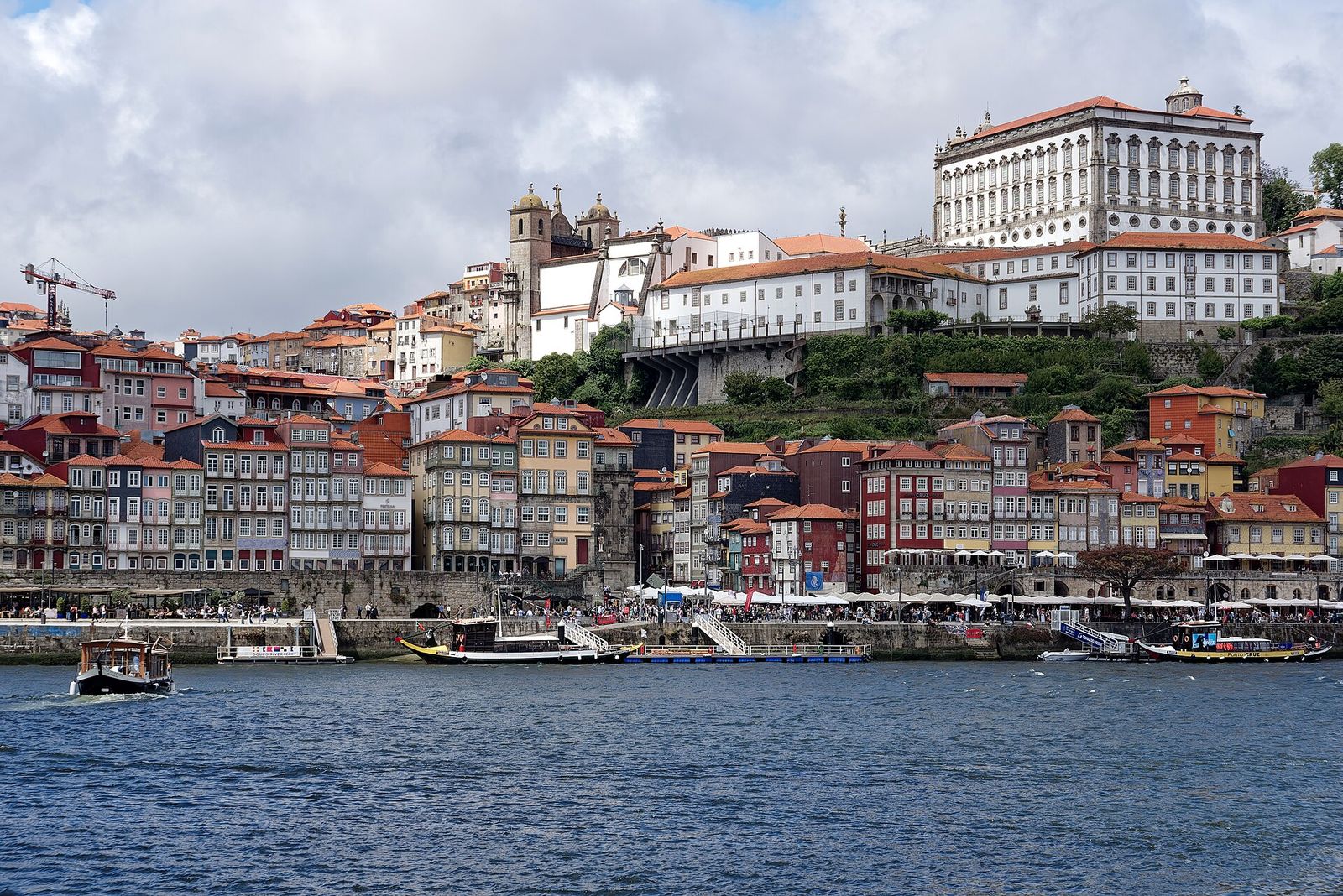
Porto packs a lot into a small space. The historic centre can be crossed on foot in half an hour, the port wine lodges are just over the river in Vila Nova de Gaia, and the terraced vineyards of the Douro Valley are close enough for a day trip by train. This plan spends two days in the city, grouped by area to limit the climbing, and gives the third to the valley that made the city's fortune.
It suits first-time visitors who don't mind hills. Porto is steep, and the walk from the river to the upper town is a real climb, so the plan pairs each ascent with a downhill stretch. For the best bases, see our guide to where to stay in Porto.
Before you start: how the city fits together
- Baixa is the downtown around the Avenida dos Aliados, São Bento station and the Clérigos Tower, on the upper ground.
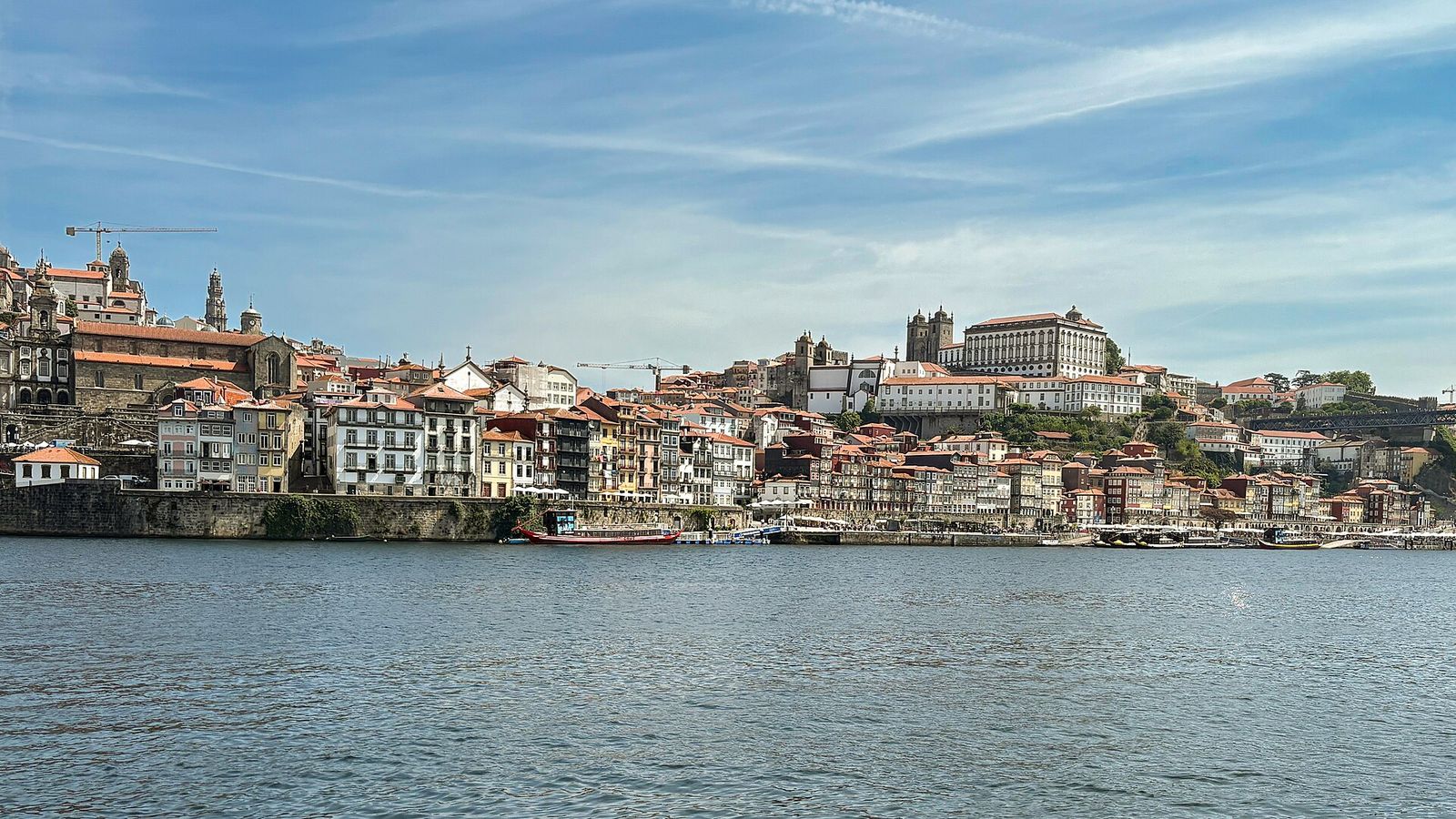
- The Sé and Ribeira drop steeply from the cathedral hill to the riverfront quay.
- Vila Nova de Gaia faces Ribeira across the Douro and is home to the port wine lodges.
- The Dom Luís I bridge links them on two levels: the lower deck for road traffic and pedestrians at river level, the upper deck for the metro and a walkway high above the water.
- Foz do Douro is where the river meets the Atlantic, about 5 km west of the centre.
The historic centre, the Dom Luís I bridge and the Monastery of Serra do Pilar form a UNESCO World Heritage Site, inscribed in 1996.
Day 1: Baixa, the cathedral and Ribeira
Morning. Start at São Bento station, whose entrance hall is lined with some 20,000 blue-and-white tiles (azulejos) showing scenes from Portuguese history. Walk up to the Clérigos Church and Tower, an 18th-century baroque landmark by the architect Nicolau Nasoni. The climb to the top is narrow and steep, but the view over the rooftops is the best introduction to the city's layout. Next to it, the gardens of the Praça de Lisboa sit on the roof of a shopping arcade, with olive trees and benches.
Afternoon. Head to the Sé, the fortress-like cathedral on the city's oldest hill, with a Gothic cloister lined with tiles and a terrace looking over the rooftops to the river. From here, follow the stairways and lanes down through the old town to Ribeira. On the way, visit the Church of São Francisco, Gothic outside and almost entirely covered in gilded carved wood inside, and the Palácio da Bolsa, the 19th-century stock exchange, seen on guided tours that end in its ornate Arab Room.
Evening. Have dinner on or near the Ribeira quay, or walk east along the river to the lower deck of the bridge. Try a francesinha, Porto's famously heavy layered sandwich, at least once, or the city's traditional tripe dish, which gives locals their nickname, tripeiros.
Day 2: the bridge, Gaia and the port wine lodges
Morning. Walk across the upper deck of the Dom Luís I bridge from the Batalha side. The walkway, shared with the metro, is high and exposed, with tremendous views up and down the gorge. At the far end, the Serra do Pilar monastery terrace and the Jardim do Morro garden give the classic panorama of Ribeira stacked above the river.
Afternoon. Descend to the Cais de Gaia riverside, by the cable car that runs above the quay or on foot. This is the home of the port wine lodges, where the wine has traditionally been aged in barrels since the trade began. Many lodges offer guided tours that explain how port is made, from the vineyards upriver to blending and ageing, followed by a tasting. Tours and tastings vary widely in length and style, so compare a few and book ahead in summer. Moored along the quay are rabelos, the flat-bottomed boats once used to carry barrels down the Douro.
Evening. Take one of the short six-bridges river cruises from either bank, which leave regularly in the season, then return to the Gaia waterfront for the sunset over Ribeira. Walk home over the lower deck.
Day 3: the Douro Valley
The Alto Douro Wine Region, a UNESCO World Heritage Site since 2001, is one of the oldest demarcated wine regions in the world: steep hillsides carved into terraces of vines, with quintas (wine estates) along the river.
By train. Regional trains from São Bento or Campanhã run up the valley to Peso da Régua and Pinhão. The journey takes around two to two and a half hours to Pinhão, and the line runs right beside the river for much of the way; sit on the right-hand side heading upriver for the water views. Pinhão's small station is decorated with tile panels of the wine harvest. From there you can walk to a quinta for a tasting, or take a short boat trip on the river.
By tour. Organised day tours by minibus usually combine two or three quintas, lunch and a boat trip, and they remove the need to plan around train times.
By car. Driving gives the most freedom, and the roads above the river are spectacular, but they are narrow and winding. Never combine driving with wine tastings: if you want to taste, take the train or a tour.
Not a wine fan? Spend the third day in the city instead: the Serralves museum of contemporary art and its large park, the Casa da Música concert hall, and an afternoon on the seafront at Foz do Douro, reached by the historic tram line 1 along the river.
What to book ahead
- Port lodge tours: the best-known lodges fill up on summer weekends. Book a time slot rather than turning up.
- The Douro day: if you're going by train, check the timetable before you plan; services are limited, and the seasonal historic train runs only on certain days and can sell out. Quinta visits and lunches usually need a reservation.
- The Palácio da Bolsa: visits are by guided tour only, in several languages at set times.
- Late June: the São João festival on the night of 23–24 June fills the city with street parties and fireworks. Book accommodation early and expect noise.
Rule of thumb: go down to the river in the morning on foot, and come back up by metro, taxi or funicular when it's running. Porto is much kinder in that direction.
Adapting the plan
- Rain: Porto is wetter than Lisbon, especially from November to March. Swap the bridge walk and garden for the port lodges, the Palácio da Bolsa, the Soares dos Reis National Museum and Serralves's galleries. The granite paving gets slippery, so wear shoes with good grip.
- With children: the cable car, the river cruise, the Crystal Palace Gardens (Jardins do Palácio de Cristal) with their views and peacocks, and the open space at Serralves usually go down well. Port tastings are for adults; check a lodge's policy on children before booking a tour.
- Slower pace or limited mobility: stay in Baixa, use the metro (line D crosses the upper deck of the bridge to Gaia) and taxis for the hills, and spend more time on the flat river quays.
- Four days or more: add a day trip by train to Braga or Guimarães, both historic cities about an hour away, or simply split the Douro day over two days with a night in the valley.
Practical booking tips
- Where to base yourself: Baixa near São Bento is the most practical for this plan, with trains to the Douro on the doorstep. Ribeira and Gaia give you the river. Our where to stay in Porto guide compares the areas in detail.
- Arriving: metro line E runs from the airport to the centre in roughly half an hour.
- Transport cards: a rechargeable card works on the metro, buses and urban trains. Check whether your Douro train is covered or needs its own ticket.
- Tourist tax: Porto and Vila Nova de Gaia each charge a per-person, per-night tax. Check the current rates when you book.
- Combining with Lisbon? Lisbon is about three hours south by train. See our three days in Lisbon itinerary and day trips from Lisbon.
Bloiq is reader-supported. Some links may earn us a commission; it never affects what we write. How we make money.
Cover photo: Jakub Hałun, CC BY 4.0, via Wikimedia Commons