Home / Travel / Spain · Itineraries
Madrid in 3 days: an itinerary for the palace, the Prado and tapas
A three-day Madrid plan grouped by area: the old centre and Royal Palace, the Prado museums and Retiro park, then Gran Vía, Malasaña and Chueca.
This guide contains affiliate links, marked as such. If you book through them, Bloiq may earn a commission at no extra cost to you.
Madrid rewards a slower rhythm than most European capitals. Its great sights are few and close together: a royal palace, three outstanding art museums and a grand park, all within a half-hour walk of each other. The rest of the pleasure is in the squares, markets and tapas bars, and in evenings that start late and run long. This plan groups each day by area and follows the local clock, with the big visits in the morning, a proper lunch and a late dinner.
It suits first-time visitors who like art and food and are happy to walk. For the best base, see our guide to where to stay in Madrid.
Before you start: how the city fits together
- Puerta del Sol is the centre point. The Plaza Mayor is a few minutes' walk to the west, and the Royal Palace about 10 minutes beyond it.
- The Paseo del Prado, with the three big museums, runs along the eastern edge of the old centre, with the Retiro park just behind it.
- Gran Vía crosses the north of the centre. Malasaña and Chueca lie beyond it.
- La Latina, the old quarter of tapas streets, is just south of the Plaza Mayor.
Madrid sits on a high plateau, so summers are hot and dry and winter nights are cold. Meal times are late: lunch is usually from about 2 p.m. and dinner from about 9 p.m., and many restaurant kitchens close in between.
Day 1: the old centre and the Royal Palace
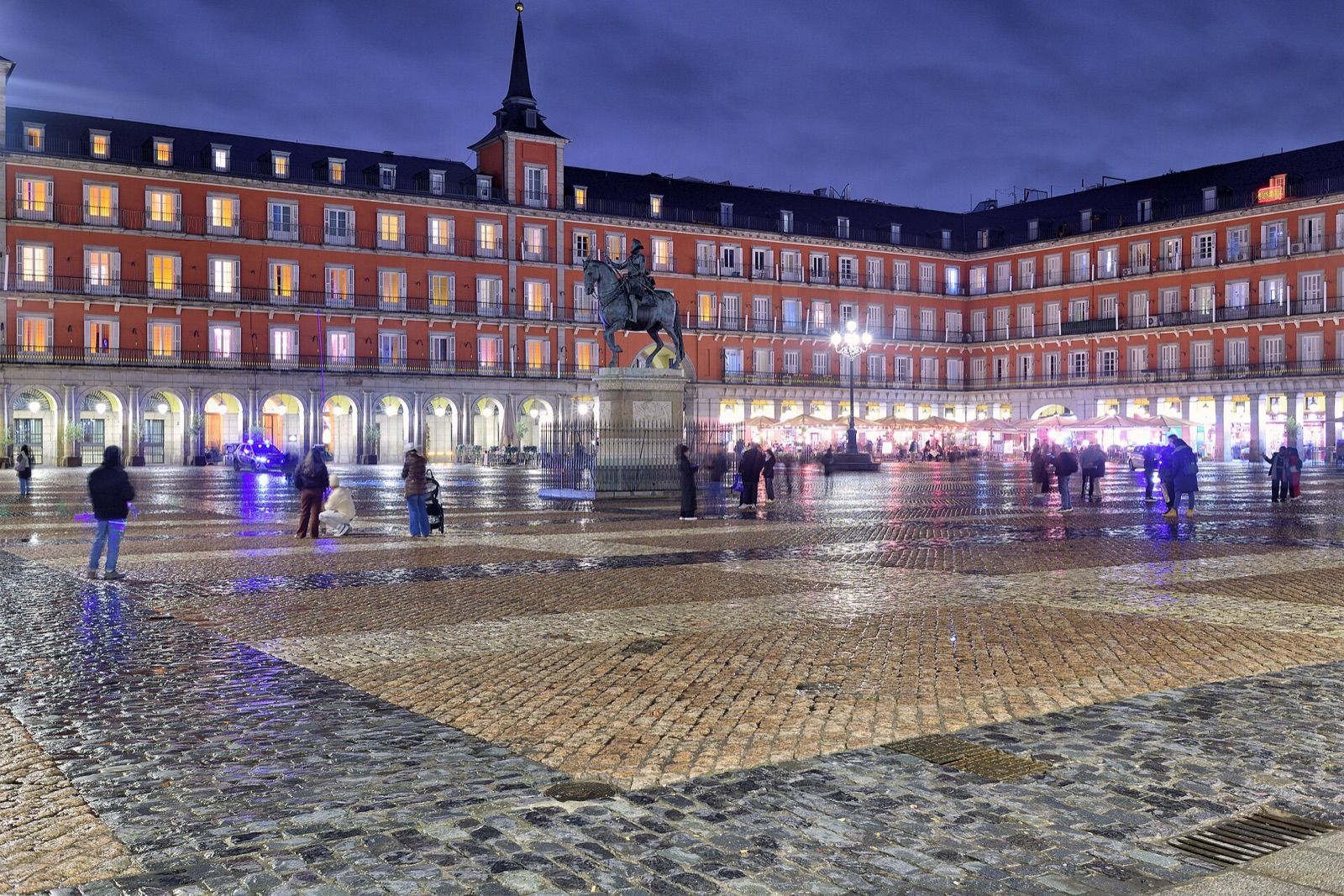
Morning. Start at the Puerta del Sol, where a plaque in the pavement marks kilometre zero of Spain's radial roads and a statue of a bear and a strawberry tree shows the city's emblem. Walk on to the Plaza Mayor, the arcaded 17th-century square with the equestrian statue of Philip III at its centre. Just outside its western side, the iron-and-glass Mercado de San Miguel is filled with tapas counters and makes a good stop for a mid-morning bite.
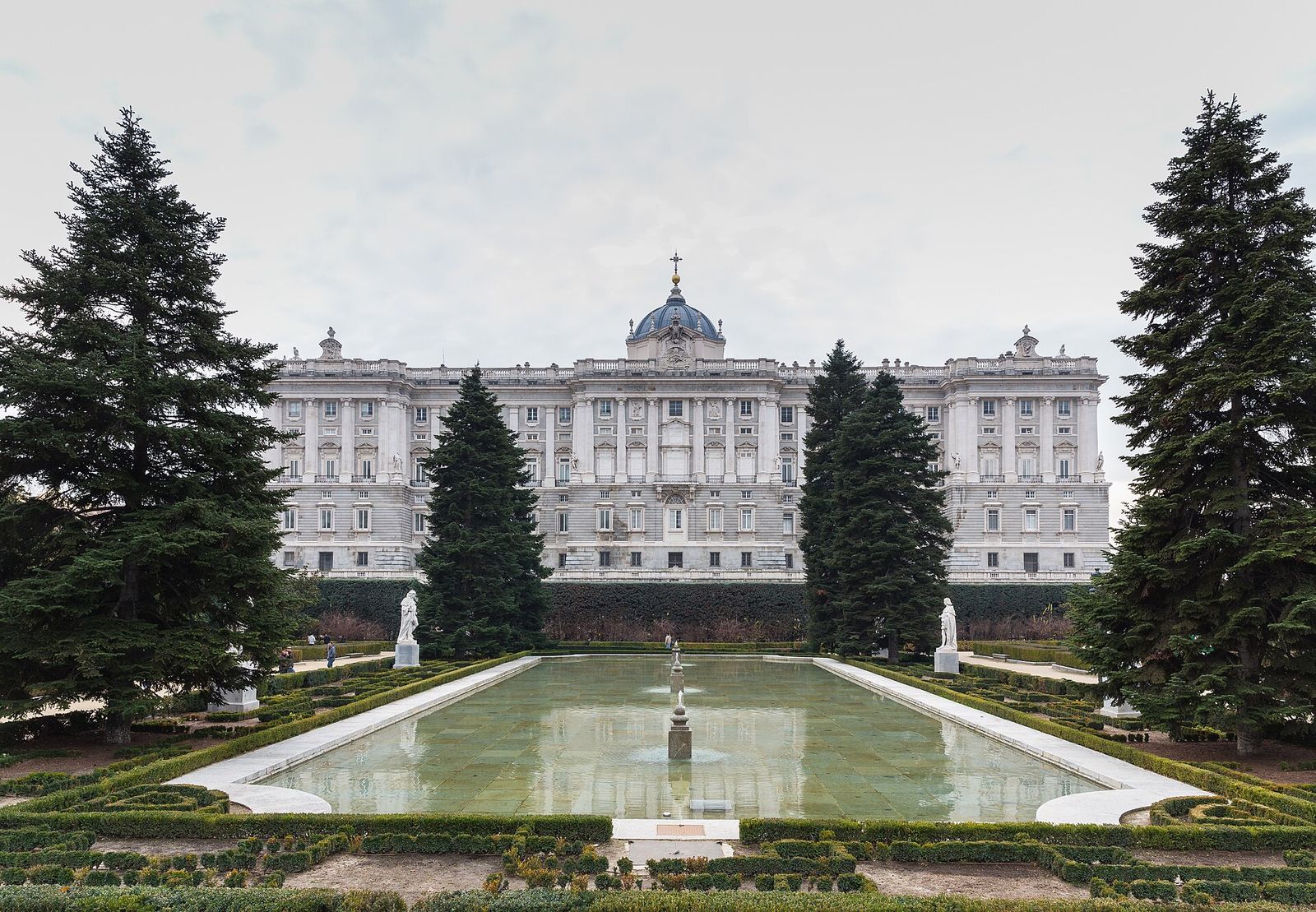
Continue west through the small Plaza de la Villa to the Royal Palace (Palacio Real). Built in the 18th century after a fire destroyed the old fortress on the site, it's one of the largest palaces in Europe. The royal family doesn't live here, but it's still used for state ceremonies, and it sometimes closes to visitors for official events. Next door are the Almudena Cathedral, completed only in 1993, and the Royal Collections Gallery, a modern museum of art and objects gathered by Spain's monarchs.
Afternoon. After lunch, walk through the Plaza de Oriente and the formal Sabatini Gardens on the north side of the palace. Then continue to the Temple of Debod, an ancient Egyptian temple given to Spain in thanks for its help in rescuing monuments threatened by the Aswan High Dam, and rebuilt in a hilltop park. It's one of the favourite places in the city to watch the sunset.
Evening. Head to La Latina for a tapas crawl along Cava Baja and the streets around it, moving from bar to bar as locals do. For something sweet, the old cafés near Sol serve thick hot chocolate with churros until late.
Day 2: the art museums and the Retiro
Morning. Give the morning to the Prado, one of the world's great collections of European painting. Its strengths are the Spanish masters: Velázquez's Las Meninas, Goya's The Third of May 1808 and his dark late works known as the Black Paintings, and El Greco. It also holds Bosch's The Garden of Earthly Delights and rooms of Titian and Rubens. Two to three hours with a plan is better than five without one.
Afternoon. Have lunch in the Barrio de las Letras, then choose one more museum rather than both:
- The Reina Sofía for 20th-century art. Picasso's Guernica is here, along with works by Dalí and Miró.
- The Thyssen-Bornemisza for a walk through seven centuries of European painting, including the Impressionists and other styles the Prado doesn't cover.
Then cross into the Retiro, once a royal garden and now the city's main park. Rent a rowing boat on the lake beneath the monument to Alfonso XII, find the glass-and-iron Palacio de Cristal beside its pond (check whether the interior is open, as it has been under restoration), and walk through the rose garden. Together with the Paseo del Prado, the park is a UNESCO World Heritage Site. On your way back, pass the Puerta de Alcalá and the Plaza de Cibeles, whose fountain is one of the symbols of the city.
Evening. The Barrio de las Letras (also called Huertas) is full of old taverns and bars around the Plaza de Santa Ana. Many venues in the centre host flamenco shows in the evening.
Day 3: Gran Vía, Malasaña and Chueca
Morning. If it's a Sunday, start at El Rastro, the huge open-air flea market that fills the streets south of La Latina on Sundays and public holidays. On other days, begin on Gran Vía, the city's showpiece avenue of early 20th-century buildings. Walk it from the domed Metropolis building at the Calle de Alcalá end to the Plaza de España, where a monument to Cervantes stands over bronze figures of Don Quixote and Sancho Panza. Several buildings along the way have rooftop terraces with views over the skyline.
Afternoon. Wander north into Malasaña, around the Plaza del Dos de Mayo, for vintage shops, cafés and bookshops, then east into Chueca, with its market and terraces. From here you have several options:
- The National Archaeological Museum, near the Plaza de Colón, for Spain's story from prehistory onwards.
- Salamanca, the elegant district of designer shops around Calle de Serrano.
- The Sorolla Museum, the painter's former house and garden in Chamberí. Check that it's open, as it has been closed for renovation.
- The Santiago Bernabéu stadium, for football fans. Tours are popular, so book ahead.
Evening. Finish with a final round of tapas, or dinner in Chueca or Malasaña, where the streets stay lively well past midnight.
What to book ahead
- Timed tickets. The Royal Palace and the Prado sell tickets online, and timed tickets often sell out in busy periods. Book a few days ahead in spring, autumn and at holiday weekends.
- Closing days. The Reina Sofía has traditionally closed on Tuesdays and several other museums on Mondays. Check the official sites before you fix your days.
- Free-entry hours. The big museums have offered free entry at certain times, usually late in the day. Queues are long and the time is short, so they suit a quick look rather than a first visit. Check the current arrangements.
- Flamenco and popular restaurants. Reserve for weekend evenings.
- Day-trip trains. If you add Toledo or Segovia, book train seats in advance, as they're reserved and can sell out at weekends.
Rule of thumb: one major museum or monument each morning, a long lunch, and the afternoon outdoors or in a second, smaller visit. Madrid's days are long, so there's no need to rush.
Adapting the plan
- Summer heat. In July and August, reverse the afternoons: stay in the museums or rest during the hottest hours, and go to the Retiro or the Temple of Debod in the evening.
- Rain. Three days of museums is easy here. Add the Thyssen, the Archaeological Museum or the Royal Collections Gallery.
- With children. The Retiro's boats and playgrounds, the riverside park of Madrid Río, the Railway Museum in a former station, and the zoo and amusement park in the Casa de Campo all work well.
- Slower pace. Drop Day 3's afternoon options and spend the time on a terrace. Taxis are plentiful, and the metro reaches every area in this plan.
- Four days or more. Take a day trip. Toledo is about half an hour by fast train from Atocha station, and Segovia, with its Roman aqueduct, is a similar ride from Chamartín followed by a short bus trip. With more time, Barcelona is a few hours away by high-speed train; see our three-day Barcelona itinerary.
Practical booking tips
- Getting around. The centre is walkable, and the metro is frequent and simple to use with a rechargeable transport card. Check the current ticket options, including tourist passes.
- Eat at local times. A weekday set lunch (menú del día) is the best-value meal of the day. Book dinner for 9 p.m. or later if you want atmosphere.
- Pickpockets work the crowds around Sol, Gran Vía, the metro and El Rastro. Keep bags zipped and in front of you.
- Where to base yourself. Sol, Huertas and the streets near the Paseo del Prado put all three days within walking distance. Our where to stay in Madrid guide compares the neighbourhoods.
Bloiq is reader-supported. Some links may earn us a commission; it never affects what we write. How we make money.
Cover photo: Diego Delso, CC BY-SA 4.0, via Wikimedia Commons