Home / Travel / Japan · Campus tours
Kyoto University campus tour: the clock tower, Yoshida and beyond
A guide to visiting Kyoto University: the clock tower and camphor tree, the Yoshida campus, student life in Sakyo, the Philosopher's Path and where to stay.
Kyoto University, known locally as Kyodai, was founded in 1897 as Japan's second imperial university, and it has long cultivated a reputation as the free-thinking, independent counterweight to Tokyo. Its main Yoshida campus lies in Sakyo ward in the north-east of Kyoto, close to the Kamo River and the eastern hills, and within walking distance of some of the city's best temples. That makes a campus visit here unusually easy to combine with sightseeing. Here is how to approach it.
Start at the clock tower
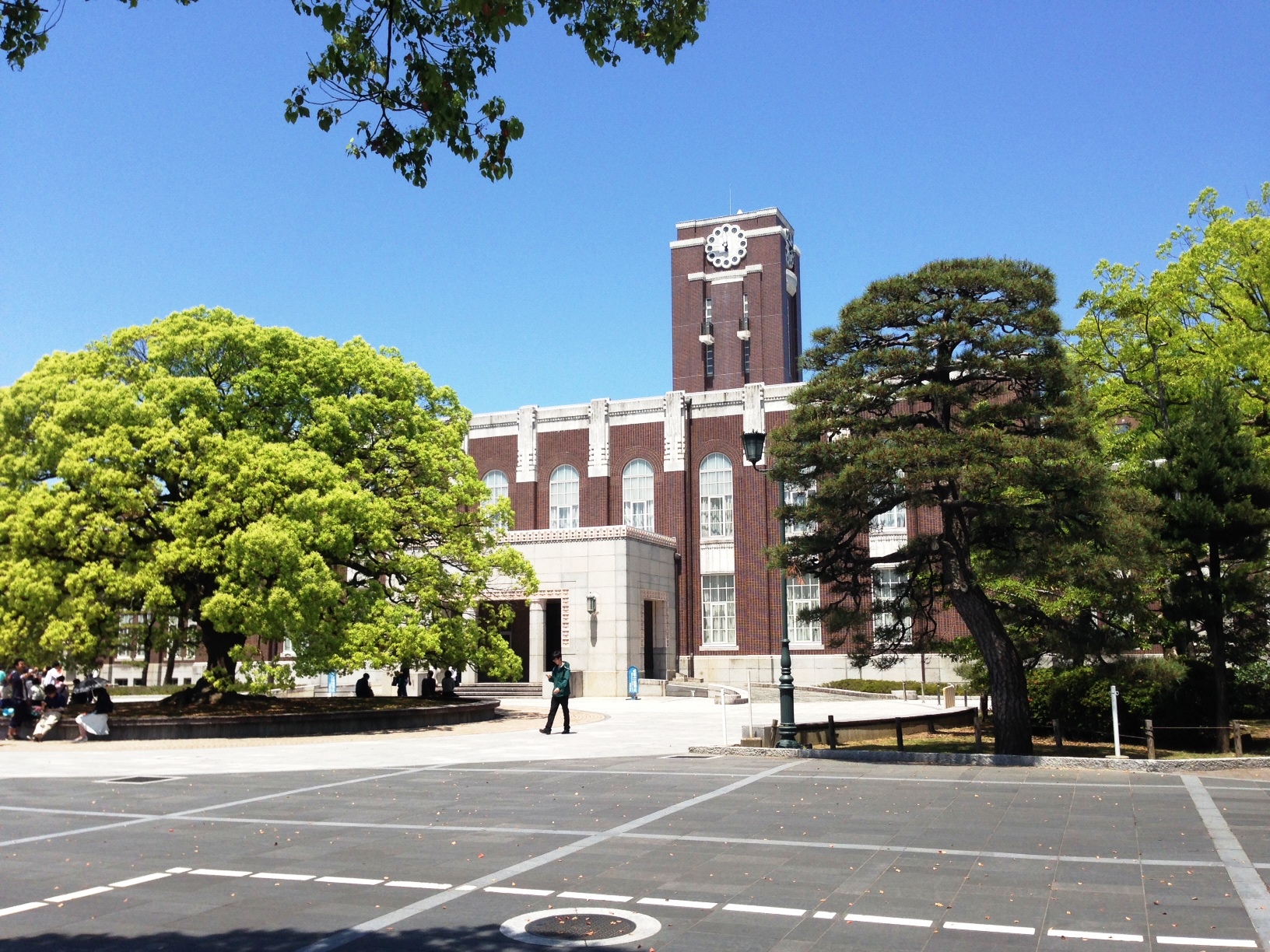
The main gate on Higashioji-dori opens straight onto the university's defining view: a great camphor tree standing in front of the brick clock tower of the Centennial Hall, built in the 1920s. The tree and tower together appear on the university's emblem, and this is where almost everyone takes a photo. The building inside houses a hall, a small exhibition on the university's history, and a restaurant and café open to the public, which make a good first stop.
How the Yoshida campus fits together
Yoshida is not one enclosed campus but several blocks split by city streets:
- The main campus, around the clock tower, holds law, letters, economics, education and much of the administration.
- The north campus, across Imadegawa-dori, is home to science and agriculture.
- The south campus includes the Graduate School of Human and Environmental Studies and the Faculty of Integrated Human Studies, where many first-year general education classes take place.
- The medical campus, towards the Kamo River, holds the Faculty of Medicine and the university hospital.
Much of engineering has moved to the Katsura campus in the western hills, and several research institutes are at Uji, south of the city. If a prospective student's programme is based there, it's worth seeing that campus too.
What's worth seeing
- The Kyoto University Museum near the main campus, which draws on the university's collections in natural history, archaeology and cultural history. Check its opening days before you go.
- Yukawa Hall, named after Hideki Yukawa, the physicist who became Japan's first Nobel laureate and a Kyoto University professor. The university's long line of Nobel-winning scientists is one of its points of pride.
- The old buildings scattered across campus, many in brick with early twentieth-century detailing, alongside newer research blocks.
- Yoshida Shrine, on the slopes of Mount Yoshida right next to the campus. A short climb through the woods leads to quiet shrines and views over the city.
Student character and life around campus
Kyodai students are known for independence, and the university's motto is often summarised as a tradition of "academic freedom". You'll see it in the campus's culture of self-run student groups, eccentric noticeboards and, famously, the Yoshida Dormitory, a wooden student dormitory dating from the early twentieth century that is among the oldest in Japan and is run by its residents.
Clubs and circles are the backbone of social life, from rowing and martial arts to film and mountaineering. The student-run November Festival fills the campus each autumn and is open to the public.
Sakyo ward feels like a student neighbourhood: bicycles everywhere, secondhand bookshops, cheap set-meal restaurants, cafés and jazz bars around Hyakumanben, the busy crossroads at the north-west corner of the main campus. The banks of the Kamo River are where students gather on warm evenings, especially at the Demachiyanagi delta, where the river's two tributaries meet.
Walking from campus to the temples
Few campuses have a better neighbourhood for an afternoon walk. Heading east and then south:
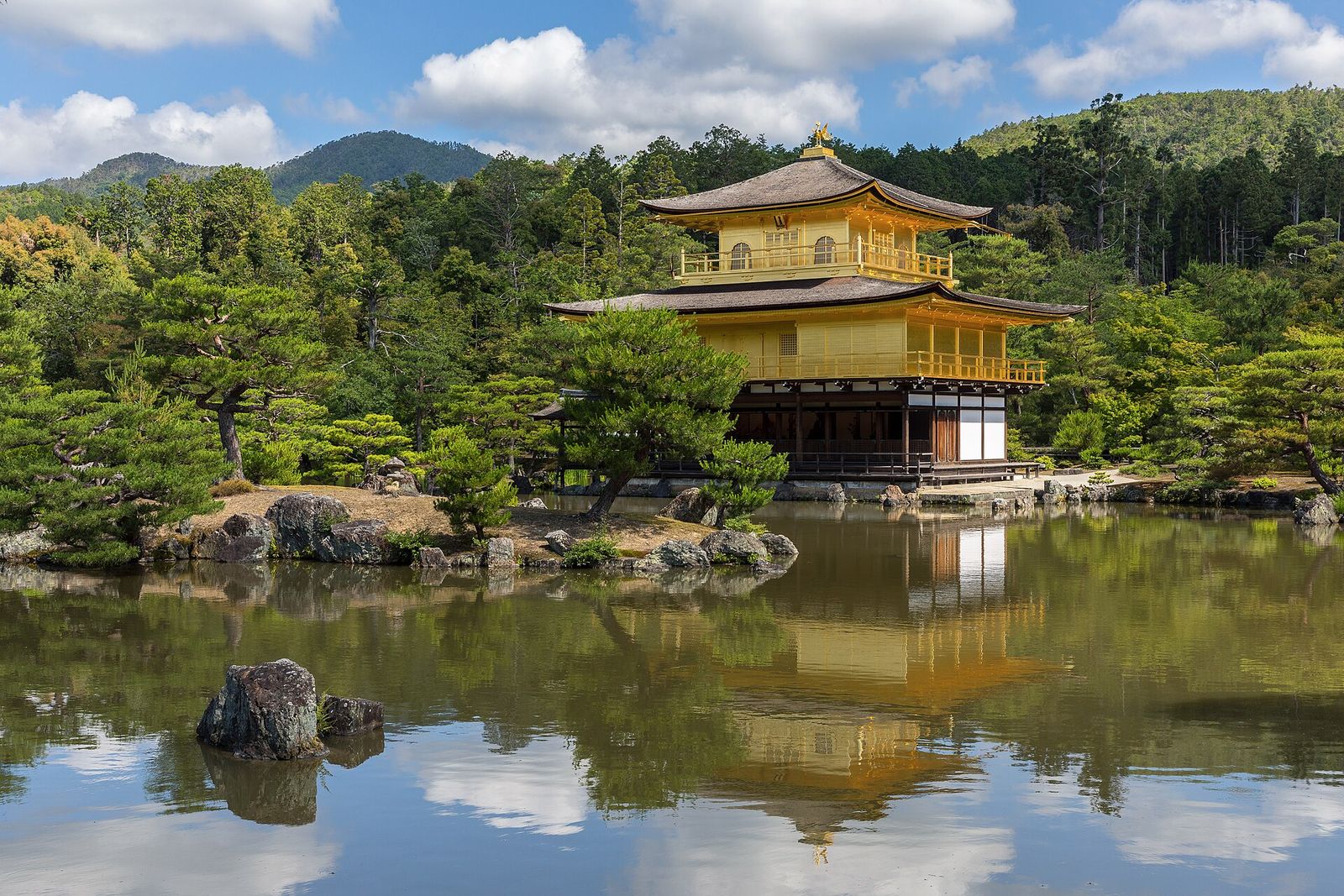
- Ginkaku-ji (the Silver Pavilion), about 25 minutes' walk from the clock tower.
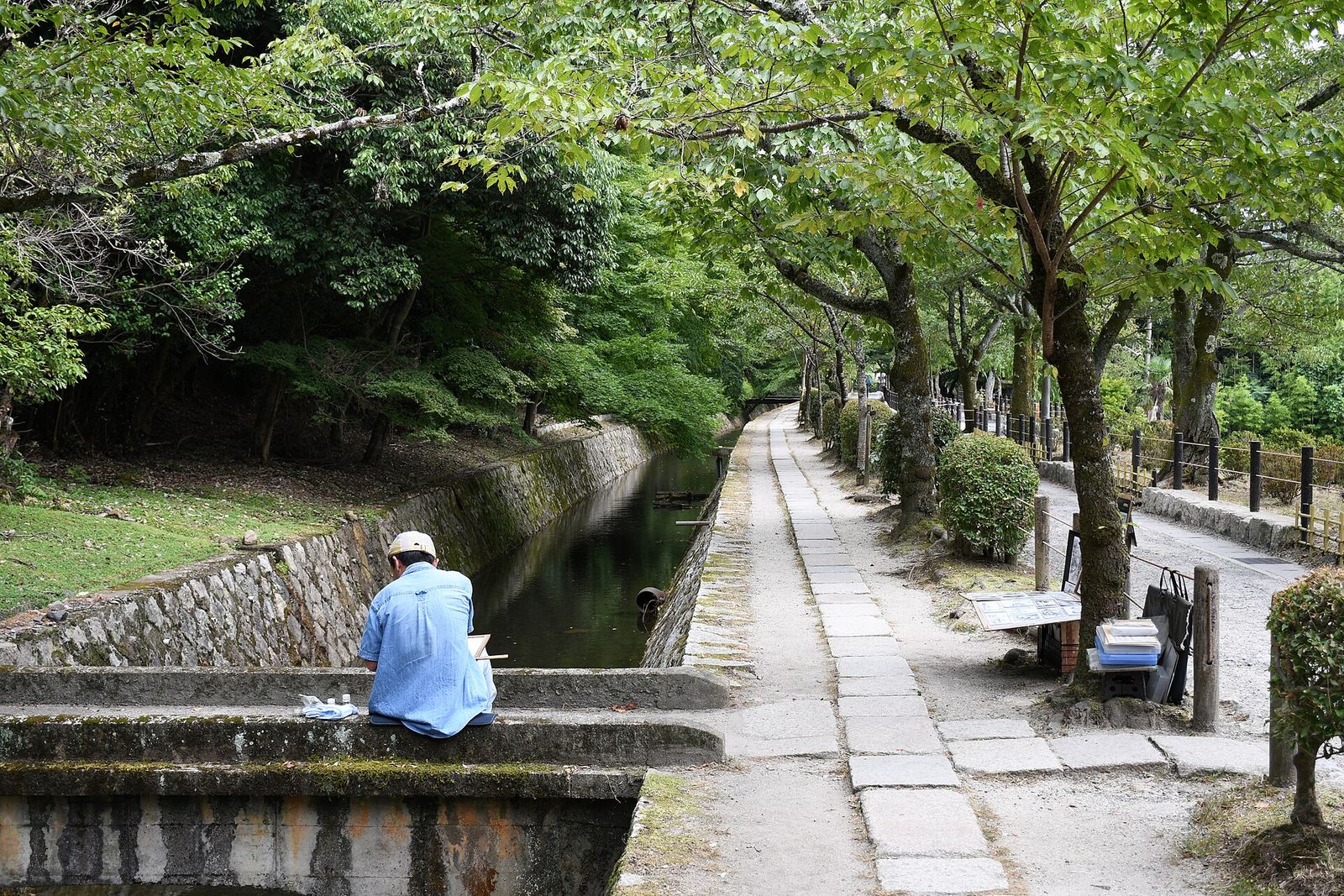
- The Philosopher's Path, a canal-side walk lined with cherry trees, named after the Kyoto University philosopher Nishida Kitaro, who walked it daily.
- Nanzen-ji and the Okazaki area with the Heian Shrine and museums at the southern end.
Allow a relaxed half-day for campus plus this walk.
Visiting the university
The Yoshida campus is generally open for visitors to walk around outdoors, with buildings reserved for students and staff. Please don't enter lecture rooms or labs, and be respectful during exam periods. For prospective students, the university holds open campus events, mainly in summer for Japanese high-school students, and publishes admissions information for international applicants, including some English-taught programmes. Check the university's official website for current events and visitor guidance before you go.
Reaching campus
- Train: Demachiyanagi on the Keihan Line is about 15 to 20 minutes' walk from the clock tower; the Keihan Line runs south through central Kyoto to Gion-shijo.
- Bus: Kyoto city buses stop at Hyakumanben and at the university's main gate (Kyodai-seimon-mae), with services from Kyoto Station and the city centre.
- Bicycle: Kyoto is flat in this area, and renting a bike is how many visitors and nearly all students get around.
From Kyoto Station, allow about 30 to 40 minutes by bus, longer at busy times.
Choosing a base for the visit
- Okazaki and the Heian Shrine area: quiet, close to campus and the eastern temples.
- Downtown around Kawaramachi and Sanjo: lively, full of restaurants, and a short bus or Keihan ride from campus.
- Near Kyoto Station: practical if you're arriving by Shinkansen or heading on to Osaka and Nara, but furthest from Yoshida.
See our guide to where to stay in Kyoto for more on each area, and Kyoto in two days or day trips from Kyoto to plan the rest of the trip.
A few practical tips
- Cherry blossom in early April and autumn leaves in November are beautiful and very busy; book accommodation early for those periods.
- Kyoto summers are hot and humid; start early.
- Carry an IC transit card for buses and trains.
- If the University of Tokyo is on your list too, our University of Tokyo campus tour covers the Hongo campus.
Bloiq is reader-supported. Some links may earn us a commission; it never affects what we write. How we make money.
Cover photo: Soraie8288, CC BY-SA 4.0, via Wikimedia Commons