Home / Travel / Japan · Campus tours
University of Tokyo campus tour: the Akamon, Yasuda Auditorium and Hongo
Visiting the University of Tokyo: the Akamon gate, the ginkgo avenue, Yasuda Auditorium, Sanshiro Pond, the Komaba campus, getting there and where to stay.
The University of Tokyo, usually called Todai, is Japan's oldest national university, founded in 1877. Its main Hongo campus in Bunkyo ward is a surprisingly calm, green island in the middle of the city, with a red Edo-period gate, a ginkgo-lined avenue and a garden pond. It is open for visitors to walk through, which makes it one of the easiest major campuses in Asia to see for yourself. This guide explains what to look for, how the university's campuses are split, and how to fit a visit into a Tokyo trip.
Two campuses you should know about
Todai's structure surprises many overseas families. Undergraduates spend their first two years at the Komaba campus in Meguro ward, in the College of Arts and Sciences, before moving to their chosen faculty. Most of those faculties are at Hongo, the historic main campus. Research institutes are also spread across other sites, including the Kashiwa campus in Chiba.
So a prospective undergraduate's daily life, at first, would be at Komaba, while the landmarks most people picture are at Hongo. If you have time, see both; they are about half an hour apart by train.
Hongo: the landmarks
The Akamon. The "Red Gate" on Hongo-dori is the university's best-known symbol. It was built in 1827 for the estate of the Maeda family, lords of the Kaga domain, whose Tokyo residence occupied this land, and it is a designated Important Cultural Property. It is sometimes closed for maintenance, in which case you'll enter by the Main Gate a short way north.
The ginkgo avenue. From the Main Gate, a straight avenue of ginkgo trees leads to Yasuda Auditorium. The ginkgo leaf is the university's emblem, and in late autumn, usually around late November, the avenue turns bright gold and draws crowds of photographers.
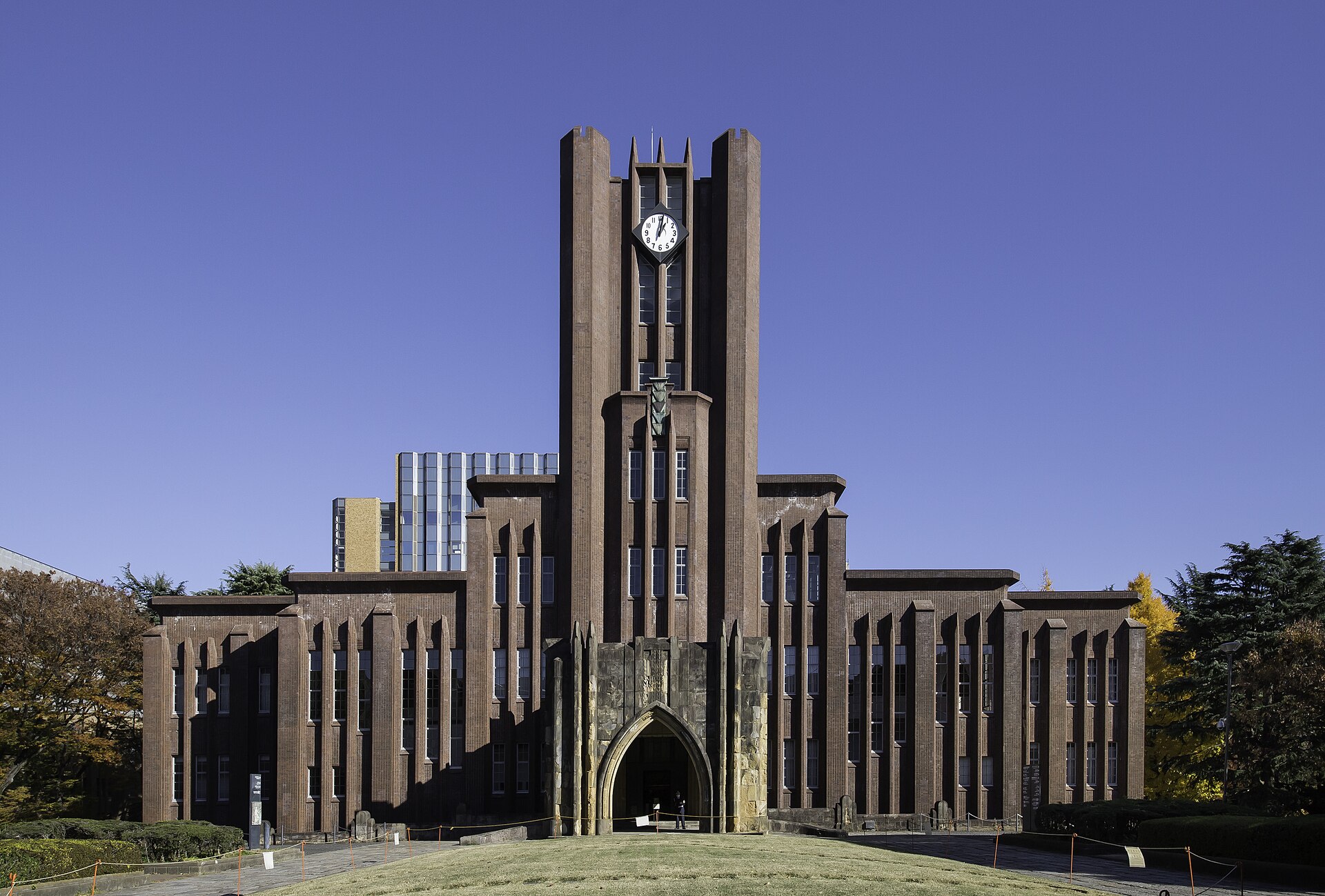
Yasuda Auditorium. The brick auditorium with its tall central clock tower, completed in the 1920s and funded by the businessman Yasuda Zenjiro, is the campus's architectural centrepiece. It is used for ceremonies such as graduation. In 1969 it was the scene of a well-known standoff during Japan's student protest movement.
Sanshiro Pond. Tucked into a wooded hollow, this pond is a surviving part of the Maeda family's garden. Its popular name comes from Natsume Soseki's novel Sanshiro, in which the young hero meets his love interest by the water. Stepping stones, overhanging trees and turtles make it the quietest corner of campus.
The campus buildings. Many of the older faculty buildings share a style of dark brick and Gothic-inspired arches, which gives Hongo a consistent look. The General Library, with a modern underground extension, sits near the pond.
Student life
Hongo sits in an old, academic part of Tokyo. Bookshops, small restaurants and cafés line the streets towards Hongo-sanchome, and university co-op cafeterias on campus are busy at lunch. Ueno Park, with its museums and zoo, is a short walk east, and the old-fashioned lanes of Nezu and Yanaka, with temples and wooden houses, are just beyond.
Clubs and circles, as Japanese student societies are known, are central to social life, from sport and music to volunteering. Two student festivals are open to the public and give a good sense of the university's energy: the May Festival at Hongo in spring and the Komaba Festival in late autumn. Check the dates on the festivals' official sites.
Most Todai students commute or live in private flats and university dormitories spread around the city, rather than on a residential campus. International students can apply for university housing.
How visits work
The Hongo campus is generally open for visitors to walk around outside the buildings, but buildings, classrooms and libraries are for students and staff. Please keep noise down, don't enter labs or lecture rooms, and follow any signs about restricted areas.
For prospective students, the university holds open campus events, mostly in summer and aimed at Japanese high-school students, and publishes admissions information for international applicants, including English-taught undergraduate programmes. Arrangements for group visits and any guided tours change, so check the university's official visitor and admissions pages before you go.
Getting there
Hongo is well served by the Tokyo Metro:
- Hongo-sanchome (Marunouchi Line and Toei Oedo Line): a short walk to the Akamon.
- Todaimae (Namboku Line): close to the north side of campus.
- Nezu (Chiyoda Line): convenient for the east side and the walk to Ueno.
Komaba is right next to Komaba-todaimae station on the Keio Inokashira Line, a few stops from Shibuya.
Where families usually stay
- Ueno: walking distance or one stop from Hongo, with good rail links to the airports. Practical and good value.
- Around Tokyo Station and Ochanomizu: central, a short metro ride from campus, and convenient for day trips by Shinkansen.
- Shibuya: the natural base if you're visiting Komaba as well, with lots going on in the evenings.
Our guide to where to stay in Tokyo compares these areas in more detail, and Tokyo in three days suggests how to fill the rest of your time.
Practical tips
- Go on a weekday during term to see the campus in normal use; weekends are quieter but pleasant for photographs.
- Late November for the ginkgo avenue and early April for cherry blossom are the most beautiful times, and the busiest.
- Combine Hongo with Ueno Park and Yanaka for an easy half-day on foot.
- Carry an IC transit card for the metro and trains.
- Confirm event dates and visitor rules on the university's official site shortly before your trip.
Bloiq is reader-supported. Some links may earn us a commission; it never affects what we write. How we make money.
Cover photo: Kakidai, CC BY-SA 4.0, via Wikimedia Commons