Home / Travel / Japan · Itineraries
Tokyo in 3 days: a first-visit itinerary planned by area
A three-day Tokyo plan grouped by area: Asakusa, Ueno and Skytree, then Meiji Jingu, Shibuya and Shinjuku, then Tsukiji, the Imperial Palace and Tokyo Tower.
This guide contains affiliate links, marked as such. If you book through them, Bloiq may earn a commission at no extra cost to you.
Tokyo is enormous, but three days is enough for a great first visit if you plan by area rather than by list. This itinerary gives each day one part of the city: the older east around Asakusa and Ueno, the busy west from Harajuku to Shinjuku, and the centre around the Imperial Palace. Travel between stops is short, the pace is steady rather than rushed, and it suits first-time visitors of most ages.
Before you start: transport and timing
Get a rechargeable IC transit card, such as Suica or PASMO, on day one, either as a physical card or on your phone. It works on JR trains, the metro and buses across the city, and at many convenience stores and vending machines too. Tokyo's rail network is fast and clearly signed in English, but avoid the morning rush, roughly 7:30 to 9:30 on weekdays, if you can.
Most sights open around 9 or 10 in the morning and many shops stay open into the evening, so early starts pay off at the famous places.
Day 1 morning: Asakusa and Sensō-ji
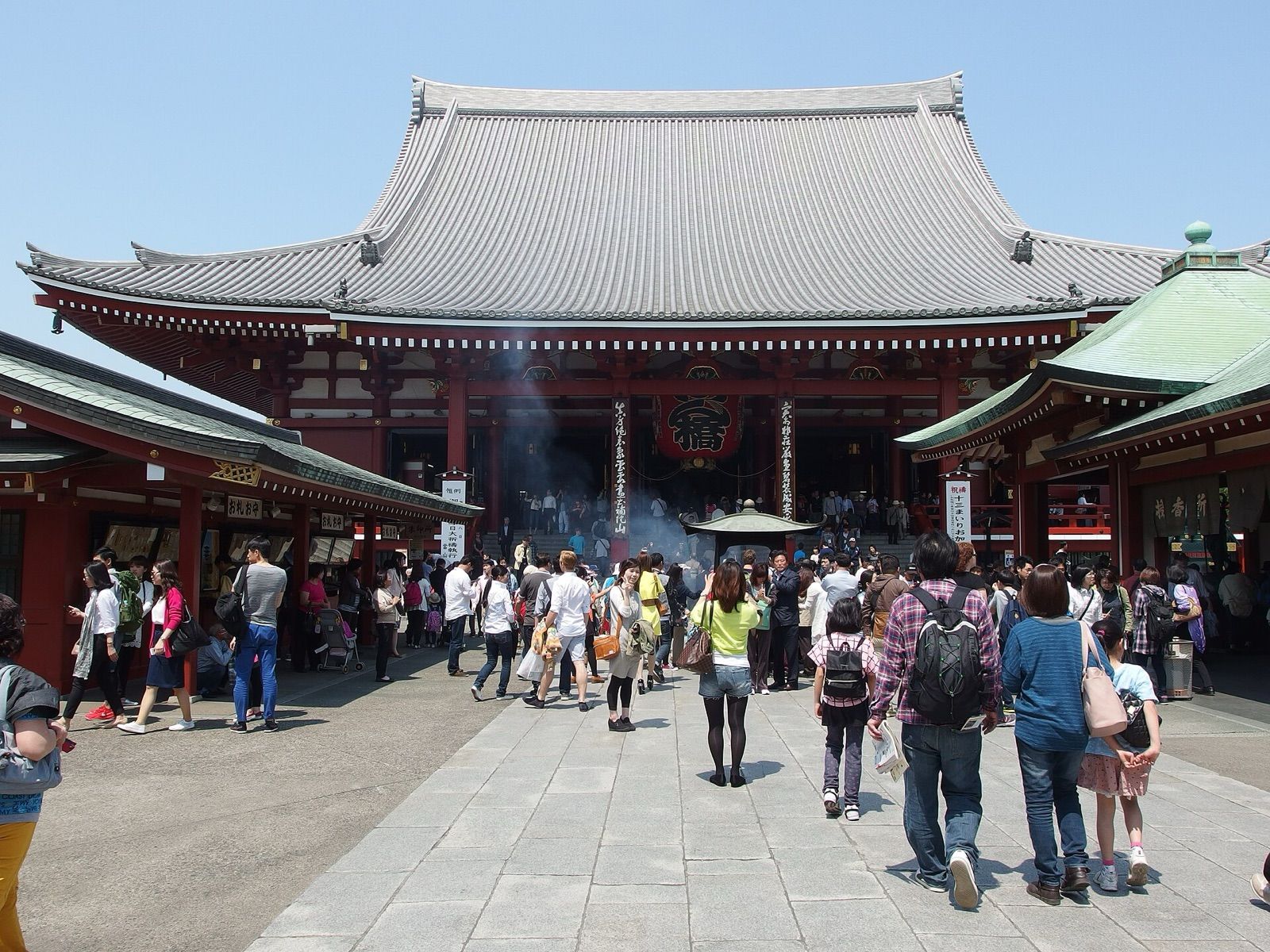
Start in Asakusa at Sensō-ji, Tokyo's oldest temple. Enter through the Kaminarimon, the "Thunder Gate" with its huge red lantern, and walk the Nakamise shopping street, lined with stalls selling snacks and souvenirs, to the main hall and five-storey pagoda. Arrive early: by mid-morning the street is packed. The temple grounds are open around the clock, and the buildings are lit up after dark.
Around the temple, the backstreets of Asakusa have old-style restaurants and craft shops, and the Sumida River is a few minutes' walk away.
Day 1 afternoon and evening: Ueno and Tokyo Skytree
After lunch, take the short metro ride to Ueno Park, a large park with a pond, shrines and several major museums. The Tokyo National Museum is the best introduction to Japanese art and history; allow at least two hours. In late March and early April, the park is one of the city's most popular spots for cherry blossom.
Then head to Tokyo Skytree, the city's tallest structure, a short train ride from Ueno or about 20 minutes' walk from Asakusa across the river. Go up for sunset and watch the lights come on across the city. On clear days, especially in winter, you can see Mount Fuji.
Day 2 morning: Meiji Jingu and Harajuku
Day two is for the west side. From Harajuku station, walk through the forest to Meiji Jingu, the Shinto shrine dedicated to Emperor Meiji and Empress Shōken. The wide gravel paths and huge wooden torii gates feel far from the city, though you're minutes from its busiest streets.
Afterwards, browse the youth fashion of Takeshita Street in Harajuku, then stroll the elegant, tree-lined avenue of Omotesandō, known for its striking modern architecture.
Day 2 afternoon and evening: Shibuya and Shinjuku
Walk or ride one stop south to Shibuya for the famous scramble crossing, where the traffic stops and crowds pour across from every direction at once. For a view from above, several buildings around the station have cafés or observation decks overlooking it. Nearby is the statue of Hachikō, the faithful dog, a popular meeting point.
Spend the evening in Shinjuku, under the neon. Squeeze into one of the tiny bars of Golden Gai, a few narrow lanes of wooden bars that seat only a handful of people each; some charge a cover charge, and a few welcome regulars only. Omoide Yokochō, beside the station, is a lane of small grilled-food counters.
Day 3 morning: Tsukiji and the Imperial Palace
On day three, have a sushi breakfast at the Tsukiji Outer Market. The wholesale fish market moved to Toyosu in 2018, but the outer market's food stalls and shops remain, and it's liveliest in the morning; many places close by early afternoon, and some close on Sundays and certain weekdays.
Then walk or take a short metro ride to the Imperial Palace East Gardens, laid out on the grounds of old Edo Castle, with stone walls, moats and the foundations of the former keep. Entry is free, but the gardens close on some days each week and for events, so check opening days before you go.
Day 3 afternoon and evening: Ginza to Tokyo Tower
Spend the afternoon in nearby Ginza, Tokyo's upmarket shopping district, where the department-store food halls in the basements are worth a look. Then end your trip at Tokyo Tower, the red-and-white lattice tower completed in 1958. Watch it light up after dark from Shiba Park or from the grounds of Zōjō-ji temple at its foot, or ride up for a view over the bay.
What to book ahead
- Observation decks: timed tickets for towers and rooftop decks can sell out for sunset slots, especially at weekends.
- Popular museums and immersive art venues: some sell timed entries weeks ahead.
- Restaurants: well-known sushi and tasting-menu restaurants often take reservations far in advance.
Adapting the plan
- Rain: swap outdoor stops for museums in Ueno, department stores in Ginza, or an indoor art venue.
- With children: add Ueno Zoo on day one, and keep Golden Gai for adults.
- Slower pace: drop Skytree or Tokyo Tower and choose one view, or add Shinjuku Gyoen, a large landscaped garden, on day two.
- More time: our Tokyo four-day itinerary adds Akihabara, the bay area and a day trip.
Where to stay and practical tips
Shinjuku, Shibuya, Ginza and the Tokyo Station area all work well for this plan; Asakusa and Ueno are good value and convenient for day one. Our guide on where to stay in Tokyo compares the areas in detail.
- From the airport: Haneda is much closer to the centre than Narita; both have fast rail links.
- Cash: cards are widely accepted, but some small restaurants and shrines still prefer cash.
- Entry rules: check the current entry requirements for your nationality on the official site before you go.
Bloiq is reader-supported. Some links may earn us a commission; it never affects what we write. How we make money.
Cover photo: Melv_L - MACASR, CC BY-SA 2.0, via Wikimedia Commons
.jpg)