Home / Travel / Japan · Day trips
Day trips from Tokyo: Kamakura, Nikko, Hakone, Mount Fuji and more
How to reach Kamakura, Nikko, Hakone, the Fuji Five Lakes, Yokohama, Kawagoe and Mount Takao from Tokyo, what to see in each and how long to allow.
This guide contains affiliate links, marked as such. If you book through them, Bloiq may earn a commission at no extra cost to you.
Tokyo could keep you busy for weeks, but some of the most memorable days of a trip to Japan are spent just outside it: among seaside temples, in mountain shrines, in hot-spring valleys and in front of Mount Fuji. Trains make almost all of them easy, though journey times range from half an hour to more than two hours each way. Here's how the main options compare, how to get there and how long each one really needs.
The quick comparison
| Trip | Typical travel time | Best for |
|---|---|---|
| Yokohama | 25–40 minutes | Waterfront, Chinatown, an easy half day |
| Kawagoe | 30–60 minutes | Edo-period merchant streets |
| Mount Takao | About 50 minutes | A short mountain walk and a temple |
| Kamakura and Enoshima | About 1 hour | The Great Buddha, temples, the coast |
| Hakone | 1.5–2 hours | Hot springs, a volcanic valley, lake views of Fuji |
| Fuji Five Lakes | About 2 hours | Close-up views of Mount Fuji |
| Nikko | About 2 hours | Ornate shrines, waterfalls, mountain lakes |
Kamakura and Enoshima: temples by the sea
Kamakura was the seat of Japan's first shogunate from the late 12th century, and the small coastal city is still full of temples and shrines.
How to get there: the JR Yokosuka line runs direct from Tokyo Station in about an hour, and the Shonan-Shinjuku line serves Shinjuku and Shibuya. For Enoshima, the Odakyu line runs from Shinjuku.
What to see: the Great Buddha at Kotoku-in, a huge bronze figure cast in the 13th century that has sat in the open air for more than 500 years since its hall was destroyed; Hase-dera, a hillside temple with views over the bay; Tsurugaoka Hachimangu, the city's main shrine, reached along a long approach lined with cherry trees; and the Zen temples of Kita-Kamakura, one stop earlier on the JR line. Komachi-dori, the shopping street near the station, is good for snacks. The little Enoden railway then runs along the coast to Enoshima, a small island with shrines, gardens, sea caves and an observation tower.
How long to allow: a full day for both, or a relaxed day for Kamakura alone. Weekends and the hydrangea season in June are very busy, and queues for the Enoden can be long.
Nikko: shrines in the mountains
Nikko's shrines and temples, set among tall cedars in the hills north of Tokyo, are a UNESCO World Heritage Site. The centrepiece, Nikko Toshogu, is the lavishly decorated shrine of Tokugawa Ieyasu, founder of the Tokugawa shogunate.
How to get there: Tobu limited express trains run from Asakusa to Tobu-Nikko in about two hours, with reserved seats. Alternatively, take the shinkansen to Utsunomiya and change to the JR Nikko line. Buses run from the stations to the shrine area and up into the mountains.
What to see: Toshogu's carved and gilded gates, including the Yomeimon, and its well-known carvings of the three wise monkeys and a sleeping cat; the red Shinkyo bridge; the temple of Rinno-ji; and the quieter Kanmangafuchi gorge with its rows of stone statues. Higher up, a winding road climbs to Lake Chuzenji and Kegon Falls, which drops nearly 100 metres.
How long to allow: a long full day for the shrines, more if you add the lake. Autumn colour arrives around the lake first, usually from October, and the mountain road can be badly congested on autumn weekends. A night in Nikko or nearby Kinugawa Onsen makes it far more relaxed.
Hakone: hot springs and Fuji views
Hakone is a mountain resort area of hot springs, museums and volcanic scenery, and a classic route loops through it by mountain railway, cable car, ropeway and boat.
How to get there: Odakyu Romancecar limited express trains run from Shinjuku to Hakone-Yumoto in about an hour and a half. Or take the shinkansen to Odawara, roughly 35–40 minutes from Tokyo Station, and change there.
What to see: ride the switchback Hakone Tozan Railway up the mountain, then the cable car and ropeway over Owakudani, a steaming volcanic valley where, according to local tradition, eating an egg boiled black in the hot springs adds years to your life. Cross Lake Ashi by sightseeing boat towards Hakone Shrine and its torii gate standing in the water, and look for Mount Fuji on clear days. The Hakone Open-Air Museum is a highlight for art lovers.
What to know: parts of Owakudani and the ropeway can close when volcanic activity or gas levels rise, so check the current status. Regional passes sold by the private railway cover most of the loop.
How long to allow: the full loop fills a day. Hakone is at its best with a night in a ryokan (traditional inn) with its own hot-spring baths.
Mount Fuji and the Fuji Five Lakes
The lakes on Fuji's northern side, especially Lake Kawaguchiko, give the closest everyday views of the mountain. Mount Fuji is a UNESCO World Heritage Site as a sacred place and source of artistic inspiration.
How to get there: a direct limited express from Shinjuku reaches Kawaguchiko in just under two hours on many days; seats are reserved and should be booked ahead. Otherwise, take a JR train to Otsuki and change to the Fujikyu railway. Highway buses from Shinjuku take a similar time, depending on traffic.
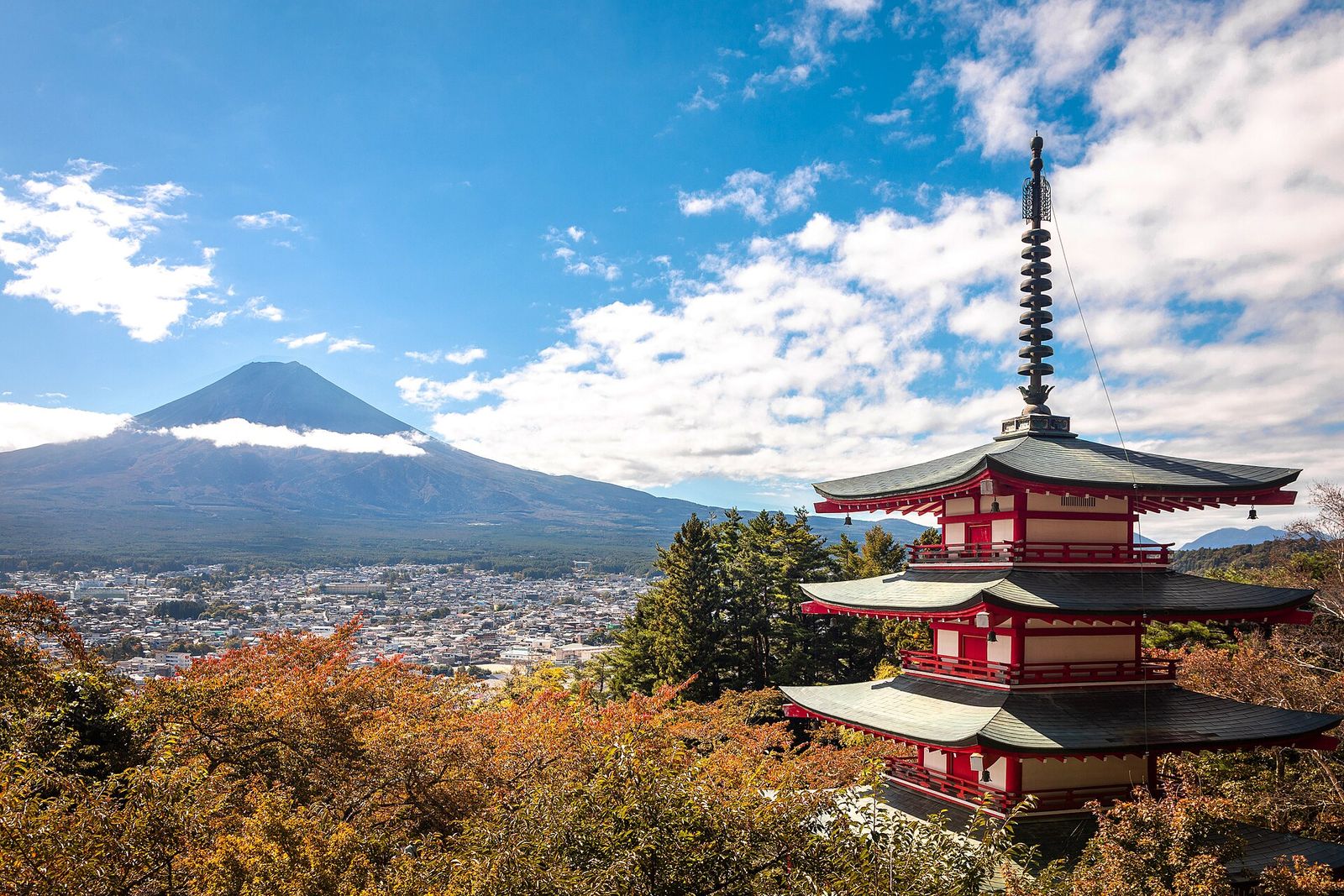
What to see: the Chureito Pagoda above Fujiyoshida, reached by nearly 400 steps, for the classic view of pagoda and mountain; the shores of Lake Kawaguchiko and its seasonal flower gardens; a ropeway up to a viewpoint above the lake; and Oshino Hakkai, a village of clear spring-fed ponds. For much of the year, when the road is open, buses climb to the Fuji Subaru Line Fifth Station, partway up the mountain.
What to know: Fuji hides in cloud on many days, especially from late spring to early autumn; clear mornings in the colder months give the best chance. The official climbing season runs roughly from July to early September, and the trails now have registration, limits and fees, so check the current rules on the official site before you go. Popular photo spots are in residential areas: stay off private property and roads.
How long to allow: a full day, or overnight for sunrise views.
Yokohama: an easy half day
Japan's second-largest city is close enough for an afternoon and evening. Walk the Minato Mirai waterfront and the historic Red Brick Warehouses, eat in Japan's largest Chinatown, and visit Sankeien, a landscape garden with historic buildings moved from Kyoto and elsewhere. JR trains from Tokyo Station take about 25 minutes, and through trains from Shibuya run direct to Minato Mirai.
Kawagoe: a taste of old Edo
Nicknamed "Little Edo", Kawagoe has a street of kurazukuri, merchant houses built with thick clay walls to resist fire, along with the wooden Toki no Kane bell tower and an alley of traditional sweet shops. Kita-in temple has hundreds of carved stone disciples of the Buddha, each with a different expression, and rooms moved from Edo Castle. Tobu Tojo line trains from Ikebukuro take about 30 minutes; the old town is a walk or short bus ride from the station. Allow half a day.
Mount Takao: a mountain walk from Shinjuku
Keio line trains from Shinjuku reach the foot of Mount Takao (599 m) in about 50 minutes. A cable car or chairlift takes you partway up, and paved and forest trails lead past Yakuo-in temple to the summit, where Fuji can appear on clear winter days. It's ideal for a half day, but very crowded on autumn weekends.
Practical tips for day trips
- Use an IC card such as Suica or PASMO on local trains and most private lines. Limited express trains and the shinkansen need a separate or reserved-seat ticket.
- Compare passes with single tickets. Regional passes for Hakone, Nikko and the Fuji area can save money and hassle, but national rail passes have risen sharply and don't cover private railways. Check the current terms.
- Base yourself near the right station: Shinjuku for Hakone, Fuji and Takao, Asakusa for Nikko, and Tokyo Station for Kamakura and the shinkansen. Our guide to where to stay in Tokyo compares the areas.
- Start early, and avoid weekends and national holidays such as Golden Week if you can.
- Travel light. Large suitcases need a reserved space on some shinkansen lines, and luggage-forwarding services and station lockers make overnight trips easier.
- Hot-spring etiquette: wash before you get in, keep towels out of the water, and check the policy on tattoos, which varies between baths.
For the city itself, see our Tokyo four-day itinerary, which leaves room for one of these trips, and if you head west to Kansai, our guide to day trips from Kyoto.
Bloiq is reader-supported. Some links may earn us a commission; it never affects what we write. How we make money.
Cover photo: Supanut Arunoprayote, CC BY 4.0, via Wikimedia Commons