Snow blowers explained: single, two or three stage, battery or gas
How single-stage, two-stage and three-stage snow blowers differ, battery versus gas power, and how to choose a clearing width for your driveway and snowfall.
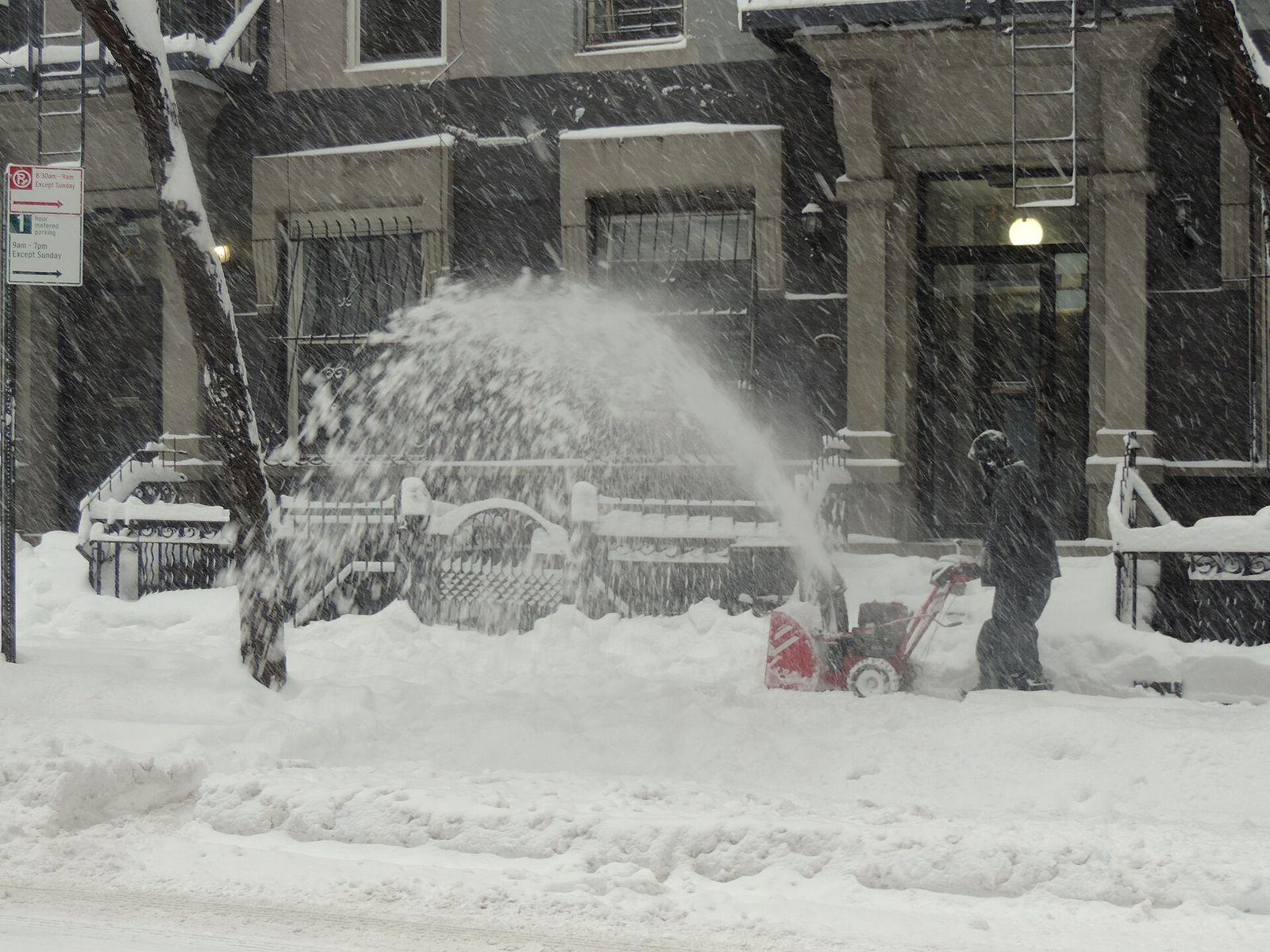
A snow blower turns an hour of shovelling into a few minutes of walking, but only if it suits your snow and your driveway. Buy one that's too small and it chokes on the heavy ridge the plough leaves at the end of the drive. Buy one that's too big and you're wrestling a heavy machine around a short path. The choice comes down to three questions: how many stages, what powers it, and how wide it clears.
How a snow blower works
Every snow blower has an auger at the front, a spiral that gathers snow into the machine. What happens next depends on the design:
- Single-stage: the auger both collects the snow and throws it out through the chute.
- Two-stage: the auger feeds the snow to a separate fast-spinning impeller, which throws it.
- Three-stage: an extra accelerator in the centre of the housing chops and pushes snow into the impeller faster.
Each extra stage adds throwing power and the ability to handle deeper, heavier snow, along with weight and complexity.
Single-stage: light, quick, best on pavement
A single-stage machine's auger is usually made of tough rubber or plastic paddles and spins close to the ground. It scrapes the surface nearly clean, and the contact pulls the machine gently forward, so you push less than you'd expect.
Good for: paved driveways, paths and decks; light to moderate snowfalls, typically up to about 20–30 cm (8–12 in) at a time; users who want something light that's easy to store and to lift over steps.
Consider: because the auger touches the ground, single-stage machines aren't suitable for gravel, which they pick up and throw. They struggle with wet, heavy snow and the dense, icy ridge a plough leaves, and they throw snow a shorter distance than two-stage machines. Most aren't self-propelled.
Two-stage: the all-rounder for real winters
In a two-stage machine, a serrated metal auger breaks up snow and feeds it to the impeller, which throws it well clear of the driveway. The auger housing rides on adjustable skid shoes just above the surface, so the machine can work on gravel when the shoes are raised. Nearly all two-stage machines are self-propelled, with several forward and reverse speeds.
Good for: deep snow, wet and heavy snow, plough ridges, long or wide driveways, gravel, and regions where storms regularly drop more than a single-stage machine can handle.
Consider: two-stage machines are heavier and bigger to store, and because the auger doesn't scrape the surface, they leave a thin layer of snow that may need a shovel or de-icer on paving. Gas models need routine engine maintenance.
Three-stage: more intake speed, more machine
Three-stage machines add a central accelerator that spins faster than the auger, chewing through heavy, wet snow and icy chunks and feeding the impeller more quickly. They're offered on a limited number of models and sit at the heavy end of the range.
Good for: large driveways in areas with frequent heavy, wet snowfalls, and the compacted snow and ice left by ploughs.
Consider: in light, powdery snow the extra stage offers little over a good two-stage machine. Weigh it against a well-powered two-stage model with a wide intake before paying for the extra complexity.
Battery, gas or corded electric
Battery snow blowers have improved quickly. Most are single-stage, but two-stage battery machines are now available on high-voltage tool platforms. They start at the press of a button, are much quieter than gas and need no fuel, oil changes or spark plugs. Runtime depends heavily on the depth and wetness of the snow, and cold reduces battery capacity, so check the rated runtime and area, store batteries indoors, and consider a second battery for bigger storms. If you already own tools on one battery platform, a compatible snow blower can save money on batteries; our guide to cordless tool battery platforms explains how they compare.
Gas machines remain the choice for the largest areas, the heaviest snow and unlimited runtime (just refuel). Many have an electric start that plugs into an outdoor outlet, which is much easier than a pull cord on a cold morning. They need fresh fuel, oil changes and proper summer storage: run the fuel system dry or use fuel stabiliser, as stale fuel is a common cause of hard starting. Run a gas machine only outdoors and never leave it running in a garage or shed, because the exhaust contains carbon monoxide.
Corded electric machines are the lightest and simplest, and suit small paths, decks and short driveways near an outlet. You need an outdoor-rated extension cord of the right gauge, and managing the cord takes some care.
Clearing width and intake height
Clearing width is how wide a path the machine clears in one pass. Intake height is how deep the snow can be before it spills over the top of the housing. Wider isn't always better: a bigger machine is heavier, harder to turn and needs more storage space.
| Your situation | Typical choice | Clearing width |
|---|---|---|
| Paths, decks, short paved drive, light snow | Corded or battery single-stage | about 30–46 cm (12–18 in) |
| One- or two-car paved driveway, moderate snow | Single-stage, battery or gas | about 46–56 cm (18–22 in) |
| Two-car or longer driveway, regular heavy snow | Two-stage | about 56–66 cm (22–26 in) |
| Long, wide, sloped or gravel driveway | Two-stage or three-stage | about 66–76 cm (26–30 in) |
| Rural lanes, very large areas | Large two-stage or three-stage, often tracked | 76 cm (30 in) and up |
These ranges are typical, not rules. If your area often gets wet, heavy snow, or the plough ridge is a regular problem, move up a category.
Rule of thumb: size for your worst regular storm and your plough ridge, not your average snowfall.
Features worth paying for
- Electric start on gas models.
- Easy chute control: a joystick or crank you can reach without stopping, plus an adjustable deflector to control the throw height.
- Trigger or power steering: frees one wheel for tight turns on self-propelled machines, which makes a heavy machine much easier to handle.
- Tracks instead of wheels: better grip on steep or icy driveways, at the cost of manoeuvrability.
- LED headlights and heated grips: useful when you're clearing before dawn.
- Replaceable wear parts: on single-stage machines, the auger paddles and scraper bar; on two-stage machines, skid shoes and shear pins, which are designed to break and protect the gearbox if the auger hits something solid. Keep spares.
- Drift cutters on larger machines help with deep, wind-packed banks.
Safe clearing habits
- Never clear a clogged chute or auger with your hands, even with the engine off. Turn the machine off, wait for all moving parts to stop and use the clean-out tool. Clogged chutes cause many serious hand injuries.
- Walk the area first and remove newspapers, hoses, toys and doormats, which can jam the auger or be thrown.
- Never aim the chute at people, pets, cars, windows or the road.
- Wear boots with good grip and avoid loose scarves or cords near moving parts.
- Keep children well away while the machine is running.
Before winter, pack your car too: our winter car kit checklist covers what to carry.
The short version
- Single-stage for paved surfaces and light to moderate snow.
- Two-stage for deep or heavy snow, plough ridges, gravel and long driveways.
- Three-stage only if heavy, wet snow is a regular problem on a large area.
- Battery for quiet, low-maintenance clearing of small to medium driveways; gas for the biggest jobs and longest runtime.
- Choose a clearing width that fits your driveway and your storage space, then add features that make it easy to use in the dark and cold.
Bloiq is reader-supported. Some links may earn us a commission; it never affects what we write. How we make money.
Cover photo: Jim.henderson, CC BY 3.0, via Wikimedia Commons