Washing machines: front-load vs top-load, capacity and spin speed
How front-loaders and top-loaders differ, how much drum capacity you need, what spin speed really does, and how to read washing machine efficiency labels.
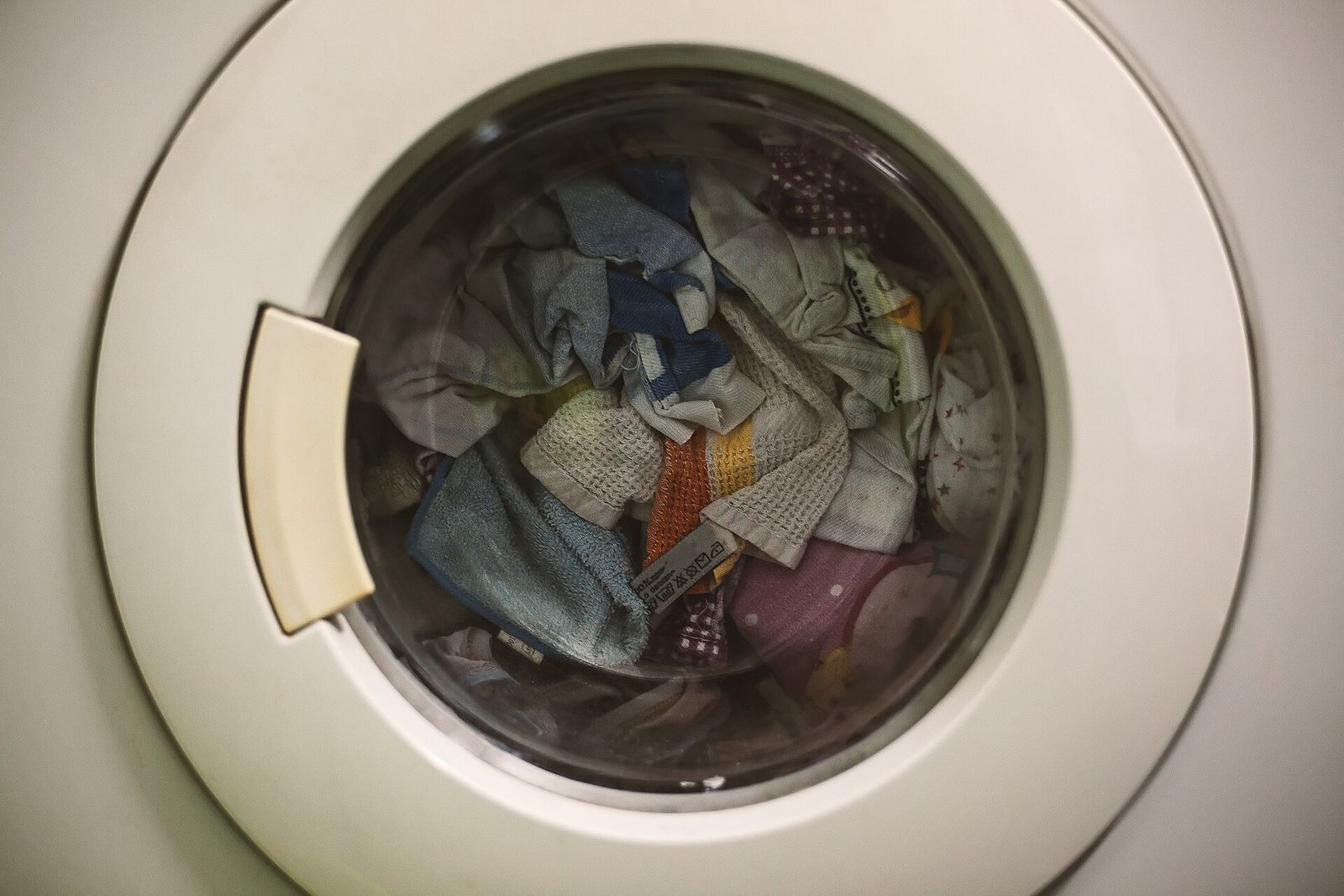
A washing machine runs several times a week for a decade or more, so small differences in water use, spin speed and capacity add up. Spec sheets are full of numbers, from kilograms and cubic feet to rpm and energy classes, and the most basic choice, loading from the front or the top, affects everything else. This guide explains what those numbers mean and what to measure before you buy.
Front-load or top-load: the main differences
Front-loaders have a drum on a horizontal axis that lifts and drops the laundry through a small amount of water. Top-loaders have a vertical drum that moves clothes with either a central post or a low plate at the bottom.
| Front-load | Top-load (impeller) | Top-load (agitator) | |
|---|---|---|---|
| Water use | Lowest | Low | Highest |
| Treatment of fabrics | Gentle | Gentle, but items can tangle | Toughest on clothes |
| Typical spin speed | Highest | Medium | Lower |
| Cycle length | Longest | Medium | Shortest |
| Loading | Bend down (or use a pedestal) | From above | From above |
| Fits under a worktop or stacks | Yes | No | No |
Front-loaders are the norm in Europe and much of the world, and they usually lead on efficiency. Their weak point is the rubber door seal, which can trap moisture and cause odours if it isn't left to dry.
Top-loaders remain popular in North America. They are easier on the back, and many let you add a forgotten sock mid-cycle, though some front-loaders now have a small add-garment door too.
Agitators, impellers and narrow European top-loaders
"Top-load" covers three quite different designs:
- Agitator models have a tall central post that twists the clothes around. They are fast and robust, but they use more water and are harder on fabrics.
- Impeller or high-efficiency (HE) models replace the post with a low wash plate. They use much less water and hold bulky items more easily, but large loads can tangle, and they need low-sudsing HE detergent.
- European top-loaders are narrow machines, often around 40–45 cm wide, with a horizontal drum reached through flaps at the top. They work like a front-loader and suit tight spaces where a door can't swing open.
Capacity: kilograms and cubic feet
In Europe, the UK and much of the world, capacity is the maximum dry weight of cotton laundry the machine can wash, in kilograms. Full-size models typically range from about 7 to 10 kg, with larger ones above that. The rating applies to the cotton programme; synthetics, delicates and wool programmes accept much less, often around half or less.
In North America, capacity is quoted as drum volume in cubic feet. Full-size machines are commonly somewhere around 4 to 5.5 cu ft, while compact 24-inch models are closer to 2 to 2.5 cu ft. Because the two systems measure different things, compare models within the same market rather than converting.
Rule of thumb: about 6–7 kg suits one or two people, 8–9 kg a family of three or four, and 10 kg or more a larger family or anyone who washes bulky bedding often. Treat the rated capacity as a maximum: laundry needs room to tumble, and an overloaded drum washes and rinses poorly.
If you want to wash duvets at home, check the manufacturer's guidance on the largest size the drum can take.
Spin speed: what the rpm figure means
Spin speed, in revolutions per minute, decides how much water is left in the clothes at the end. Front-loaders commonly offer maximum speeds of around 1,000 to 1,600 rpm, while top-loaders generally spin more slowly.
- Faster spinning leaves less water behind, so clothes dry faster on a line and tumble drying takes less time and energy.
- The gains shrink at the top end. The step from 1,000 to 1,400 rpm makes a clear difference; the extra few hundred rpm beyond that matter less for most households.
- High speeds crease more and aren't suitable for delicates, which is why programmes choose lower speeds automatically. You can always turn the speed down, but not above the maximum.
On the EU and UK label, the spin-drying efficiency class runs from A to G. Class A leaves the least moisture in the laundry and is the most useful figure if you tumble dry.
Reading efficiency labels
EU and UK: since 2021, washing machines carry a rescaled A–G energy label, so a model that was "A+++" on the old label may now sit several classes lower. Compare models on the same version of the label. It shows:
- the energy class and energy use per 100 cycles
- the rated capacity in kilograms
- water use per cycle, in litres
- the duration of the eco 40–60 programme
- the spin-drying efficiency class
- the noise during spinning in dB(A), with a noise class from A to D
All figures are measured on the eco 40–60 programme, which washes normally soiled cotton labelled for 40 °C or 60 °C together in the same cycle. It often takes three hours or more. That's by design: it saves energy with lower temperatures and longer soaking.
North America: look for the Energy Star label, which marks models that meet efficiency criteria, and the EnergyGuide label (US) or EnerGuide label (Canada), which estimate annual energy use. Detailed specifications list an energy factor (higher is better) and a water factor (lower is better).
Whatever the label says, heating water uses most of the energy in a typical warm wash, so washing at lower temperatures saves more than any feature. Modern detergents are designed to clean well at 30–40 °C.
Features worth having
- Inverter or brushless motor: often quieter and more efficient; some are direct drive, with no belt to wear.
- Automatic dosing: a detergent reservoir that doses each load, avoiding the residue and odours that come with overdosing.
- Quick and half-load programmes: useful for small or lightly soiled loads.
- Steam or allergy programmes: freshen clothes and help with some allergens; check how long they take.
- Delay start and app control: run the machine overnight on an off-peak tariff or finish a cycle just before you get home.
- Washer-dryers: save space, but they dry a smaller load than they wash and take a long time to do both, so you'll often dry in two batches.
In a hard-water area, limescale builds up in the heater and drum. Our guide to water softeners and whole-house filters explains water hardness, and if you dry laundry indoors, a dehumidifier helps.
Size, installation and noise
- Measure the space: height, width and depth, plus room behind for hoses and in front for the door to open fully. European models are typically about 60 cm wide and 85 cm high to fit under a worktop; North American full-size models are often about 69 cm (27 in) wide.
- Stacking: a front-loader can usually carry a matching dryer on top with the manufacturer's stacking kit.
- Water connections: many European machines take only a cold supply and heat water themselves; North American machines usually connect to both hot and cold.
- Remove the transit bolts that hold the drum still during delivery before first use. Leaving them in can cause violent shaking and damage.
- Level the machine and place it on a solid floor. Spin noise and vibration travel further through wooden floors and upstairs rooms.
- Check the hoses periodically and replace any that are cracked or bulging. On upper floors, a drip tray adds protection against leaks.
The short version
- Choose a front-loader for the lowest water use, fastest spin and under-counter or stacked installation; choose a top-loader if you want to load without bending, preferably an impeller (HE) model.
- Size the drum to your household, around 7–9 kg for most families, or compare cubic feet within your market.
- Look for a maximum spin of 1,200–1,400 rpm and a good spin-drying class if you tumble dry.
- Compare energy labels on the same scale, and check the eco programme's water use and duration.
- Measure the space, door swing and hose connections, and remember to remove the transit bolts.
- With a front-loader, leave the door and detergent drawer ajar after washing, and clean the filter as the manual recommends.
Bloiq is reader-supported. Some links may earn us a commission; it never affects what we write. How we make money.
Cover photo: Dejan Krsmanovic, CC BY 2.0, via Wikimedia Commons