Clothes dryers: vented, condenser and heat-pump dryers compared
How vented, condenser and heat-pump tumble dryers work, what each costs to run and needs to install, how to choose a capacity, and which features are worth having.
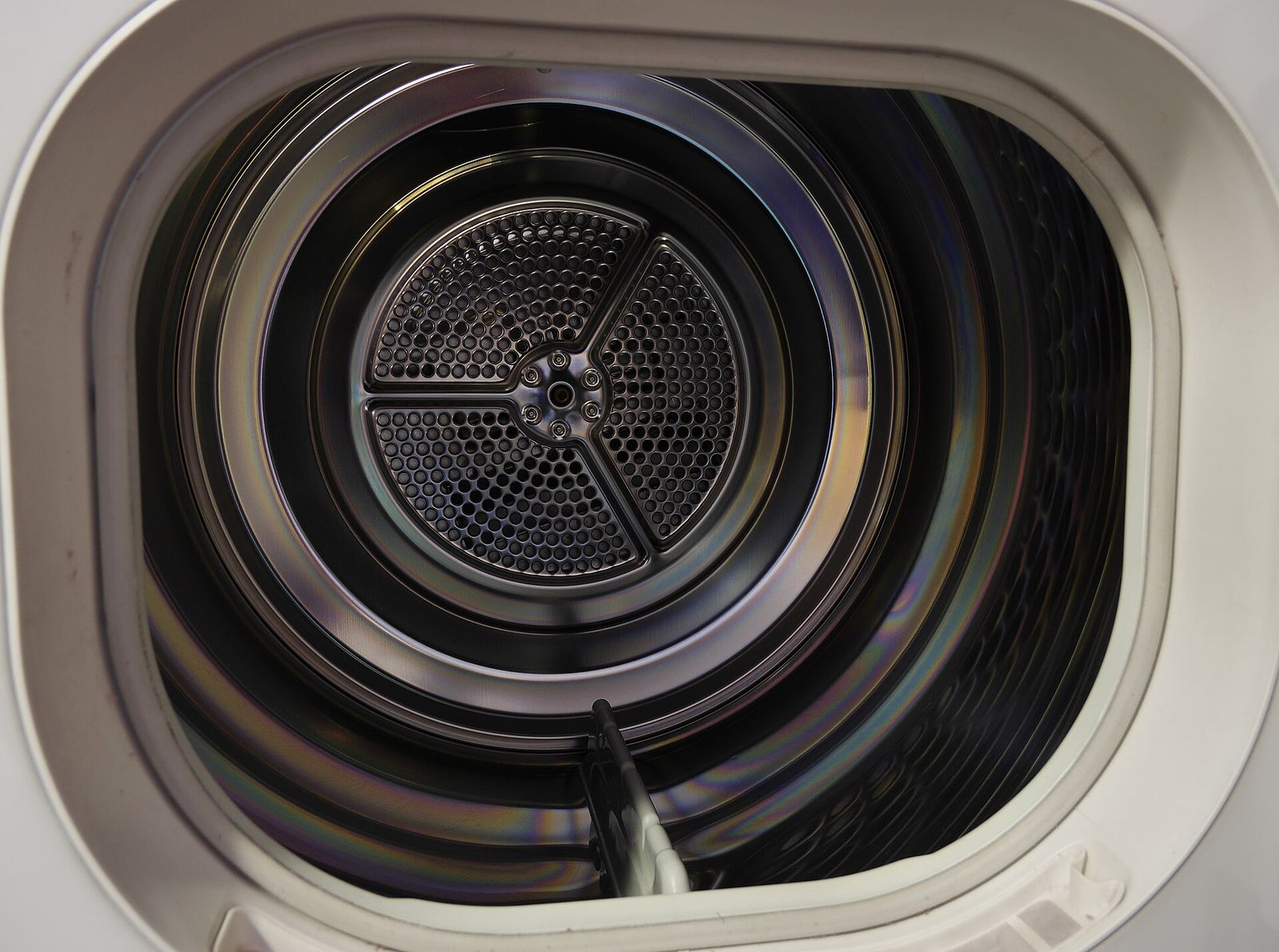
A tumble dryer can be one of the most energy-hungry appliances in a home, so the type you choose decides much of what it costs to run for the next ten years or more. It also decides where it can go: some dryers need a hole in an outside wall, others a drain or a water tank you empty. This guide explains how vented, condenser and heat-pump dryers differ, and what to check before you buy.
How a tumble dryer works
Every tumble dryer does the same three things: it heats air, passes it through tumbling wet laundry so it picks up moisture, and then gets rid of that moisture. The three types differ in that last step, and in how they heat the air.
- Vented dryers blow the warm, damp air out of the building through a duct.
- Condenser dryers cool the damp air inside the machine so the water condenses out, then reheat the same air and send it back through the drum.
- Heat-pump dryers also recirculate the air, but use a heat pump that works like a refrigerator: one side chills the damp air so the water condenses, and the other uses the heat collected there to warm the air again, recycling much of the heat instead of throwing it away.
Vented, condenser and heat pump at a glance
| Vented | Condenser | Heat pump | |
|---|---|---|---|
| Energy use | High | High | Low, often around half or less |
| Purchase price | Lowest | Medium | Highest |
| Drying time | Shortest | Medium | Longest |
| Needs | An outside vent | A drain or water tank | A drain or water tank |
| Effect on the room | Little, if vented properly | Adds warmth and some humidity | Little |
| Drying temperature | Hot | Hot | Lower, gentler on fabrics |
Vented dryers: simple and fast
Vented dryers are the simplest design: a heater, a fan and a drum. They dry quickly, are usually the cheapest to buy and have the fewest parts to go wrong. In North America, most full-size dryers are vented, powered either by electricity or by natural gas or propane.
The catch is the vent. The dryer must be near an outside wall or window, connected by a duct that should be as short and straight as possible. Long runs and tight bends slow drying, waste energy and let lint build up. Use rigid or semi-rigid metal ducting where the manufacturer specifies it, rather than thin plastic or foil hose, and never vent a dryer into a loft, wall cavity or room. A gas dryer must always vent outdoors, and installation is a job for a qualified installer.
Condenser dryers: no vent needed
A condenser dryer can go anywhere with a power socket, because it doesn't need a duct. The water it removes collects in a tank, usually in the top or the base, which you empty after every load or two. Most models also have a hose so you can plumb them into the drain beside a washing machine.
Condenser dryers use about as much energy as vented models, sometimes slightly more. They release some warmth and a little humidity into the room, so a small, closed cupboard can get hot and stuffy. They need a bit more care than vented models: as well as the lint filter, many have a condenser unit that needs rinsing every few weeks of use.
Heat-pump dryers: the efficient choice
Heat-pump dryers cost more to buy, but they use far less energy than either of the other types, often around half or less for the same load. They dry at lower temperatures, which is gentler on clothes and reduces shrinkage, and like condenser models they need no vent.
The trade-offs:
- Longer cycles. A full cotton load can take noticeably longer than in a vented dryer. Quicker programmes exist but use more energy.
- Room temperature matters. Heat pumps work best in a heated space. Check the manufacturer's ambient temperature range before putting one in an unheated garage or outbuilding.
- Filters to clean. Most have a second filter in front of the heat exchanger as well as the door filter; keeping both clear maintains performance.
Rule of thumb: if you tumble dry several loads a week, a heat pump's lower running costs usually more than make up for its higher price over the machine's life. If you only use a dryer occasionally, a simpler model may cost less overall.
Energy labels and the rules where you live
In the EU, efficiency rules that took effect in July 2025 mean that new tumble dryers placed on the market must reach a level that, in practice, only heat-pump models meet. They carry a rescaled A–G energy label, so you may still see older stock with the previous A+++ to D label; compare models on the same version. Rules differ elsewhere, and vented and condenser models remain on sale in many markets, including North America. Check the current rules and labels where you live.
In North America, the Energy Star label marks efficient models, including heat-pump and "hybrid" heat-pump dryers. Ventless heat-pump models are increasingly common, especially in compact 24-inch sizes and all-in-one washer-dryers for apartments.
Whatever the label says, the biggest saving comes before the dryer starts. A washing machine that spins faster leaves less water to remove: our guide to washing machines explains spin speeds and the spin-drying efficiency class.
Capacity: matching your washer
In Europe and the UK, capacity is the maximum dry weight of cotton laundry, in kilograms; many households choose 8 or 9 kg. Laundry needs room to tumble, so choose a dryer at least as large as your washing machine, and ideally a kilogram or so larger. In North America, capacity is quoted in cubic feet, and full-size dryers are usually around 7 cu ft or more, sized to match a full-size washer.
Synthetic and delicate programmes accept much smaller loads than the cotton rating. Overloading slows drying, increases creasing and leaves damp patches.
Features worth having
- Sensor drying: moisture sensors stop the cycle when the laundry reaches the dryness you selected. They save energy and prevent over-drying, and are worth far more than a timer-only control.
- Anti-crease tumbling: the drum turns occasionally after the cycle ends if you can't unload straight away.
- Reversing drum: changes direction to reduce tangling of sheets and large items.
- Drain hose option: avoids emptying a water tank on condenser and heat-pump models.
- Delay start and smart controls: useful for off-peak electricity tariffs, but don't leave a dryer running unattended overnight or when you go out.
- Wool and delicate programmes: check whether a wool programme is approved by a recognised wool-care scheme if you plan to dry knitwear.
Installation, safety and maintenance
- Measure the space, including room behind for hoses or ducts and in front for the door. Many European dryers are about 60 cm wide and can stack on a front-loading washer of the same width using the manufacturer's stacking kit.
- Check the power supply. European dryers use a standard socket. In North America, electric full-size dryers need a dedicated 240-volt circuit, and gas dryers need a gas connection installed by a professional.
- Clean the lint filter after every load. Lint is flammable, and a clogged filter also lengthens drying times. Have vent ducts checked and cleaned periodically.
- Follow the care labels. Some items, such as rubber-backed mats, shouldn't be tumble dried, and laundry soiled with oil or flammable substances needs to be washed properly first; check the manual's warnings.
- Ventilate the room when using a condenser model in a small space. If you dry indoors without a tumble dryer, a dehumidifier helps clothes dry faster and protects walls from condensation.
The short version
- Choose a heat-pump dryer if you dry often: it costs more to buy but much less to run, and needs no vent.
- Choose a vented dryer for speed and simplicity if you can vent it directly outdoors and dry only occasionally.
- Choose a condenser dryer only if a heat pump doesn't fit your budget and you can't vent outside.
- Match capacity to your washer, or a little larger.
- Insist on sensor drying, and check the room-temperature range for heat-pump models.
- Clean the lint filter every time, and keep ducts and condenser filters clear.
Bloiq is reader-supported. Some links may earn us a commission; it never affects what we write. How we make money.
Cover photo: Santeri Viinamäki, CC BY-SA 4.0, via Wikimedia Commons