Air purifiers explained: CADR, true HEPA and air changes per hour
How to size an air purifier using CADR and air changes per hour, what true HEPA means, how to budget for filters and why ozone-producing models are best avoided.
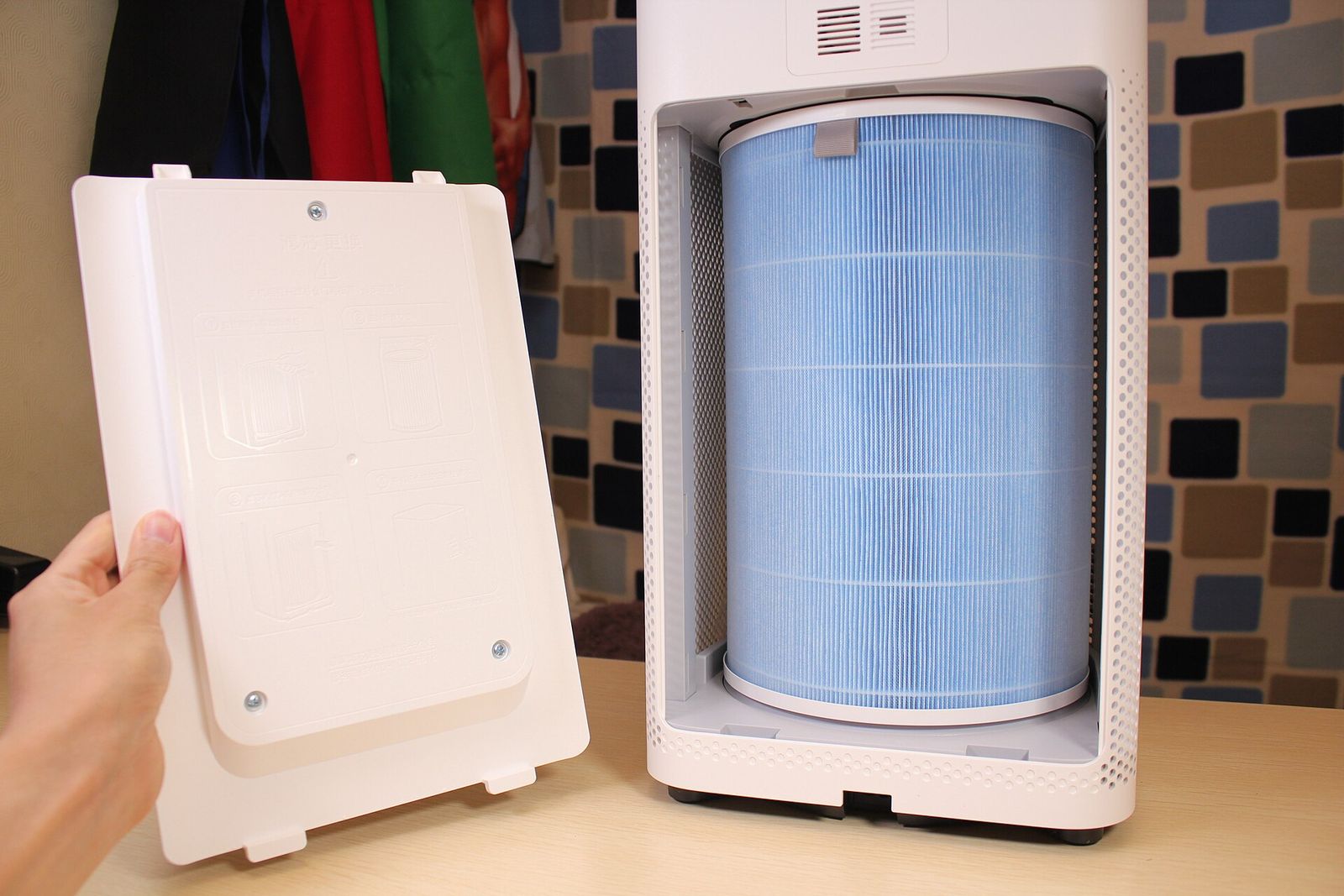
A portable air purifier can reduce pollen, pet dander, dust and smoke particles in a room, which many people with allergies notice most. But the boxes are full of claims that are hard to compare: room sizes that seem too generous, "HEPA-type" filters, ionisers and a clean-air rating that's often hidden in the small print. This guide explains the numbers that matter and how to size a purifier for your room.
What an air purifier can and can't do
Most portable air purifiers pull room air through a filter with a fan. A good one removes a large share of airborne particles: dust, pollen, pet dander, mould spores and smoke. A purifier with a substantial activated-carbon filter can also reduce some odours and gases.
What a purifier won't do:
- remove dust that has already settled on floors and furniture (regular cleaning still matters);
- deal with carbon monoxide or radon, which need detectors and specialist remedies;
- replace ventilation or fixing the source of a problem, such as damp or an unvented gas appliance.
CADR: the most useful number on the box
Clean air delivery rate (CADR) is a standardised measure of how much filtered air a purifier delivers, tested under the AHAM AC-1 method used widely in North America. It is usually given as three figures:
- Smoke (the smallest particles),
- Dust,
- Pollen (the largest).
In North America CADR is quoted in cubic feet per minute (cfm); elsewhere you may see cubic metres per hour (m³/h). One cfm is about 1.7 m³/h. CADR accounts for both airflow and filter efficiency, so it tells you more than fan speed or filter grade alone.
CADR is measured at the highest fan setting. If you plan to run the purifier on a quieter setting most of the time, the effective CADR will be lower.
Room size and air changes per hour
Air changes per hour (ACH) is how many times the purifier can, in theory, filter the whole volume of air in a room each hour. It links CADR to your room:
ACH = CADR (m³/h) ÷ room volume (m³). Room volume is floor area × ceiling height. For example, a 20 m² room with a 2.4 m ceiling holds 48 m³; a purifier with a CADR of 240 m³/h gives about 5 air changes per hour. In imperial units: ACH = CADR (cfm) × 60 ÷ (area in ft² × ceiling height in ft).
For allergy relief, many specialists suggest aiming for around 4 to 5 air changes per hour. A common North American rule of thumb from AHAM is that the smoke CADR in cfm should be at least two-thirds of the room's floor area in square feet, which works out to roughly this range for a standard 8-foot ceiling.
This is where marketing claims need a closer look. A "suitable for rooms up to 100 m²" claim may be based on just one or two air changes per hour, or even on how much air the purifier moves in an hour rather than how well it cleans it. Work out the ACH for your room from the CADR, and size up if you want to run the purifier quietly.
True HEPA and other filters
HEPA stands for high-efficiency particulate air. The terms to know:
- True HEPA in North America generally means a filter that captures 99.97% of particles 0.3 microns in size, the particle size hardest for filters to catch.
- In Europe, the EN 1822 standard grades filters; H13 captures at least 99.95% and H14 at least 99.995% of particles at their most penetrating size.
- "HEPA-type", "HEPA-like" or "99% HEPA" are marketing terms without a guaranteed standard. They may perform well or poorly; the CADR is a better guide.
Most purifiers combine several layers:
- a pre-filter that catches hair and large dust, often washable, and protects the main filter;
- the HEPA filter for fine particles;
- an activated-carbon filter for odours and some gases. A thin carbon-coated sheet has limited capacity; purifiers aimed at odours and smoke smells use a thicker bed of carbon granules.
Filter costs and replacement
The purchase price is only part of the cost. Replacement filters typically need changing every 6 to 12 months, depending on use and how polluted your air is, and a set can cost a significant fraction of the purifier's price.
Before buying:
- check the price and availability of genuine replacement filters;
- note whether the HEPA and carbon filters are combined (one replacement) or separate (replace only what's worn);
- be aware that many "change filter" indicators are timers, not sensors, so they may not reflect actual filter condition.
Also consider electricity use. Purifiers often run for many hours a day. In North America, ENERGY STAR certified models meet efficiency criteria based on CADR per watt.
Ozone: why to avoid ozone-producing purifiers
Ozone is a lung irritant, and adding it to indoor air is not a good way to clean it. Some technologies can produce ozone:
- Ozone generators, sometimes sold as air purifiers, deliberately produce ozone. Health agencies, including the US Environmental Protection Agency, advise against using them in occupied spaces.
- Ionisers and electrostatic precipitators can produce small amounts of ozone as a by-product.
- Some UV-C features can produce ozone if not designed to prevent it.
A helpful indicator is certification by the California Air Resources Board (CARB), which limits ozone emissions from air cleaning devices sold in California to 0.050 parts per million. Many purifiers sold elsewhere also carry this certification. If a model has an ioniser or similar feature, check whether you can switch it off, and look for purifiers that rely on mechanical filtration.
Noise, placement and practical features
- Noise: check the decibel figure at each fan speed, especially for bedrooms. A larger purifier on a low setting is often quieter than a small one on high.
- Placement: keep it a little away from walls and furniture so air can flow freely in and out, and close doors to the room for best results.
- Air quality sensors and an auto mode adjust fan speed automatically; basic sensors mainly detect particles.
- Filter access: filters should be easy to change without tools.
Humidity also affects comfort and allergens; see our guides to humidifiers and dehumidifiers.
The short version
- Use the smoke CADR to compare purifiers, not room-size claims.
- Calculate air changes per hour for your room and aim for about 4–5.
- Look for true HEPA (or H13 and above), not "HEPA-type".
- Choose a thicker activated-carbon filter if odours matter.
- Price the replacement filters over a few years.
- Avoid ozone generators; look for CARB certification or purely mechanical filtration.
Bloiq is reader-supported. Some links may earn us a commission; it never affects what we write. How we make money.