Ultrasonic, evaporative or steam: choosing the right humidifier
How the three main humidifier types compare on output, noise, white dust, running costs and cleaning, plus the indoor humidity level to aim for.
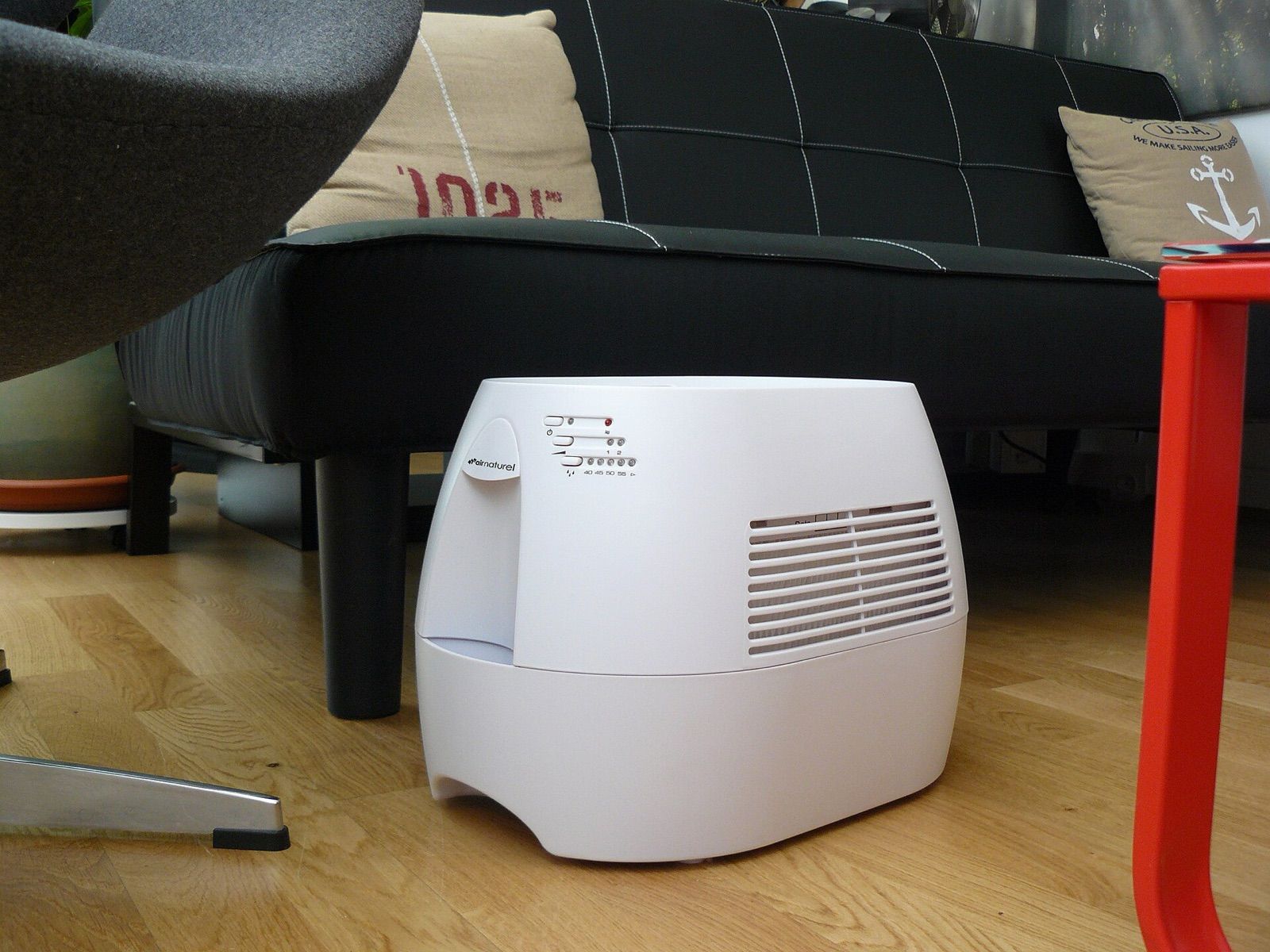
Heated indoor air in winter can become very dry, which many people notice as dry skin, irritated eyes, static shocks and a scratchy throat in the morning. A humidifier adds moisture back, but the three main types work very differently, and the wrong choice can leave white dust on your furniture or make cleaning a chore. This guide compares ultrasonic, evaporative and steam humidifiers, explains how to size one for your room, and covers the humidity level to aim for.
What humidity to aim for
Relative humidity (RH) is the amount of water vapour in the air compared with the most it could hold at that temperature. Most health and building agencies suggest keeping indoor RH somewhere around 30–50%.
- Below about 30%: air feels dry and static builds up.
- Above about 50–60%: dust mites thrive, and condensation can lead to mould on cold walls and window frames.
In very cold weather, you may need to stay at the lower end of the range. Warm, moist indoor air condenses on cold glass, so if your windows are streaming in the morning, turn the humidifier down.
Rule of thumb: aim for roughly 40% in winter, and use a separate hygrometer to check. More humidity is not better.
An inexpensive digital hygrometer placed away from the humidifier gives a more honest reading than a built-in sensor, which sits in the damp air right next to the machine.
Ultrasonic humidifiers
A small plate vibrating at ultrasonic frequencies breaks water into a fine, cool mist that you can see drifting from the nozzle.
- Strengths: very quiet, low energy use, often compact and inexpensive, and no wick to replace.
- Weaknesses: anything dissolved in the water is released into the air with the mist. With hard tap water, minerals settle as a fine white dust on furniture and electronics. Bacteria or mould growing in a neglected tank can also be dispersed.
- How to avoid white dust: use distilled or demineralised water, or a model with a demineralisation cartridge. Cartridges help but need replacing, and their effectiveness depends on your water hardness.
Ultrasonic models suit bedrooms and offices where silence matters, provided you are willing to clean them often and, in hard-water areas, buy distilled water.
Evaporative humidifiers
A fan blows air through a wet wick or filter. Water evaporates from the wick, and the moisture enters the room as invisible vapour.
- Strengths: no white dust, because minerals stay behind in the wick. They are also self-regulating: as the air gets more humid, evaporation slows, so they are less likely to over-humidify a room.
- Weaknesses: audible fan noise, especially on high settings, and wicks that harden with scale and need replacing periodically. Output drops as the wick clogs.
- Good for: living areas, larger rooms, and homes with hard water.
Larger evaporative units can move a lot of water for their energy use, which makes them a common choice for open-plan spaces.
Steam (warm-mist) humidifiers
A heating element boils water, and the steam cools slightly before it leaves the unit as warm mist.
- Strengths: boiling kills most microbes in the water, and minerals stay behind as scale inside the unit rather than dust in the room. They are usually quiet apart from gentle bubbling.
- Weaknesses: much higher electricity use than ultrasonic or evaporative models, typically a few hundred watts while running. Scale builds up quickly in hard-water areas, and the hot water and steam are a scald risk, which makes them a poor choice around young children and pets.
Some "hybrid" models combine an ultrasonic mist with gentle heating. They reduce, but do not remove, the white-dust issue.
Quick comparison
| Type | Noise | Energy use | White dust | Main upkeep |
|---|---|---|---|---|
| Ultrasonic | Very quiet | Low | Yes, with hard water | Frequent tank cleaning; distilled water |
| Evaporative | Fan noise | Low to moderate | No | Wick replacement; tank cleaning |
| Steam | Quiet bubbling | High | No | Descaling; scald risk |
Sizing: output and room size
Humidifiers are rated by output, usually in millilitres per hour or litres per day (US listings often use gallons per day), and by a suggested room size.
- Small bedroom or office: a small unit, often in the region of 200–300 mL per hour.
- Large bedroom or living room: usually 300–500 mL per hour or more.
- Open-plan spaces or several rooms: a large console unit, or a whole-home humidifier fitted to a forced-air furnace.
Treat room-size claims as optimistic. They assume ordinary ceiling heights and a reasonably airtight room. High ceilings, open stairwells, draughty windows and very cold weather all mean you need more output.
Tank size decides how often you refill. A 4-litre tank running at 300 mL per hour lasts around 13 hours, roughly one night plus an evening. Check that the model switches off automatically when the tank runs dry.
Cleaning: the part you can't skip
Standing water grows bacteria and mould. Manufacturers' instructions vary, but a typical routine looks like this:
- Daily: empty the tank, rinse it, let it air-dry if possible, and refill with fresh water. Don't top up old water.
- Weekly: descale and disinfect following the manual. White vinegar is widely used for scale; rinse thoroughly afterwards.
- Periodically: replace wicks, filters or demineralisation cartridges as recommended.
- Before storage: clean and dry every part completely.
When you compare models, look for a wide tank opening you can reach into, few hard-to-clean corners and dishwasher-safe parts. A humidifier that is easy to clean is one you will actually keep clean. Don't add essential oils unless the manufacturer says the unit is designed for them, as oils can damage some plastics.
Where to put it
- On a flat, water-resistant surface, ideally raised off the floor so mist can disperse.
- Away from walls, curtains, electronics and wooden furniture, so they don't get damp.
- Not pointed directly at a bed or at people.
- Out of reach of children and pets, especially steam models.
The short version
Choose evaporative if you have hard water or want a model that is unlikely to over-humidify. Choose ultrasonic for the quietest bedroom unit, and use distilled water to avoid white dust. Choose steam if you want minimal microbe risk and don't mind higher running costs, but keep it away from children. Size it for your real room, aim for about 30–50% humidity with a separate hygrometer, and clean it regularly, because a neglected humidifier can do more harm than good.
Bloiq is reader-supported. Some links may earn us a commission; it never affects what we write. How we make money.
Cover photo: Air-interieur, CC BY-SA 4.0, via Wikimedia Commons