Wiper blades guide: conventional, beam and hybrid, sizes and winter
How conventional, beam and hybrid wiper blades differ, how to find the right sizes and connector, when winter blades help, and the signs that it's time to replace.
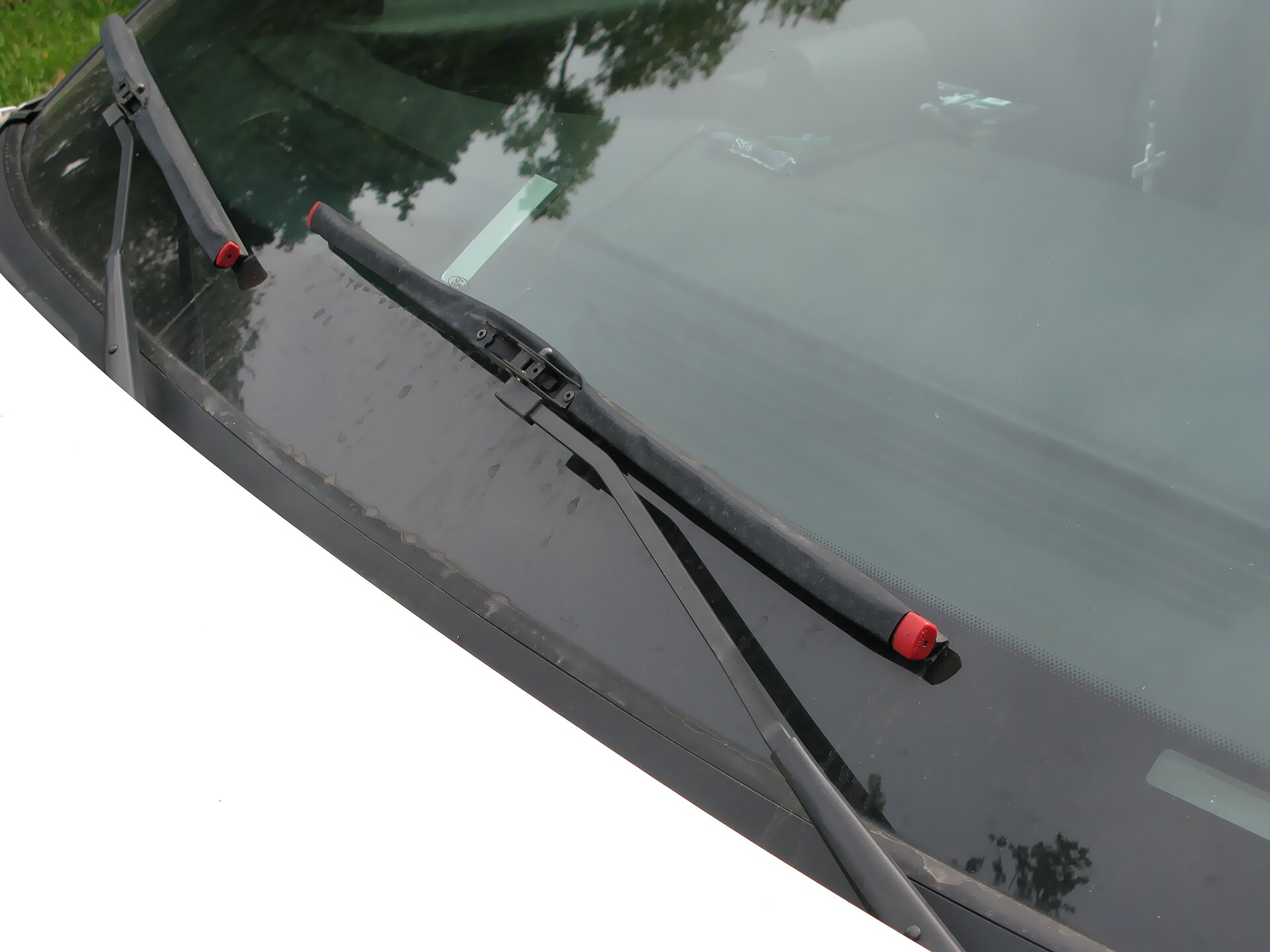
Wiper blades are one of the cheapest safety parts on a car, and one of the easiest to neglect. A worn blade that streaks, smears or skips can turn a rainy night drive or a slushy motorway into guesswork. Replacing them is usually a five-minute job once you know which type and size to buy. This guide explains the main designs, how to find the right fit and when to change them.
The three main designs
Conventional (framed) blades use a metal frame with several pivoting arms and claws that press a rubber strip against the glass. They're simple and widely available. Their weaknesses: the frame can collect ice and snow, which stops the rubber following the glass, and at motorway speeds some can lift slightly.
Beam (flat or frameless) blades use a curved strip of spring steel inside the rubber to spread pressure evenly along the blade, with no external frame. A built-in spoiler helps hold the blade on the glass at speed. With no joints to freeze, they tend to cope better with snow and ice, and they're now fitted as original equipment on many cars.
Hybrid blades combine an internal frame with an aerodynamic outer shell, aiming for the even pressure of a framed blade with the wind and snow resistance of a beam blade. They're original equipment on some models.
| Conventional | Beam | Hybrid | |
|---|---|---|---|
| Pressure distribution | Through several claw points | Continuous, from a spring-steel band | Through an enclosed frame |
| Snow and ice | Frame can clog | Generally good | Generally good |
| High-speed contact | Can lift on some cars | Spoiler helps | Shell helps |
| Typical use | Older cars, rear wipers, budget replacements | Many modern cars | Some modern cars |
Any design can work well if it fits your windscreen's curve and is in good condition. Many drivers stick with the type the car came with, since the arm and windscreen were designed around it.
Rubber and coatings
Most blades use natural or synthetic rubber, sometimes with a graphite or similar coating to help them glide quietly. Silicone blades are also available; they're often claimed to last longer and resist heat and ultraviolet light, and some leave a water-repellent film on the glass. Claims about lifespan vary between makers, and real life depends heavily on climate and use. Whatever the material, a blade in good condition matters more than the marketing.
Finding the right size
Wiper blades are sized by length, usually in inches with millimetres alongside. On most cars:
- the driver's and passenger's blades are different lengths;
- the rear blade is a separate size, and often uses a different connector;
- some models changed sizes between years, body styles or markets.
To find your sizes, check the owner's manual, a blade-fitment guide or the part numbers on your old blades. Or measure the old blades end to end, not the arms. A blade slightly shorter than specified is generally safer than one that's too long, which can hit the windscreen frame or the other blade, but the correct size gives the best coverage.
Connectors
The fitting where the blade meets the arm varies more than the blade itself. Common types include the hook (J- or U-shaped arm end, very common), pin and side-pin, bayonet, push-button and several top-lock and pinch-tab designs used on newer cars.
Many replacement blades come with a set of adapters to fit several arm types. Check that your arm is listed before buying, and fit the adapter exactly as shown in the instructions; a blade that isn't fully locked can come off on the road.
Winter blades and cold-weather tips
Winter blades are typically conventional blades enclosed in a rubber boot that stops ice building up in the frame, often with a softer rubber compound that stays flexible in the cold. Beam blades also cope reasonably well with snow, which is one reason they've become popular in cold climates.
Whatever you use, winter is hard on blades:
- Clear ice and snow from the glass before switching wipers on. Using wipers to break ice tears the rubber and strains the wiper motor and linkage.
- If blades are frozen to the glass, free them gently with the defroster; don't pull them.
- Use a winter-rated washer fluid that won't freeze at the temperatures you expect.
- Some drivers lift the arms off the glass before snow falls to stop blades freezing in place. On some cars the bonnet gets in the way unless the wipers are first moved to a service position; the handbook explains how.
Our winter car kit checklist covers snow brushes, scrapers and the rest of what's worth carrying.
When to replace
Blades wear out even when they look fine, because the rubber hardens and its edge rounds. Replace them when you notice:
- streaks or thin lines of water left behind;
- smearing, a film that blurs vision, especially at night;
- chattering or juddering across the glass;
- skipping or unwiped patches;
- cracked, split or torn rubber, or a bent frame.
Many drivers replace blades every 6–12 months. Hot, sunny climates and harsh winters shorten their life. Don't forget the rear blade, which often gets less attention.
Sometimes the problem is the glass, not the blade. Traffic film, wax or silicone residue from car washes can cause smearing and chatter even with new blades. Clean the windscreen thoroughly with glass cleaner, and wipe the blade edges with a damp cloth.
Replacing blades safely
- Protect the windscreen. A spring-loaded wiper arm without a blade can snap back and crack the glass. Lay a folded towel on the windscreen while you work.
- Switch off the ignition, so the wipers can't start, and turn off automatic rain-sensing wipers before cleaning the glass or using a car wash.
- Put the wipers in the service position first if your car has one.
- Check the new blade is firmly locked before driving, and test it with washer fluid.
The short version
- Know your three sizes: driver, passenger and rear.
- Check the connector type before buying.
- Beam and hybrid blades generally cope better with speed and snow; winter blades help in heavy snow.
- Replace blades that streak, smear, chatter or skip, typically every 6–12 months.
- Never use wipers to break ice, and protect the glass when changing blades.
Good visibility also depends on your lights; our guide to LED headlight bulbs explains what to check before upgrading.
Bloiq is reader-supported. Some links may earn us a commission; it never affects what we write. How we make money.
Cover photo: Wesha, Public domain, via Wikimedia Commons