Windscreen chips and cracks: repair or replace, and ADAS calibration
When a windscreen chip can be repaired, when a crack means a new screen, why camera calibration matters on modern cars, and what to check with your insurer.
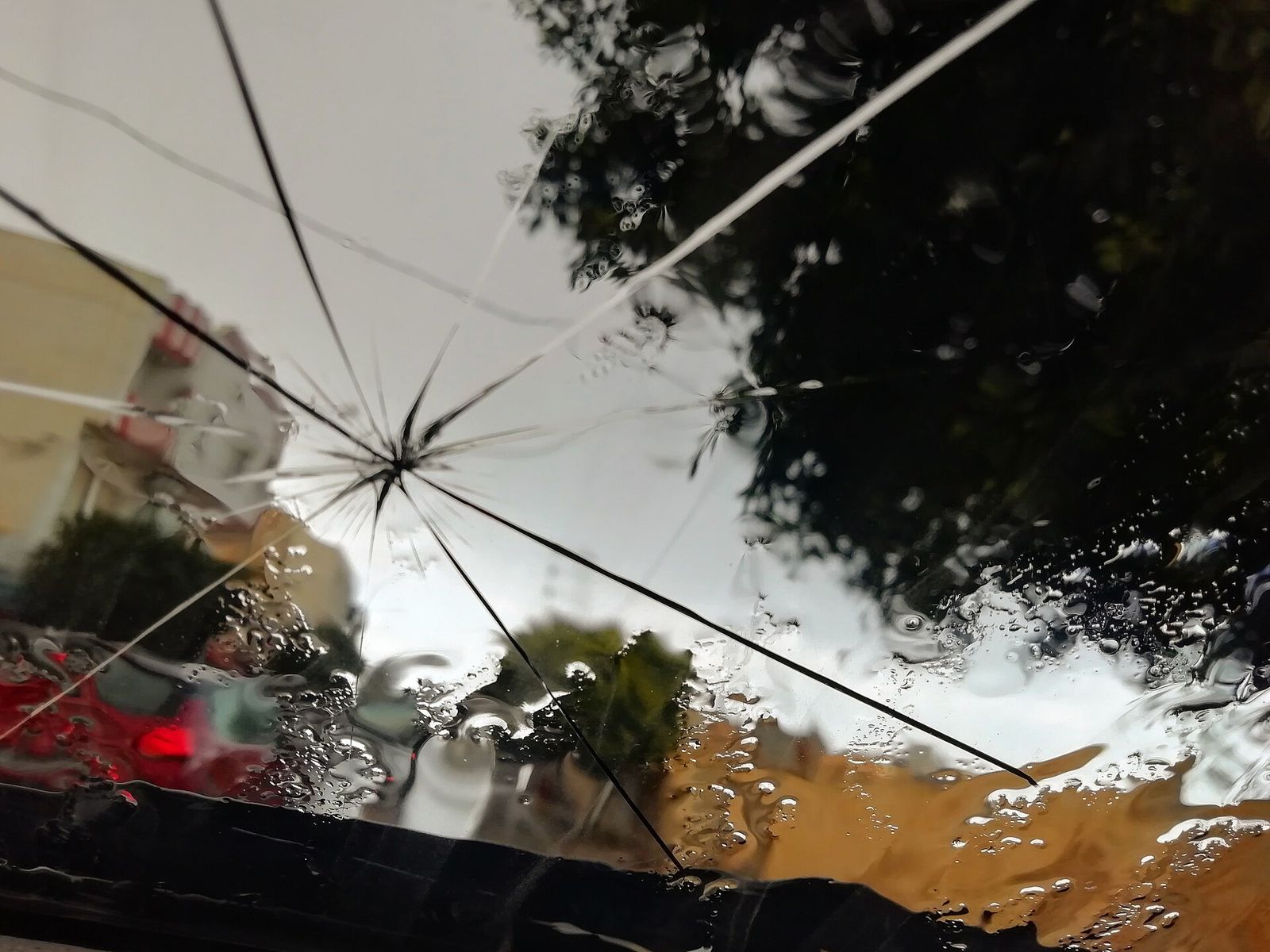
A stone flicks up from the lorry in front, there's a sharp crack, and a small star appears in the glass. Most windscreen chips can be repaired quickly if you act early, but leave one for a few weeks of cold mornings and potholes and it can spread into a crack that means a new screen. On many modern cars, a new screen also means recalibrating the driver-assistance camera behind it. This guide explains how to tell which job you need and what to ask before the work is done.
How a windscreen is built
Car windscreens are made of laminated glass: two layers of glass bonded to a thin plastic interlayer, usually polyvinyl butyral (PVB). When the outer layer is hit, it chips or cracks, but the interlayer holds the pieces together and the inner layer usually stays intact. That's why a damaged windscreen rarely shatters, and why most damage starts on the outside.
The screen isn't just a window. On most cars it's bonded into the body with a strong adhesive and helps keep the roof rigid in a rollover. It also gives the passenger airbag something to push against when it deploys. A badly fitted or badly damaged screen can weaken both, which is why repairs and replacements are worth taking seriously.
Common types of damage
Glass technicians use a few standard names:
- Bullseye: a round, cone-shaped mark, often with a dark ring.
- Star break: a central impact point with short cracks radiating out.
- Combination break: a bullseye with star legs, very common from road stones.
- Half-moon: a partial bullseye.
- Surface pit: a tiny nick that doesn't penetrate the outer layer far. It usually doesn't need any repair.
- Crack: a single line, either running from a chip or starting at the edge of the screen. Edge cracks tend to spread quickly.
When a repair usually works
A repair injects a clear resin into the damage under pressure or vacuum, then cures it with ultraviolet light. Done well, it restores much of the glass's strength and stops the damage spreading. It won't make the mark invisible: expect a faint blemish, more noticeable in some light than others.
Repair is typically possible when:
- the chip is small, roughly the size of a coin or smaller (many repairers work to a limit of about 2–2.5 cm across, including the legs);
- the damage is in the outer layer only;
- it's not right in front of the driver's eyes, where even a faint blemish could distort the view;
- it's not close to the edge of the screen, where stress is higher;
- it hasn't filled with dirt or water from being left for a long time.
Some specialists also repair short single cracks, but limits vary between companies and many simply replace a cracked screen. Ask before you book.
Rule of thumb: a chip smaller than a coin, away from the edges and out of the driver's direct line of sight, is usually repairable. Anything longer, at the edge or in front of the driver usually means a new screen.
When it needs replacing
Replacement is usually the answer when:
- a crack runs more than a few centimetres, or starts at the edge;
- there are several chips close together;
- the damage is in the driver's main field of view;
- the inner layer is damaged too;
- an old repair has failed or spread.
Roadworthiness rules also set limits. In the United Kingdom, for example, the annual test has strict size limits for damage in the zone directly in front of the driver and looser limits elsewhere in the area the wipers sweep. Many other countries have similar rules, and police can stop a car whose screen obstructs the driver's view. The limits differ by country and change over time, so check the current rules where you live.
ADAS cameras and why calibration matters
Many cars built in the last decade carry a forward-facing camera, usually mounted behind the windscreen near the rear-view mirror. It feeds advanced driver-assistance systems (ADAS) such as automatic emergency braking, lane-keeping assistance, traffic-sign recognition and adaptive headlights. Some cars also have rain and light sensors, heated glass, an acoustic interlayer or a head-up display built into the screen.
When the screen is replaced, the camera is removed and refitted, and the new glass can sit very slightly differently. A tiny change in angle can mean the camera misjudges where the lane or the car in front is, many metres down the road. That's why makers usually require the camera to be recalibrated after a replacement.
There are two main methods, and some cars need both:
| Static calibration | Dynamic calibration | |
|---|---|---|
| How it works | The car is parked on a level floor in front of printed targets at precise distances | The car is driven on well-marked roads while a diagnostic tool guides the camera |
| Where | A workshop with space and controlled lighting | On the road, at specified speeds |
| Typical time | Often an hour or more | Depends on road and weather conditions |
| Needs | Correct tyre pressures, empty boot, fuel level as specified | Clear lane markings and good visibility |
What to ask when booking a replacement:
- Does my car have a windscreen camera, and does the maker require calibration?
- Will you calibrate it, and by which method? Will I get a calibration report?
- Is the replacement glass made to the same specification as the original, with the same camera bracket, sensor areas, heating, tint and head-up display layer?
- Is the screen marked with an approval code for the country where the car is registered?
Don't ignore a dashboard warning about the camera after a screen replacement. Go back to the fitter. Requirements for calibration are set by vehicle makers and, in some places, by regulation or insurers, and they change. Check the current requirements for your car.
Original or aftermarket glass
You'll hear three terms:
- OEM glass: made by the supplier that makes the car maker's own screens, often carrying the car maker's logo.
- OEE or aftermarket glass: made to fit the car by another manufacturer, usually without the car maker's branding.
- Approved equivalent: glass that meets the same safety standards and approval markings.
Good aftermarket glass is widely used and perfectly safe. The things to check are optical quality, the exact match of features (camera mount, sensors, heated wires, head-up display) and the approval marking. On cars with a head-up display or sensitive cameras, some owners and fitters prefer original glass to avoid ghosting or calibration problems.
Insurance and the practical side
Many comprehensive motor policies include glass cover, sometimes with a separate, lower excess, and some insurers waive the excess for repairs to encourage drivers to fix chips early. A glass claim may or may not affect your no-claims record, depending on the policy. Read your policy wording or call your insurer before booking, as they may require you to use an approved repairer.
On the day:
- Drive-away time: the adhesive needs time to cure before the car is safe to drive. The fitter will tell you how long; it depends on the adhesive and the weather.
- After fitting: avoid slamming doors and high-pressure car washes for the period the fitter advises, and leave any retaining tape in place until told otherwise.
- Check the seal and the trim once you're home, and look for wind noise or leaks in the first rain.
Stopping a chip from spreading
If you can't get a repair straight away:
- Cover the chip with clear tape to keep out dirt and water.
- Avoid blasting the heater or defroster straight onto cold glass, and don't pour hot water on an icy screen.
- Drive gently over speed bumps and potholes, and close doors softly.
- Book a repair within days, not weeks.
Keeping well back from lorries and gritting vehicles reduces the chance of chips in the first place, and good wiper blades avoid scratches across the glass. If you're looking at a car to buy, our used car inspection checklist covers what else to look at besides the screen.
The short version
- Act quickly: small chips are usually repairable; neglected ones turn into cracks.
- Repair suits coin-sized chips away from the edges and out of the driver's line of sight.
- Replace for long or edge cracks, several chips, or damage in front of the driver.
- Ask about ADAS calibration if your car has a windscreen camera, and get a report.
- Check your insurance for glass cover and approved repairers.
- Roadworthiness limits vary: check the current rules where the car is registered.
Bloiq is reader-supported. Some links may earn us a commission; it never affects what we write. How we make money.
Cover photo: B.H. Dhiaeddine, CC BY-SA 4.0, via Wikimedia Commons