Home EV chargers: Level 1 vs Level 2, amps, circuits and connectors
How fast Level 1 and Level 2 charging really is, how amperage relates to the circuit, why an electrician matters, and what J1772 and NACS (SAE J3400) mean for you.
Most electric-car charging happens at home, overnight, and getting that set-up right makes daily driving effortless. The choices look technical: charging levels, amperage settings, circuit sizes, hardwired or plug-in, and a change in connector standards in North America. This guide explains each in plain terms, so you can work out what you need and have an informed conversation with an electrician.
Level 1 and Level 2
The "Level" terms are mainly used in North America.
- Level 1 uses an ordinary 120 V household outlet and the portable cord that often comes with the car. It typically draws about 12 A, around 1.4 kW, and adds very roughly 5–8 km (3–5 miles) of range per hour.
- Level 2 uses a 208 V or 240 V circuit, like an electric dryer or range. Home units commonly deliver 16–48 A, about 3.8–11.5 kW, adding very roughly 20–70 km (12–45 miles) of range per hour, depending on the power and the car.
DC fast charging (sometimes called Level 3) uses large, expensive equipment and isn't normally installed in homes.
Level 1 can be enough if you drive short distances and park for long periods: 12 hours overnight might add 60–100 km. It struggles with longer commutes, cold weather (when heating the battery and cabin uses energy) and larger vehicles. Level 2 comfortably refills most daily driving overnight and gives you margin for unexpected trips.
Outside North America, home charging runs on 230 V single-phase supplies, commonly up to 7.4 kW, and some homes with a three-phase supply can charge at 11 kW or more if the car supports it. There, you'll see the terms "Mode 2" (a portable cable with a control box, used from a domestic socket) and "Mode 3" (a dedicated wall-mounted charger).
Your car sets a limit too
Every EV has an onboard charger that converts AC from the wall to DC for the battery. Its maximum rating, often somewhere around 7–11 kW and sometimes higher, caps AC charging speed. A 48 A wall unit won't charge a car limited to 7 kW any faster than a 32 A unit would. Check your car's specifications, and consider whether a future vehicle might accept more, before paying for a larger circuit.
Amperage and the circuit
In North America, EV charging counts as a continuous load, and electrical codes generally limit continuous current to 80% of the circuit breaker's rating.
Rule of thumb: charger current ≤ 80% of the breaker rating. A 40 A circuit supports a 32 A charger; 50 A supports 40 A; 60 A supports 48 A.
Many wall units let the installer set the maximum current to suit the circuit. That makes it possible to start at a lower setting if your electrical panel is near capacity, and to raise it later if the service is upgraded.
Whether your home can support Level 2 depends on the panel's capacity and existing loads such as electric heating, air conditioning, a range and a dryer. An electrician will do a load calculation. If capacity is tight, options include a lower-current charger, a load-management device that reduces charging when the house is busy, a circuit-sharing device, or a service upgrade.
Hardwired or plug-in
Level 2 units come in two forms:
- Plug-in units connect to a 240 V receptacle, commonly a NEMA 14-50 in North America. They can be unplugged and taken with you, but they're typically limited to 40 A on a 50 A circuit. The receptacle must be high quality and correctly installed, because it carries a heavy load for hours at a time, and some codes now require ground-fault protection for these outlets.
- Hardwired units connect directly to the circuit. They're needed for the higher current settings and are often preferred outdoors and for permanent installations.
Your electrician can advise which suits your home and local code.
Why an electrician should do it
Level 2 installation involves high-current 240 V wiring, correct cable sizing, breaker selection, earthing and ground-fault protection. It should be done by a licensed electrician, and in many places it requires a permit and inspection. Rules vary by province, state and country; check local requirements.
Some practical points:
- Don't use an ordinary household extension cord for Level 1 charging. If you must, use only what the car or charger maker explicitly allows.
- Don't improvise adapters from dryer or welder outlets without an electrician's assessment.
- A dedicated outlet on its own circuit is the safest choice for Level 1.
- If a plug, receptacle or cable ever feels hot, smells of burning or shows discolouration, stop using it and have it checked.
Connectors: J1772 and NACS (SAE J3400)
In North America, two AC connector designs are in use:
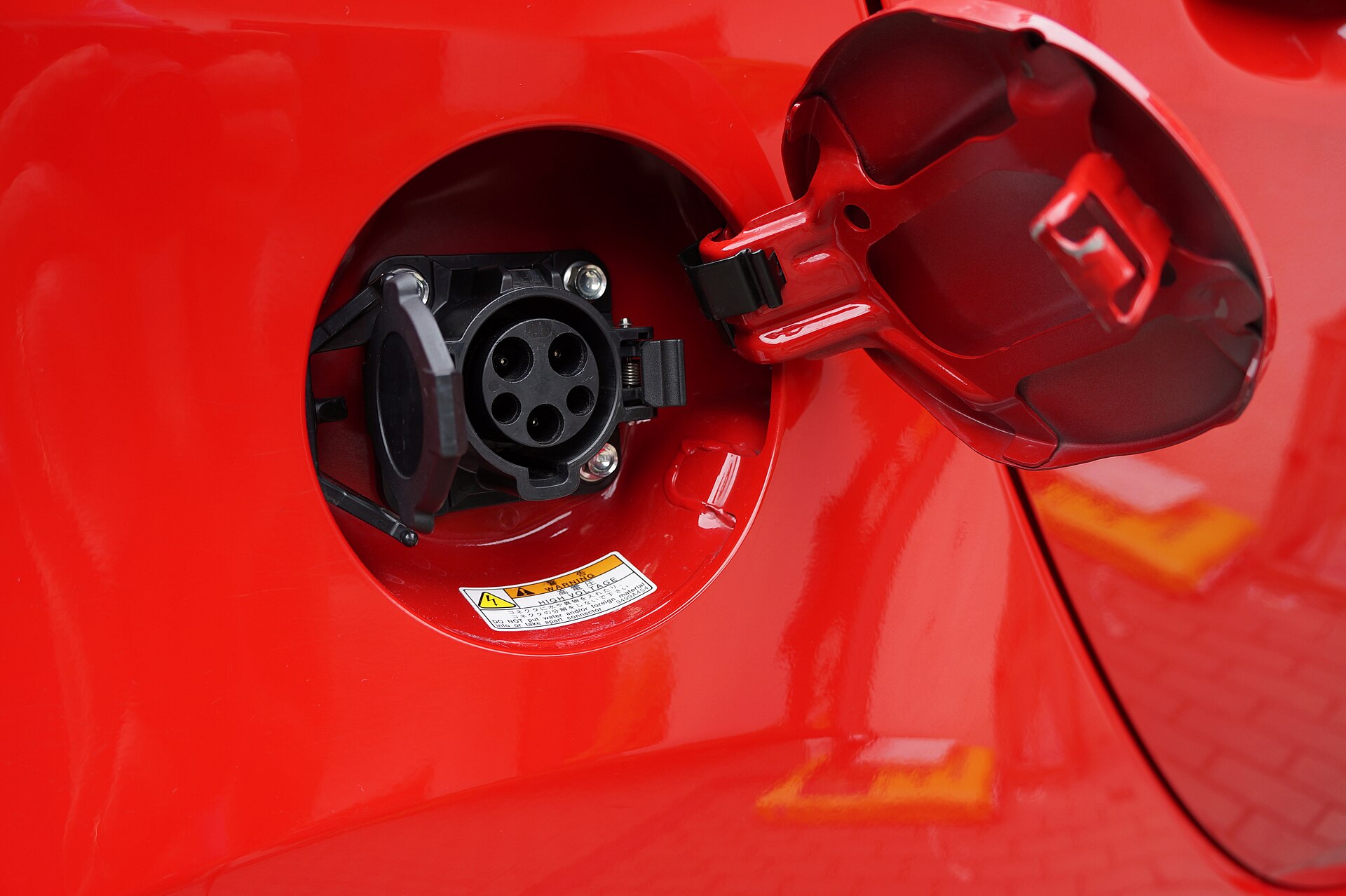
- J1772 (Type 1) has long been the standard for most non-Tesla EVs.
- NACS, the connector developed by Tesla, has been standardised as SAE J3400. Many carmakers have announced moves to it, and newer models from several brands use it.
During the transition, many cars and chargers use one and adapters bridge the gap. Adapters for AC charging between J1772 and J3400 are common; buy certified ones from reputable sources, and follow the car maker's guidance. When choosing a home charger, match the connector to your car, or choose a unit whose cable or adapter options cover what you might own next.
In Europe and many other regions, Type 2 is the standard AC connector.
DC fast-charging connectors such as CCS are separate; they matter on road trips, not for a typical home charger.
Features worth checking
- Safety certification recognised in your country (in Canada, look for marks such as CSA, cUL or cETL).
- Weather rating for outdoor installation.
- Cable length, commonly around 5–7.5 m (16–25 ft); measure from the wall to your car's charge port.
- Adjustable current to match the circuit.
- Scheduling, in the car or the charger, to use time-of-use electricity rates.
- Energy monitoring if you want to track costs.
- Load management or power sharing if your panel is tight or you have two EVs.
- Utility or government programmes, which sometimes require specific "smart" features; check the current requirements before buying. Some countries require home chargers to include smart functions.
Looking after the rest of the car
An EV still has a small 12 V battery that runs its electronics and must be healthy for the car to start up. See our guide to car battery chargers and maintainers if you store the car for long periods. And in cold climates, our winter car kit checklist covers what to carry.
The short version
- Level 1 suits low mileage; Level 2 suits most households.
- Your car's onboard charger caps AC charging speed.
- Charger current is limited to 80% of the breaker rating.
- Have a licensed electrician check the panel and install the circuit, with any required permit.
- Choose hardwired for higher currents; use a quality receptacle if plug-in.
- Match the connector: J1772, J3400 (NACS) or Type 2, with certified adapters where needed.
Bloiq is reader-supported. Some links may earn us a commission; it never affects what we write. How we make money.