Car wax, sealants and ceramic coatings: what each one really does
Carnauba wax, synthetic sealants, spray products and ceramic coatings compared: how they protect paint, how long they last, and what applying each involves.
Paint protection products promise gloss, water beading and protection, but they range from a quick spray that lasts a few weeks to a coating that takes a day to apply and lasts years. The marketing blurs the differences, and "ceramic" now appears on everything from professional coatings to shampoos. This guide explains what waxes, sealants and coatings actually do, how long they typically last and what each asks of you.
What paint protection does
Modern car paint has a clear coat on top that provides the gloss and takes the abuse. A protective layer on top of that:
- adds a sacrificial barrier against UV, road grime, bird droppings, tree sap and road salt;
- makes the surface hydrophobic, so water beads or sheets off and dirt sticks less;
- makes washing easier and quicker;
- can enhance gloss and depth.
What none of these products do is repair damage. Swirl marks, scratches and dull, oxidised paint need polishing, which uses fine abrasives to level the clear coat. Wax or a coating goes on after polishing, not instead of it.
Carnauba wax
Carnauba is a natural wax from the leaves of a Brazilian palm, blended with other waxes and oils into pastes and liquids.
- Look: often described as a warm, deep glow, particularly on dark colours.
- Durability: typically a few weeks to a couple of months, depending on the product, climate and how often the car is washed.
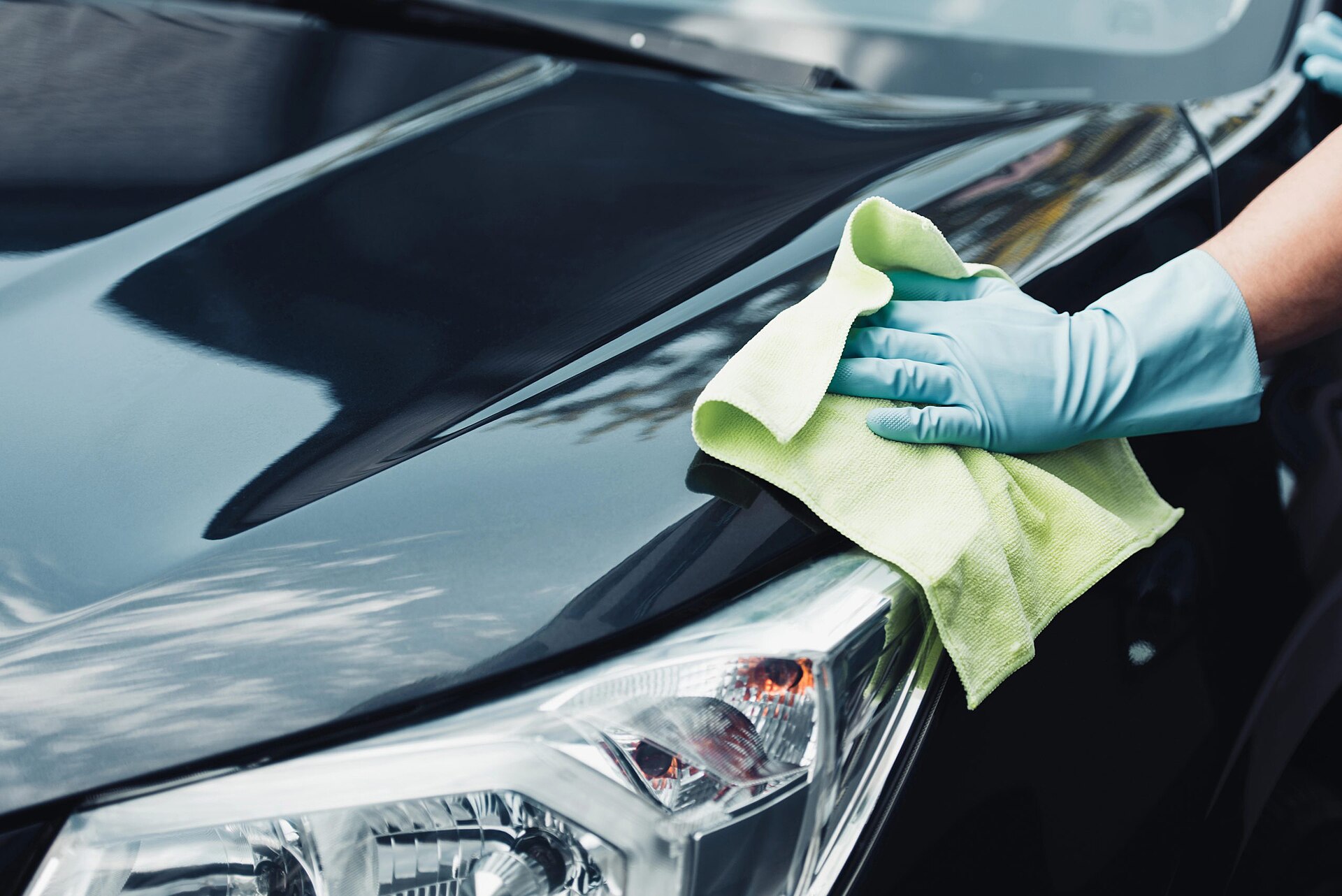
- Application: apply a thin coat to a clean, cool panel, let it haze, buff off with a microfibre cloth.
- Suits: enthusiasts who enjoy regular waxing, and classic cars.
Heat, detergents and road salt all wear wax away faster, so in a Canadian winter expect the shorter end of the range.
Synthetic sealants
Paint sealants use synthetic polymers designed to bond to the paint and resist heat and detergents better than natural wax.
- Look: a sharp, glassy shine.
- Durability: typically several months, with many aimed at lasting through a season.
- Application: similar to wax; some need a cure time before they're rained on or washed.
- Suits: people who want to protect the car once in autumn and once in spring.
Some people apply a carnauba layer on top of a cured sealant for the look of wax with the durability of a sealant.
Spray products and "ceramic" sprays
Spray waxes, spray sealants and silica-based (SiO₂) "ceramic" sprays are applied to a clean, often still-damp car and wiped off.
- Durability: from a couple of weeks to a few months, depending on type.
- Strengths: very quick, easy and forgiving; good for topping up an existing wax, sealant or coating.
- Limits: thinner than a true coating; a "ceramic" spray isn't the same as a ceramic coating.
Ceramic coatings
A ceramic coating is a liquid, typically based on silica or similar silicon compounds, that cures into a thin, hard layer bonded to the clear coat.
- Durability: commonly one to several years, depending on the product, preparation, climate and maintenance. Longer claims usually assume ideal care.
- Strengths: strong chemical resistance, lasting water beading, easier cleaning and good resistance to UV and contaminants.
- Limits: it is very thin. It does not make paint scratch-proof or stop stone chips; that's the job of paint protection film (PPF). "9H hardness" claims refer to a pencil hardness test and don't mean the paint can't be scratched.
- Water spots: coated cars bead water strongly, and beads that dry in the sun can leave mineral spots, so drying still matters.
| Product | Typical durability | Effort to apply | Main benefit |
|---|---|---|---|
| Carnauba wax | Weeks to ~2 months | Low to moderate | Warm gloss, easy to reapply |
| Synthetic sealant | Several months | Moderate | Season-long protection |
| Spray wax, sealant or "ceramic" spray | Weeks to a few months | Very low | Quick top-ups |
| Ceramic coating | One to several years | High (prep is most of the work) | Long-lasting, easy-clean surface |
Applying a ceramic coating
Most of the work is preparation, because a coating locks in whatever is underneath it:
- Wash thoroughly; see our guide to washing a car at home.
- Decontaminate: an iron remover for embedded brake dust, then a clay bar or clay mitt for bonded contamination.
- Polish to remove swirls and scratches. A dual-action polisher makes this far easier than hand polishing.
- Panel wipe with a suitable prep spray to remove polishing oils so the coating can bond.
- Apply in small sections, following the product's flash time, then level and buff off residue before it cures. Good lighting is essential for spotting high spots.
- Cure: keep the car dry for the time the maker specifies, often around a day, and avoid washing with soap for longer.
Work in a garage or shaded, dry area at the temperature and humidity the product specifies. Coating a car properly usually takes a full day or more; professional application is an option if that's not appealing.
Rule of thumb: a coating is only as good as the paint underneath it. If you're not going to decontaminate and polish first, a sealant is the better choice.
Safety and practical cautions
- Read the safety data and labels. Coatings and prep sprays contain solvents: wear nitrile gloves, work with good ventilation and, where the maker recommends it, eye protection and a respirator.
- Work on cool panels out of direct sun, as heat makes products flash too quickly and streak.
- Keep products off rubber trim and textured plastics unless they're designed for them, as some can stain.
- Glass, wheels and trim may need specific products; not every paint coating suits them.
- Matte paint and vinyl wraps need matte-specific products; wax and polish can leave them patchy or shiny.
- Dispose of used applicators as the label directs; some coating residues can heat up as they cure.
Maintenance makes the difference
Whatever you apply, washing habits decide how long it lasts:
- Use a pH-neutral car shampoo; strong detergents and degreasers strip wax and wear down sealants.
- Avoid harsh brush washes, which add fine scratches.
- Use toppers or maintenance sprays as recommended to refresh water beading.
- In winter, rinse off road salt regularly. A car cover helps with long-term outdoor storage, but only on a clean, dry car.
The short version
- Polish fixes defects; wax, sealant and coatings protect.
- Carnauba wax for gloss and the enjoyment of regular waxing.
- Sealant for a season of protection with moderate effort.
- Spray products for quick top-ups.
- Ceramic coating for long-lasting protection, if you'll do thorough prep.
- None of them stop stone chips; that needs paint protection film.
Bloiq is reader-supported. Some links may earn us a commission; it never affects what we write. How we make money.
Cover photo: Squeegeedetailofficial, CC BY-SA 4.0, via Wikimedia Commons