Home / Travel / Iceland · Where to stay
Where to stay in Reykjavík, and how to plan Iceland day trips
Downtown, Þingholt, the Old Harbour, Vesturbær or Laugardalur? How Reykjavík's areas compare, which day trips work from the city, and when to spend a night away.
This guide contains affiliate links, marked as such. If you book through them, Bloiq may earn a commission at no extra cost to you.
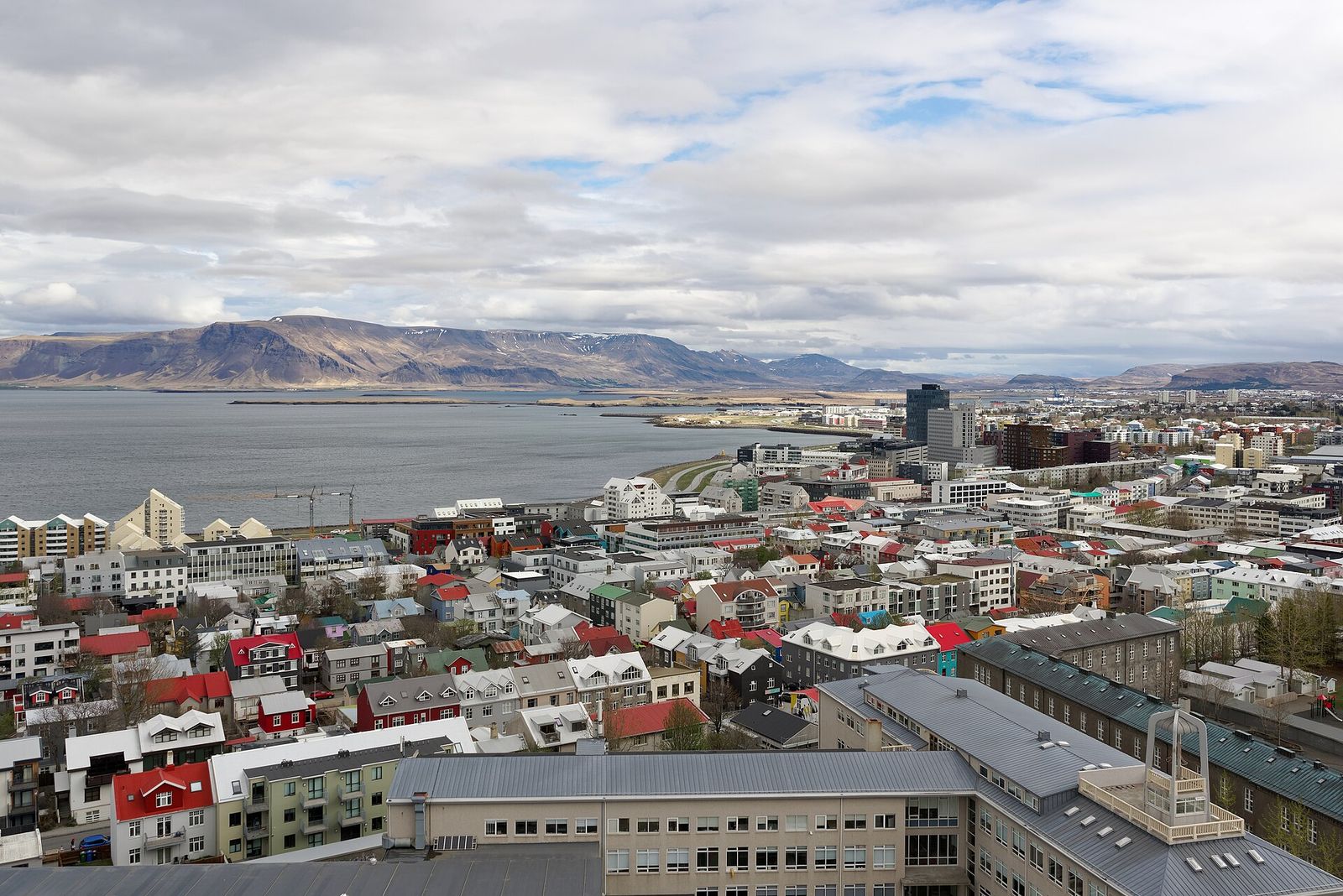
Reykjavík is small, and most visitors use it twice over: as a city break and as a base for day trips to waterfalls, geysers and lava fields. Where you sleep decides how lively your evenings are, how far you walk to tour pick-ups and whether you can park a rental car. Here's how the main areas compare, followed by the day trips that work from the capital and the ones that are better with a night away.
The quick answer
- First visit, no car, joining tours: downtown, between Laugavegur and the harbour.
- Quieter streets, still central: Þingholt and the streets around Hallgrímskirkja.
- Sea views, boat trips and newer hotels: the Old Harbour and Grandi.
- Apartments and a local feel: Vesturbær, the west end.
- Families, drivers and campervans: Laugardalur and the east.
- A late arrival or an early flight: Keflavík, next to the international airport.
Downtown: Laugavegur, the pond and the harbour
The city centre (the 101 postcode) runs from the harbour up to Hallgrímskirkja and along Laugavegur, the main shopping street. Most of the restaurants, bars, cafés, museums and shops are here, along with the Tjörnin pond, the parliament square at Austurvöllur and the Harpa concert hall on the waterfront. Almost everything is within a 15-minute walk.
Good for: first-time visitors, short stays and anyone relying on tours instead of a car. Consider: rooms are often small, and many guesthouses are in older houses with shared bathrooms. Streets near the bars on and around Laugavegur are noisy late on Friday and Saturday nights, and parking is limited and paid.
Þingholt and around Hallgrímskirkja
On the slope between Laugavegur and the pond, Þingholt is a residential quarter of old timber houses clad in brightly painted corrugated iron, with quiet lanes, small guesthouses and apartments. At the top stands Hallgrímskirkja, the city's landmark church, whose tower gives the classic view over the rooftops.
Good for: couples and anyone who wants to walk everywhere but sleep away from the bars. Consider: some streets are steep and slippery when icy, and there are few large hotels.
The Old Harbour and Grandi
Whale-watching and puffin boats leave from the Old Harbour, and the streets around Harpa have several of the city's newer, larger hotels. To the west, Grandi's former fish-processing buildings now hold restaurants, a food hall, galleries and museums. The waterfront path east past Harpa to the Sun Voyager sculpture is one of the city's best walks.
Good for: sea views, early boat departures and travellers who prefer a modern hotel. Consider: the waterfront is exposed to the wind, and Grandi is a 15–20 minute walk from Laugavegur.
Vesturbær: the west end
West of the centre, Vesturbær is a calm residential district with a neighbourhood geothermal pool, local bakeries and, on its southern edge, the University of Iceland and the National Museum. Accommodation here is mostly apartments and guesthouses rather than hotels.
Good for: longer stays, families who want a kitchen, and travellers who like to live as locals do. Consider: there are fewer restaurants, and the centre is a 10–20 minute walk away.
Laugardalur and the east
About 3 km east of the centre, Laugardalur is a broad green valley with the city's largest swimming pool, the botanic garden, a family park with farm animals and the city campsite. Larger hotels line the main roads nearby, and parking is far easier than downtown. Between here and the centre, the area around Hlemmur, the main city bus interchange at the eastern end of Laugavegur's shopping stretch, has more mid-range options.
Good for: families, drivers, campervans and travellers watching their budget. Consider: you'll take a bus or walk 30–40 minutes to the old centre, and evenings are quiet.
Keflavík: near the airport
The international airport is at Keflavík, roughly 50 km (about 45 minutes' drive) south-west of Reykjavík. The neighbouring towns of Keflavík and Reykjanesbær have plain, practical hotels and guesthouses a few minutes from the terminal.
Good for: arrivals late at night, departures early in the morning, and a first or last night on the Reykjanes Peninsula. Consider: there's little to see in town, so it isn't a base for the whole trip.
Getting around
- From the airport: airport buses run to terminals near the centre, with onward transfers to hotels or downtown bus stops; check the timetable against your flight. Taxis and pre-booked transfers are also available. There are no trains in Iceland.
- Tour pick-ups: large coaches aren't allowed in much of the centre, so many tours collect passengers from numbered bus stops around downtown. Check which stop is nearest before you book a room.
- In the city: the centre is easily walkable, and city buses cover the suburbs, the pools and Laugardalur.
- Driving: a car makes day trips flexible. Downtown street parking is paid and limited, so ask about parking when you book.
Day trips from Reykjavík
- Golden Circle: about 3.5–4 hours of driving in total, so a full day with stops. Best for a first taste of Iceland. Þingvellir National Park, a UNESCO World Heritage Site, is where Iceland's assembly first met in 930, in a rift valley where the North American and Eurasian plates are pulling apart. The Geysir area's Strokkur erupts every few minutes, and Gullfoss drops in two stages into a canyon.
- Reykjanes Peninsula: lava fields, steaming geothermal areas, sea cliffs and the Blue Lagoon, all close to the airport, so it suits an arrival or departure day. Volcanic activity near Grindavík has repeatedly closed roads and nearby sites since 2023, so check the current status with official sources before you go.
- South Coast to Vík: the Seljalandsfoss and Skógafoss waterfalls and the black-sand beach at Reynisfjara. Vík is roughly 2.5–3 hours each way, so it's a long day; our South Coast road trip guide covers the stops and the beach safety warnings.
- Snæfellsnes Peninsula: often called "Iceland in miniature", with Kirkjufell mountain, sea cliffs, fishing villages and the glacier-capped Snæfellsjökull. The peninsula starts about two hours from Reykjavík, and a full loop makes a 10–12 hour day.
- From the Old Harbour: whale-watching trips run for most of the year, and puffin trips roughly from May to mid-August.
- Northern lights: tours run on dark, clear nights, roughly from September to April. Sightings depend on cloud and solar activity and are never guaranteed.
Day trip or a night away?
As a rough guide, if a destination is more than about three hours' drive each way, a night away gives you more time at the sights and less time on the road.
- Jökulsárlón glacier lagoon is about five hours from Reykjavík: possible on a very long tour, but far better with a night near Vík, Skaftafell or Höfn.
- Snæfellsnes rewards a night in Grundarfjörður, Stykkishólmur or near Arnarstapi.
- The Golden Circle and the South Coast combine well with a night around Selfoss, Hella or Hvolsvöllur.
A common plan is to start and end in Reykjavík with one or two nights out in between. Seasons change the maths: around midsummer it barely gets dark, while in late December daylight lasts only about four hours, and ice and strong winds can close roads. Check road conditions, weather warnings and safety advice on Iceland's official sites every day. If you aren't used to winter driving, guided tours are a sensible alternative. Mountain roads (F-roads) open only in summer and are for four-wheel-drive vehicles; check the current rules and your rental terms before you go.
Practical booking tips
- Book early for June to August, when rooms in the centre and along the South Coast fill first.
- Check the bathroom. Many guesthouses have shared bathrooms; listings usually say so.
- Look for blackout curtains if you're visiting in summer and sleep badly in daylight.
- Accommodation tax: Iceland charges an accommodation tax per room per night, usually added to the bill. Check the current rules when you book.
- Use the pools. Reykjavík's geothermal pools are a local institution; everyone showers without a swimsuit before going in.
- Match your base to your plans: downtown if you'll join tours, Laugardalur or the edge of the centre if you'll drive.
Stay downtown or in Þingholt for your first visit, keep the long drives for nights away, and Reykjavík makes an easy, friendly base for exploring Iceland.
Bloiq is reader-supported. Some links may earn us a commission; it never affects what we write. How we make money.
Cover photo: Jakub Hałun, CC BY-SA 4.0, via Wikimedia Commons