Home / Travel / United States · Where to stay
Where to stay in Las Vegas: Strip sections, Downtown and off-Strip
Centre, South or North Strip, Downtown's Fremont Street or a quieter off-Strip base? How the areas of Las Vegas compare for shows, sights, conventions and day trips.
This guide contains affiliate links, marked as such. If you book through them, Bloiq may earn a commission at no extra cost to you.
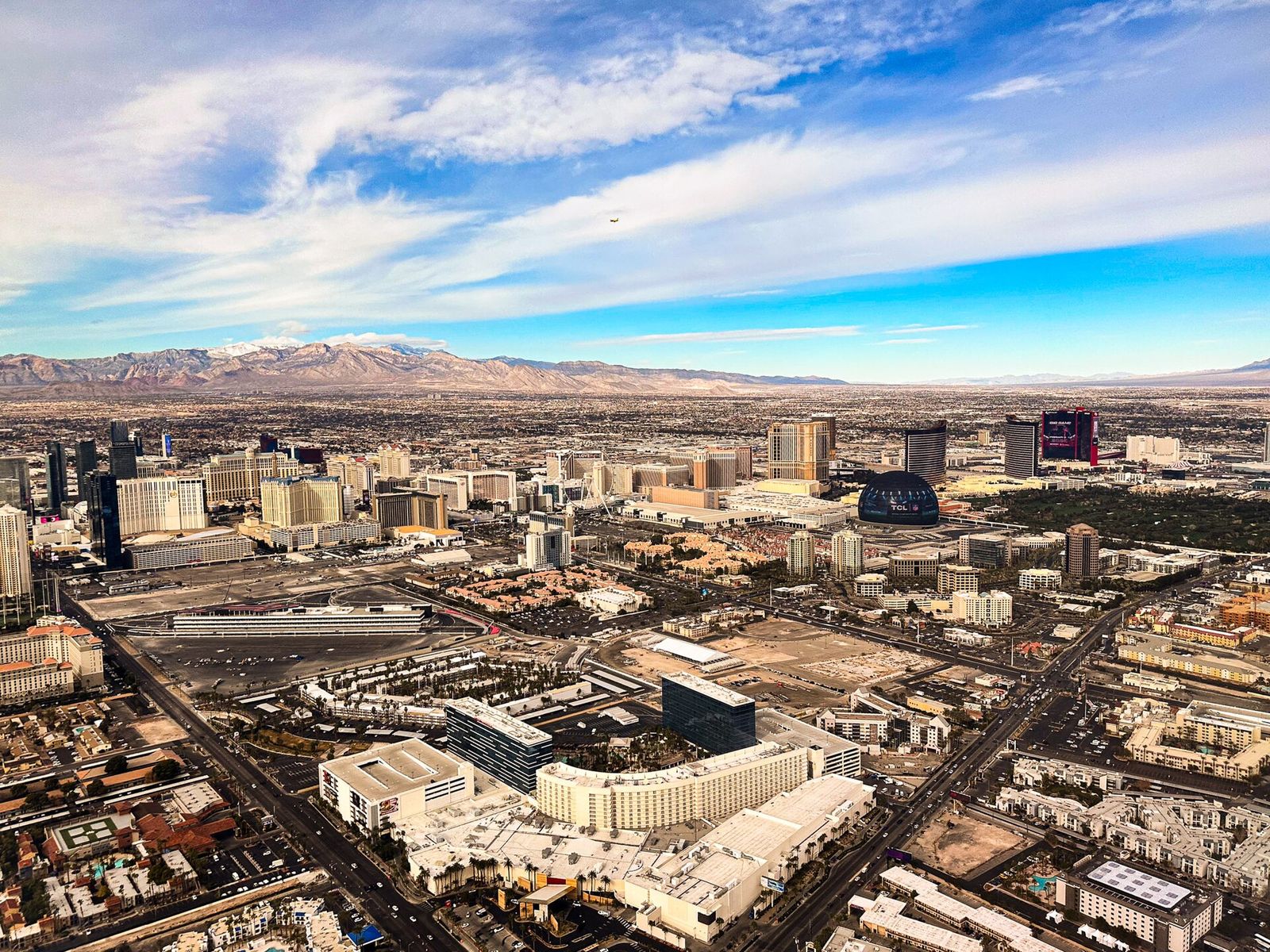
Las Vegas looks compact on a map, but the Strip alone runs for roughly 7 km (4 miles), and its resorts are so large that the hotel "next door" can be a 15-minute walk away. Where you stay decides how much of your trip is spent in corridors, taxis and traffic. Most of the famous resorts sit on the Strip itself, which is mostly outside the city limits, while the older casinos and the city's historic core are Downtown. Here's how the main areas compare.
The quick answer
- First visit, shows and the classic sights: the Centre Strip.
- Concerts, sports and quick airport access: the South Strip.
- Conventions and newer resorts: the North Strip.
- Old Vegas character, lower rates and nightlife on foot: Downtown and Fremont Street.
- Value, food and a quieter base with a car: off-Strip, east or west of the Strip.
- Hiking, golf and day trips: Summerlin or Henderson.
Centre Strip: the classic sights
The Centre Strip, roughly around the Flamingo Road intersection, is the Las Vegas of postcards. Bellagio's fountains dance across its lake, Paris Las Vegas faces them with its half-scale Eiffel Tower, Caesars Palace and the Cosmopolitan are a short walk away, and the Venetian has indoor canals with gondolas. The LINQ Promenade, with its High Roller observation wheel, leads off the Strip, and the Sphere, the huge spherical venue covered in LEDs, stands just east, behind the Venetian.
Good for: first-time visitors, show-goers, food lovers and anyone who wants to walk between famous resorts. Consider: rates are among the highest in town, especially at weekends, crowds are constant, and distances inside and between resorts are longer than they look.
South Strip: arenas, stadiums and the airport
The South Strip runs from around Tropicana Avenue to Mandalay Bay. Its landmarks include the pyramid of the Luxor, the castle-themed Excalibur, New York-New York's skyline facade and the MGM Grand. The T-Mobile Arena sits beside Park MGM, and Allegiant Stadium, home of the NFL's Raiders, is just across Interstate 15. The "Welcome to Fabulous Las Vegas" sign stands south of Mandalay Bay, and a free tram links Mandalay Bay, Luxor and Excalibur.
Good for: concerts, games and fight nights, travellers who want to be close to the airport, and families. Consider: you're a long walk or a ride from the Centre Strip and further still from Downtown. Expect building work around the former Tropicana site, where a ballpark is under construction.
North Strip: conventions and new resorts
North of the Centre Strip, Wynn and Encore lead to a stretch of newer resorts, including Resorts World and Fontainebleau, then older properties such as Circus Circus, with its indoor Adventuredome theme park, and the Sahara. The STRAT tower, with an observation deck and rides at the top, marks the northern end. The Las Vegas Convention Center is just east.
Good for: convention-goers, travellers who like newer resorts, families (the indoor theme park helps on hot days) and value at the older properties. Consider: there are long gaps between properties, the Centre Strip is a ride away, and the stretch between the STRAT and Downtown is best covered by bus or taxi rather than on foot.
Downtown and Fremont Street: old Vegas
Downtown is the city's historic core. The Fremont Street Experience is a five-block pedestrian street under a giant LED canopy with nightly light shows and a zip line, lined by casinos such as the Golden Nugget and Binion's. To the east, the Fremont East district has bars, music venues and the El Cortez, open since 1941. The Mob Museum occupies a 1930s former federal courthouse and post office, the Neon Museum displays historic signs in its "boneyard", and the Arts District to the south has galleries, bars and breweries.
Good for: budget-minded travellers, repeat visitors, nightlife within walking distance and anyone curious about old Las Vegas. Consider: rooms in older hotels are often smaller, Fremont Street is loud and crowded at night, and the blocks away from the lit-up streets feel quiet after dark, so many visitors take a taxi back. The Centre Strip is about 15–20 minutes by car or longer on the bus. One of the newer resorts here, Circa, is adults-only.
Off-Strip: east and west of the Strip
East of the Strip, along Paradise Road and near the convention centre, you'll find business hotels, extended-stay properties and some hotels without casinos, plus the university campus further south. West of the Strip, across Interstate 15, are casino resorts such as the Palms and the Rio, and Chinatown along Spring Mountain Road, known for its Asian restaurants.
Good for: value, conventions, food lovers, travellers who want a non-gaming hotel, and drivers, since parking is often easier. Consider: walking to the Strip is hot and slow, and crossing the interstate on foot is unpleasant. Plan on taxis, ride-hailing or a car, or stay near a Monorail station on the east side.
Summerlin and Henderson: the suburbs
Summerlin, on the western edge of the valley, is a planned community with a shopping district, golf courses and resorts popular with locals, and the closest base for Red Rock Canyon National Conservation Area. Henderson, a separate city to the south-east, has quieter resort hotels, the Lake Las Vegas area and the easiest access to Hoover Dam and Lake Mead.
Good for: hikers, climbers and golfers, families, longer stays and anyone who wants to sleep away from the noise. Consider: you'll need a car, and the Strip is often 25–40 minutes away depending on traffic.
How the areas compare
| Area | Feel | Getting around | Best for |
|---|---|---|---|
| Centre Strip | Busy, glamorous | Walking, Monorail, bus | First visits, shows |
| South Strip | Big resorts, events | Free tram, bus, taxi | Arenas, airport |
| North Strip | Newer and older resorts | Monorail, Vegas Loop, bus | Conventions |
| Downtown | Old Vegas, lively | Walking, bus | Value, nightlife |
| Off-Strip | Practical, quieter | Car, taxi, Monorail (east) | Value, food |
| Summerlin / Henderson | Suburban, calm | Car | Outdoors, day trips |
Getting around
- Walking: fine within one section of the Strip, using the pedestrian bridges at the big intersections. In July and August, daytime highs often pass 40 °C (104 °F); carry water and use the indoor routes between resorts.
- Free trams: one links Mandalay Bay, Luxor and Excalibur, and another links Park MGM, Aria and Bellagio.
- Las Vegas Monorail: runs behind the east side of the Strip between the MGM Grand and the Sahara, with a stop at the convention centre. Stations are at the back of the resorts, so allow time to walk through.
- The Deuce: a double-decker bus that runs 24 hours along the Strip and on to Downtown. It's slow in heavy traffic; passes are sold through the transit agency's app and at ticket machines.
- Vegas Loop: underground tunnels with electric cars serving the convention centre and a growing number of resorts; check which stations are open.
- Taxis and ride-hailing: each resort has a designated pick-up area. Traffic on the Strip crawls on weekend nights and during big events.
- From the airport: Harry Reid International Airport lies just east of the South Strip, often 10–20 minutes by taxi. Ride-hailing, shuttles and public buses also serve it.
- Driving: a car makes day trips easy, but many Strip resorts charge for parking, so check before you book.
Practical tips before you book
- Compare total prices. Most Strip resorts and many Downtown hotels charge a mandatory daily resort fee. US rules now require advertised prices to include it, but taxes and parking may still be extra.
- Watch the calendar. Weekend rates are often far higher than midweek, some hotels require minimum stays at weekends, and big conventions, fight nights, holiday weekends and the Formula 1 race held in November in recent years push prices up.
- Smoking is still allowed on most casino floors. If it bothers you, look at non-gaming hotels or one of the few smoke-free resorts.
- Age rules: the minimum age to gamble and drink is 21, and some pools and clubs are adults-only. Under-21s may pass through casinos but not linger in gaming areas.
- Pools are seasonal at many resorts, with reduced hours or closures in winter.
- Short-term rentals are tightly regulated in Clark County and the City of Las Vegas; check the current rules.
- Day trips: Red Rock Canyon's scenic drive needs a timed-entry reservation for much of the year, roughly October to May; check the current rules before you go. Hoover Dam and Valley of Fire State Park are within about an hour, and Zion and the Grand Canyon make long day trips or overnight stays.
- Going further: our guides cover where to stay in Los Angeles, a drive of four hours or more without traffic, and where to stay in San Francisco.
For a first visit, choose the Centre Strip for the sights and shows, or Downtown if you'd rather spend less and enjoy old Las Vegas.
Bloiq is reader-supported. Some links may earn us a commission; it never affects what we write. How we make money.
Cover photo: joannapoe, CC BY-SA 2.0, via Wikimedia Commons
.jpg)