Home / Travel / United States · Where to stay
Where to stay in San Francisco: the neighbourhoods compared
Union Square, Nob Hill, Fisherman's Wharf, North Beach, the Marina, SoMa or the Mission? How San Francisco's areas compare and how BART, Muni and cable cars link them.
This guide contains affiliate links, marked as such. If you book through them, Bloiq may earn a commission at no extra cost to you.
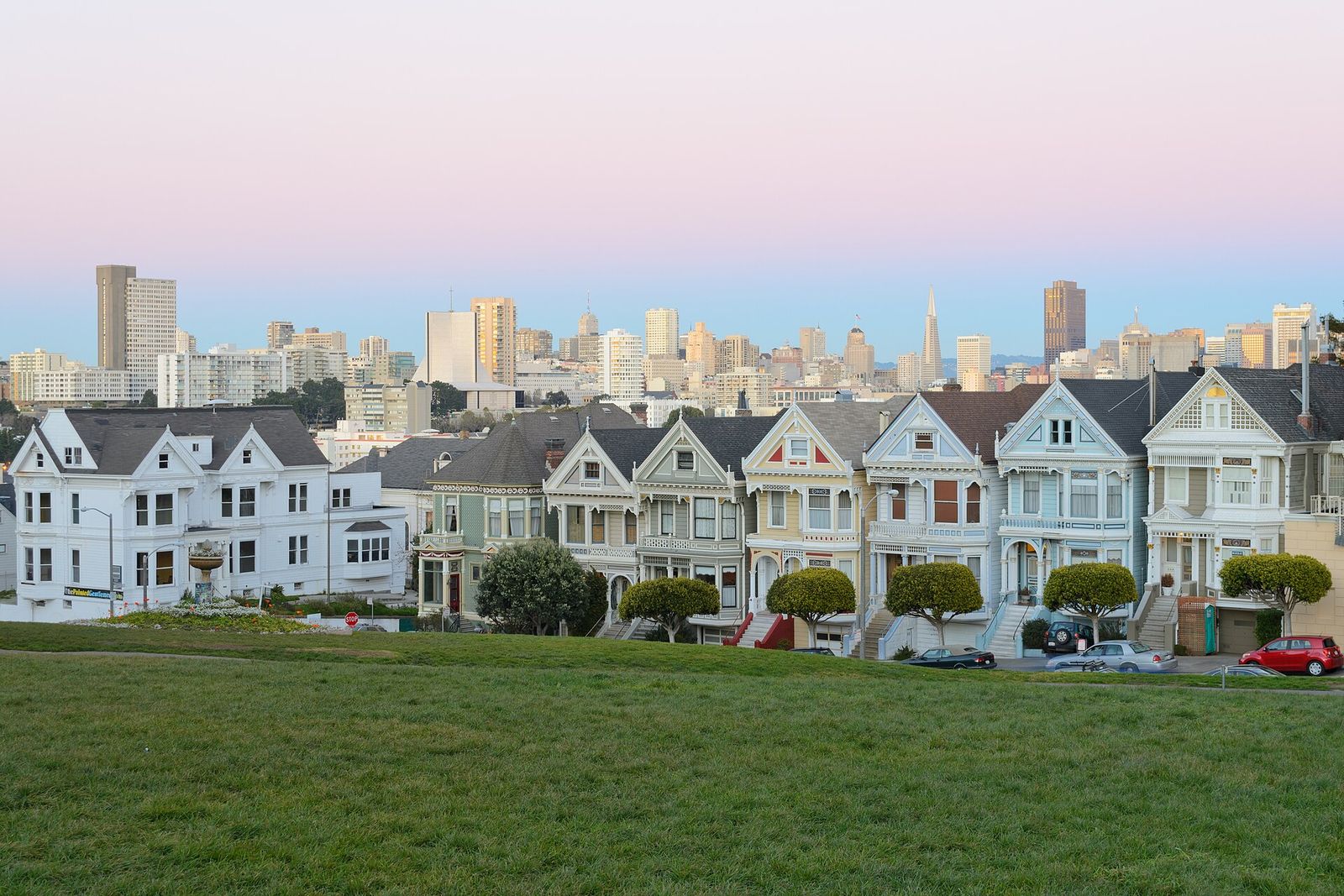
San Francisco is compact, roughly 11 km (7 miles) across, but where you stay still shapes your trip. The city is famously hilly, the weather can change from one neighbourhood to the next, and the areas range from the busy hotel district around Union Square to quiet residential streets of Victorian houses. Here's how the main areas compare, and how to get between them.
The quick answer
- First visit, shopping and transit: Union Square.
- Grand old hotels and views: Nob Hill.
- Business trips, the Ferry Building and the bay: the Financial District and the Embarcadero.
- Museums, conventions and the ballpark: SoMa.
- Families and the waterfront: Fisherman's Wharf.
- Cafés, history and walkable streets: North Beach and Chinatown.
- A neighbourhood feel near the Golden Gate Bridge: the Marina and Cow Hollow.
- Food, murals, sunshine and nightlife: the Mission and the Castro.
Union Square: the central hub
Union Square is the city's main shopping and hotel district, with department stores, theatres along Geary Street and the cable car turnaround at Powell and Market streets. Powell Street station, a few minutes' walk away, is served by both BART and the Muni Metro.
Good for: first-time visitors, shoppers, theatre-goers and anyone who wants the best transit connections. Consider: the blocks to the west and south-west border the Tenderloin, where visible homelessness and drug use are common. Many visitors prefer hotels north and east of the square and take a taxi late at night.
Nob Hill: grand hotels and cable cars
Nob Hill rises steeply north of Union Square. Before the 1906 earthquake and fire it was where the railway barons built their mansions; today it has grand hotels, Grace Cathedral, the small Huntington Park and some of the best views in the city. The California Street cable car crosses the two Powell Street lines near the top.
Good for: couples, classic luxury and anyone who wants a calm base close to downtown. Consider: the hills are very steep, so walking back up after dinner is a workout; the cable cars and taxis save your legs. The lower slopes towards the Tenderloin are less polished.
The Financial District and the Embarcadero
The Financial District is the city's cluster of high-rises, including the Transamerica Pyramid. On its waterfront edge, the Ferry Building has a food hall, a well-known farmers' market and ferries across the bay, and the Embarcadero promenade runs along the piers in both directions.
Good for: business travellers, bay views and quick links to the airport and the East Bay; Embarcadero and Montgomery stations are on both BART and Muni Metro. Consider: it's very quiet at night and at weekends, and rates are often highest mid-week.
SoMa: museums, conventions and the ballpark
South of Market Street, SoMa is a former industrial district now full of offices, apartments and modern hotels. Its heart is Yerba Buena, with the Moscone convention centre, the San Francisco Museum of Modern Art and Yerba Buena Gardens. The baseball park sits on the waterfront to the south-east, and the basketball arena is further south in Mission Bay.
Good for: convention-goers, museum visitors and sports fans. Consider: some streets feel empty after office hours, the blocks around Sixth Street can feel uncomfortable at night, and prices spike during big conventions.
Fisherman's Wharf: the waterfront for families
The northern waterfront has sea lions at Pier 39, historic ships at the Hyde Street Pier, Aquatic Park and the ferries to Alcatraz from Pier 33. Two cable car lines end here, and the historic F-line streetcars run along the Embarcadero to Market Street.
Good for: families and short visits focused on the sights. Consider: it's the most touristy part of the city, with little local life in the evening, and it's often cool and foggy in summer. There's no BART station, so reaching other neighbourhoods takes longer. Alcatraz tours often sell out, so book ahead through the official operator.
North Beach and Chinatown: history and character
North Beach is the historic Italian neighbourhood, with espresso bars, bakeries, Washington Square, Saints Peter and Paul Church and a strong link to the Beat writers of the 1950s. Coit Tower stands on Telegraph Hill above it. Next door, Chinatown, centred on Grant Avenue and Stockton Street, is one of the oldest in North America; the ornate Dragon Gate marks its southern entrance on Grant Avenue.
Good for: food lovers, couples and keen walkers. Consider: accommodation is mostly small hotels and guesthouses, and the Broadway strip has late-night bars and clubs. The Central Subway links Chinatown to Union Square and SoMa in a few minutes.
The Marina and Cow Hollow: relaxed and residential
Near the bay in the north-west, the Marina and Cow Hollow are affluent neighbourhoods built around Chestnut and Union streets, with boutiques, restaurants and bars. The Palace of Fine Arts, the Marina Green and Crissy Field are close, and the Golden Gate Bridge is a walk or short ride away through the Presidio. Lombard Street here is a long strip of motels and mid-range hotels; the famous crooked block is further east on Russian Hill.
Good for: active travellers, families and anyone who wants a neighbourhood feel near the bridge. Consider: there's no BART or Muni Metro, so buses to downtown take a while, summer fog is common, and Lombard Street is noisy with traffic.
The Mission and the Castro: food, murals and sunshine
The Mission is one of the oldest parts of the city, named after Mission Dolores, founded in 1776. It's known for its Latino heritage, the murals of Balmy and Clarion alleys, taquerias, the bars and restaurants of Valencia Street and Dolores Park. It's often sunnier and warmer than the rest of the city. The Castro, next door, is the city's historic LGBTQ+ neighbourhood, with its 1920s movie palace.
Good for: food lovers, nightlife and repeat visitors. Consider: there are few hotels, mostly guesthouses and rentals, and some blocks near the 16th Street BART station are gritty. Repeat visitors also like Hayes Valley, near the opera house and symphony hall, and the streets around Alamo Square with its row of Victorian "Painted Ladies".
How the areas compare
| Area | Feel | Transit | Best for |
|---|---|---|---|
| Union Square | Busy, central | Excellent (BART, Muni, cable cars) | First visits, shopping |
| Nob Hill | Elegant, hilly | Cable cars | Classic hotels, views |
| Financial District / Embarcadero | Business, waterfront | Excellent (BART, Muni) | Business, the bay |
| SoMa | Modern, mixed | BART, Muni Metro | Conventions, museums |
| Fisherman's Wharf | Touristy | Cable cars, F-line, buses | Families, sights |
| North Beach / Chinatown | Historic, lively | Central Subway, buses | Food, walking |
| Marina / Cow Hollow | Residential, affluent | Buses | The bridge, a local feel |
| Mission / Castro | Vibrant, sunny | BART, Muni Metro | Food, nightlife |
| Near SFO | Functional | Hotel shuttles, BART | Early flights |
Getting around
- From SFO: BART runs from the international terminal to downtown in about 30 minutes. Hotels around the airport and in nearby towns such as Millbrae and Burlingame suit early flights.
- Muni: the city's network of buses, Muni Metro light rail, historic streetcars and cable cars. Muni Metro and BART share the stations under Market Street downtown.
- Cable cars: three lines, Powell–Hyde, Powell–Mason and California Street. They charge a separate, higher fare, and queues at the Powell Street turnaround can be long; boarding at a later stop often saves time.
- Paying: tap a contactless bank card or phone at BART gates and on Muni, or use the regional fare card. Muni has multi-day visitor passes; check the current fares and options on the official sites.
- Walking: distances are short, but a few blocks can include a very steep hill.
Practical tips before you book
- Pack layers whatever the season. Summer is often cool and foggy, especially near the ocean and the bay, while September and October are frequently the warmest months.
- Check the convention calendar. Big conferences at the Moscone convention centre fill downtown hotels and push rates up.
- Compare total prices. The city adds a hotel tax and other assessments to room rates, and some hotels add daily fees.
- Short-term rentals must be registered with the city, and the listing should show its registration number. Read the current rules before you book.
- Don't keep a car if you can avoid it. Parking is scarce and expensive, and car break-ins are a known problem: never leave anything visible in a parked car.
- Day trips: the Bay Area universities make good outings; see our guides to Berkeley and Stanford, and for a longer drive, the Big Sur road trip.
For a first visit, stay between Union Square and the Embarcadero, close to the BART and Muni stations under Market Street, and the rest of the city is a short ride away.
Bloiq is reader-supported. Some links may earn us a commission; it never affects what we write. How we make money.
Cover photo: King of Hearts, CC BY-SA 3.0, via Wikimedia Commons