Home / Travel / Australia · Campus tours
University of Queensland campus tour: St Lucia, the Great Court and the river
A guide to visiting UQ's St Lucia campus in Brisbane: the Great Court, the Forgan Smith Building, the jacarandas, UQ Lakes and the CityCat ferry to the city.
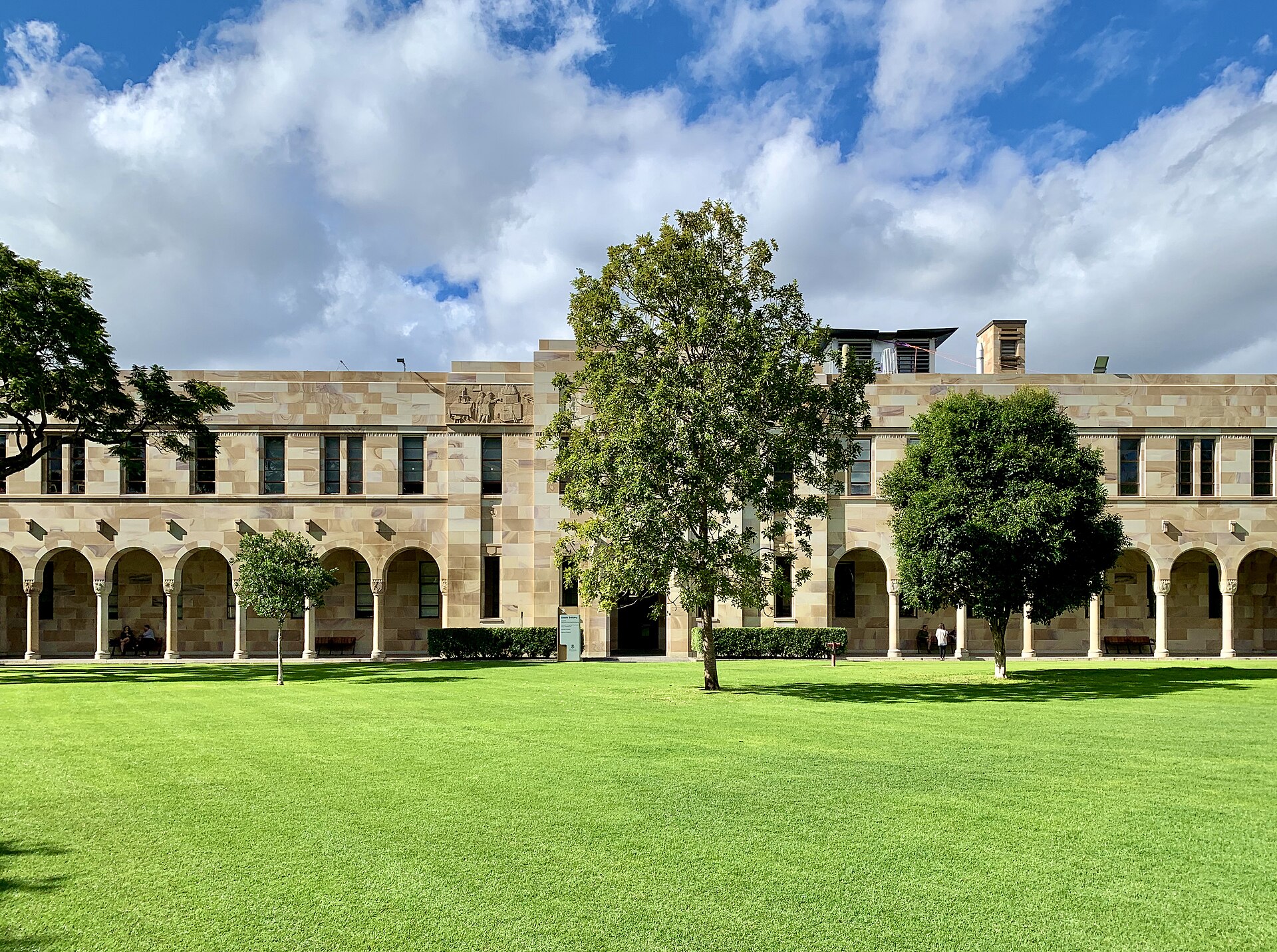
The University of Queensland was founded in 1909 as the state's first university, and its main campus is at St Lucia, on a wide bend of the Brisbane River a few kilometres south-west of the city centre. Sandstone buildings, jacaranda trees, lakes and a ferry stop on the riverbank make it one of the most memorable campuses in Australia to visit. This guide covers what to see, how visits are organised and how to get there from central Brisbane.
Arriving by river
The most enjoyable way to reach St Lucia is by water. The CityCat, Brisbane's fast river ferry, stops at the UQ St Lucia terminal on the campus riverbank and runs downstream to the city centre, passing South Bank and the high-rise towers along the way. It's a practical commuter service and a scenic ride at the same time.
From the ferry terminal it's a short walk up to the heart of the campus. If you're coming by bus instead, services arrive at bus stations within the campus, and the Eleanor Schonell Bridge (often called the Green Bridge) carries buses, pedestrians and cyclists across the river from Dutton Park.
The Great Court
The centre of the campus is the Great Court, a large lawn framed on three sides by long sandstone buildings with shady arcades. Look closely at the arcades and you'll see carved figures and grotesques: faces, animals and scenes set into the stonework. The carvings were added over many decades and are part of the fun of walking the cloisters.
The Great Court is where students cross between classes, sit in the shade and meet friends. It's also the best place to start a self-guided walk, because most of the older buildings open onto it.
The Forgan Smith Building
The tallest building on the Great Court is the Forgan Smith Building, home to the law school. Its central tower is the classic symbol of UQ and appears on much of the university's imagery. It's the obvious backdrop for a photo, and standing on the lawn in front of it gives a good sense of the scale of the whole court.
Jacaranda season
In late spring, usually from around late October into November, jacaranda trees turn parts of the campus purple. The blooms arrive right around exam time, and students joke that if a flower lands on your head, you haven't studied enough. If you can time your visit to the flowering season, the Great Court and the paths around it are at their most photogenic.
UQ Lakes and the wider campus
Down the slope from the Great Court, the UQ Lakes area has lawns, shady trees and water birds that wander freely among the picnickers. In Brisbane's warm, subtropical climate, students often eat and study outdoors here between classes.
Beyond the historic core, the campus has modern teaching and research buildings, extensive sports facilities, including playing fields and an aquatic centre, and an art museum. Several residential colleges are on the campus, including St John's, Emmanuel, King's and Women's College, each with its own traditions, dining and community. Colleges run their own applications, so check their websites alongside the university's accommodation pages.
Planning your visit
UQ runs campus tours for prospective students, and it holds an Open Day when faculties and services present programmes, give talks and open facilities to visitors. Self-guided walking maps are also available. Tour formats and dates change from year to year, so check UQ's official future-students and visitor pages before you plan the trip.
You can walk through the Great Court and around the grounds on your own. Many buildings require a student or staff card.
Getting to Brisbane and around the city
- From the airport: the Airtrain runs from Brisbane Airport to the city centre; taxis and rideshares are also available.
- To campus: the CityCat from the city centre or South Bank, or frequent buses from the city and the Cultural Centre area.
- Paying: Brisbane's public transport uses the go card and accepts contactless payment on many services; check the current options on the official transport website.
- Driving: parking on campus is limited and usually paid, so public transport is generally easier.
Picking a neighbourhood for your stay
- The city centre: a wide choice of accommodation and a direct CityCat or bus ride to St Lucia.
- South Bank: across the river from the city, beside the parklands, the Queensland Museum and the Gallery of Modern Art, with ferry and bus links to campus.
- Toowong: a suburb close to St Lucia, with shops, places to eat and quick bus connections.
- West End: a lively inner suburb across the river from the campus, known for cafés and restaurants.
Practical tips
- Dress for the climate. Brisbane is warm and humid for much of the year; bring a hat, sunscreen and water.
- Plan around the heat. Summer storms often roll in during the afternoon, so mornings are best for walking the grounds.
- Use the river. Allow time to ride the CityCat at least one way; it's the best view of the city.
- Compare campuses. The University of Sydney campus tour and the UNSW Sydney campus tour cover two very different campuses further south.
- Check before you go. Tour times and visitor rules change; UQ's official visitor page has the current details.
Bloiq is reader-supported. Some links may earn us a commission; it never affects what we write. How we make money.
Cover photo: Chris Olszewski, CC BY-SA 4.0, via Wikimedia Commons