Home / Travel / Australia · Campus tours
ANU campus tour: visiting the Australian National University in Canberra
A visitor's guide to the ANU campus in Acton: Kambri, the residential halls, Lake Burley Griffin, Black Mountain, the National Museum and Mount Stromlo.
The Australian National University was created by an act of the Australian Parliament in 1946, and its campus in Acton sits right beside central Canberra. Unlike the sandstone city campuses of Sydney or Melbourne, ANU feels like a large park: native trees, open lawns, a creek running through the middle, and kangaroos grazing on the grass in the evenings. This guide explains how the campus is laid out, what's worth seeing, and how to plan a visit to Canberra around it.
The shape of the campus
The Acton campus covers a wide area between the city centre, known locally as Civic, to the east, Black Mountain to the west and Lake Burley Griffin to the south. Sullivans Creek runs roughly north to south through the grounds, with paths and lawns on both banks, and it's the easiest landmark to navigate by.
Because the campus is so spread out, distances are longer than they look on a map. Buildings are scattered among the trees rather than packed around quadrangles, and a walk from one side to the other can take 20 minutes or more. Comfortable shoes and a downloaded campus map make a real difference.
Kambri, the heart of campus
Kambri is the newer heart of the university, a precinct beside Sullivans Creek with cafés, shops, student services, sports facilities and teaching spaces. It opened around the end of the 2010s and is where most visitors should start: it has places to eat, shade and seating, and it's close to many of the main teaching buildings.
Several of the university's libraries are within a short walk of Kambri, including the Chifley Library, which serves the humanities, social sciences and business. It shows how much of student life is organised around this central strip of campus.
Living on campus
Many ANU students, especially in their first year, live in residential halls and colleges a short walk from the centre of campus. Names such as Bruce Hall, Burgmann College and Ursula Hall come up often, and each has its own dining arrangements, traditions and community events. Because so many students come to Canberra from other parts of Australia and overseas, residential life is a larger part of the student experience here than at many city universities. Check the university's accommodation pages for the current options and how to apply.
The lake, the mountain and the museum
Three places just beyond the campus boundary are worth adding to any visit.
Lake Burley Griffin. The lake is at the southern edge of campus, with shared paths for running and cycling along the shore and views across the water to the national institutions. A lakeside loop is a pleasant way to end a day of walking the campus.
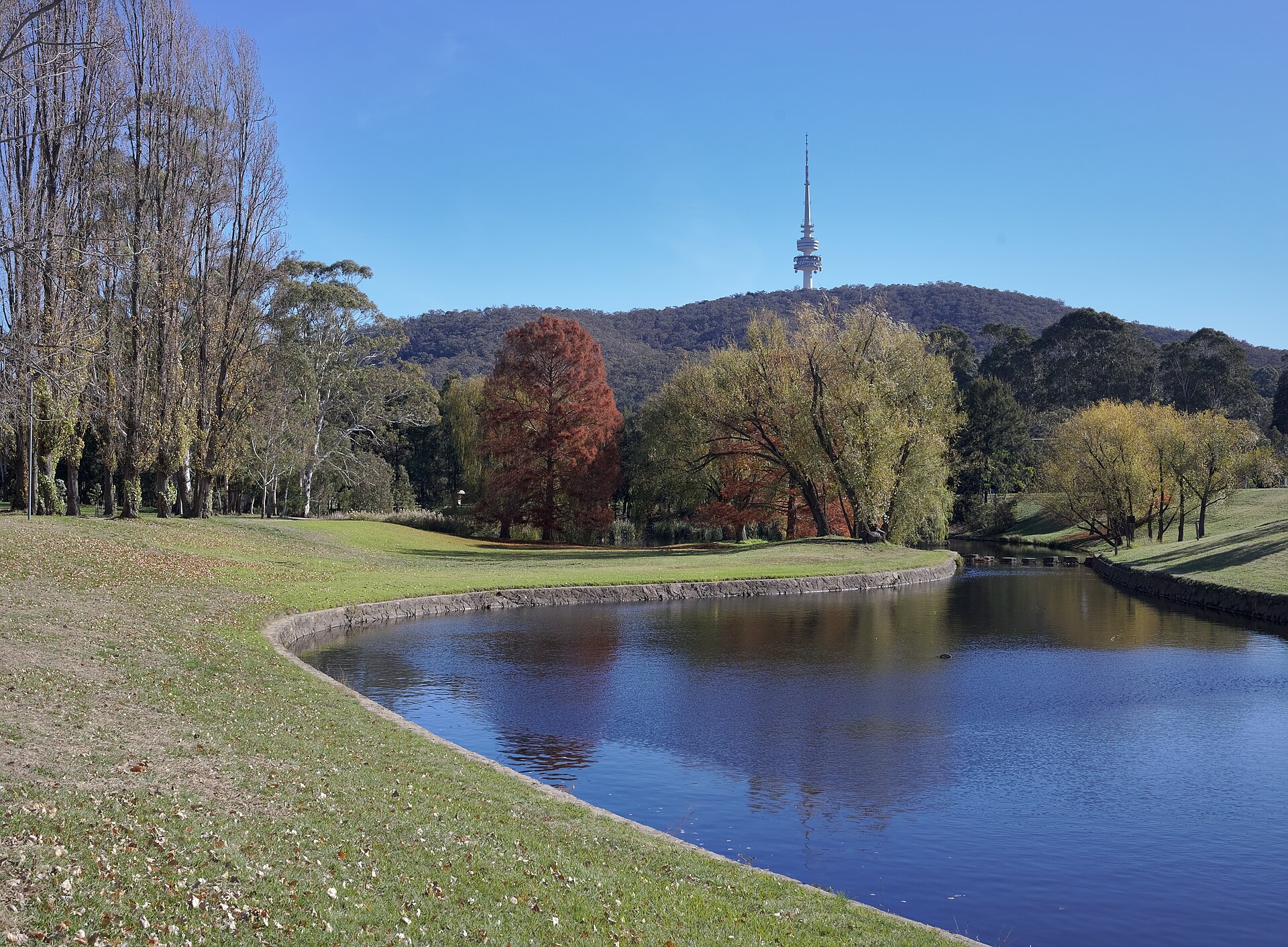
Black Mountain. Behind the campus rises Black Mountain, topped by the Telstra Tower, a telecommunications tower with a viewing area. Bushwalking trails start almost at the campus boundary. The Australian National Botanic Gardens are on the mountain's lower slopes, next to the university, and are a good place to see native plants up close.
Acton Peninsula. The National Museum of Australia stands on the Acton Peninsula, a short walk from campus. It covers Australian history and Aboriginal and Torres Strait Islander cultures, and it's an easy addition to a campus day.
Mount Stromlo and ANU science
ANU's astronomers work at Mount Stromlo Observatory, on a hill to the west of the city. Research led from there on distant supernovae showed that the expansion of the universe is accelerating, work that led to a Nobel Prize in Physics for ANU astronomer Brian Schmidt, shared with two American colleagues. The observatory site is some distance from the main campus, so you'll need a car or a taxi to get there. Check what's open to visitors before you go.
How to arrange a visit
ANU offers campus tours for prospective students, and it holds an annual Open Day when schools, colleges and student services run talks and information stalls. Arrangements, dates and booking details change, so check the university's official future-students and visitor pages before you travel.
The campus grounds are open, so you can walk around on your own at any reasonable hour. Teaching buildings and residences are generally limited to students and staff.
Getting to Canberra and around it
- By air: Canberra Airport is a short drive east of the city, around 15 to 20 minutes by taxi or rideshare to the campus, depending on traffic.
- From Sydney: the drive takes roughly three hours, and coaches and trains also run between the two cities. The train station is in Kingston, south of the lake, so allow for a connection to campus.
- In the city: Canberra's light rail runs from the northern suburbs into Civic, which borders the campus. Buses cover the rest of the city. Check current fares and payment options on the official transport website.
- By bike: Canberra has an extensive network of shared paths, and cycling around the lake and campus is one of the best ways to see the city.
Where families usually stay
- Civic (the city centre): next to campus, with the widest choice of places to stay and eat.
- Braddon: just north of Civic, known for cafés and restaurants along Lonsdale Street.
- New Acton: a small precinct between Civic and the lake, within walking distance of campus.
- Kingston and Barton: south of the lake, closer to the parliamentary area and the train station; a short drive or bus ride to campus.
Tips before you go
- Pick a season. Canberra has cold winters with frosty mornings and hot summers, so pack for the weather. Autumn, roughly March to May, brings colourful trees across the campus.
- Look out for wildlife. Kangaroos are often seen on campus lawns around dusk. Keep your distance.
- Allow extra time. The campus is large and walkable, but not quick.
- Compare campuses. The University of Sydney campus tour and the University of Melbourne campus tour show two very different city settings.
- Check before you go. Tour times and visitor rules change; ANU's official visitor page has the current details.
Bloiq is reader-supported. Some links may earn us a commission; it never affects what we write. How we make money.
Cover photo: Thennicke, CC BY-SA 4.0, via Wikimedia Commons