Home / Travel / Australia · Campus tours
University of Melbourne campus tour: Parkville, Carlton and the colleges
Plan a visit to the University of Melbourne's Parkville campus: Old Arts and the Old Quad, the South Lawn, the colleges, Lygon Street and getting there by tram.
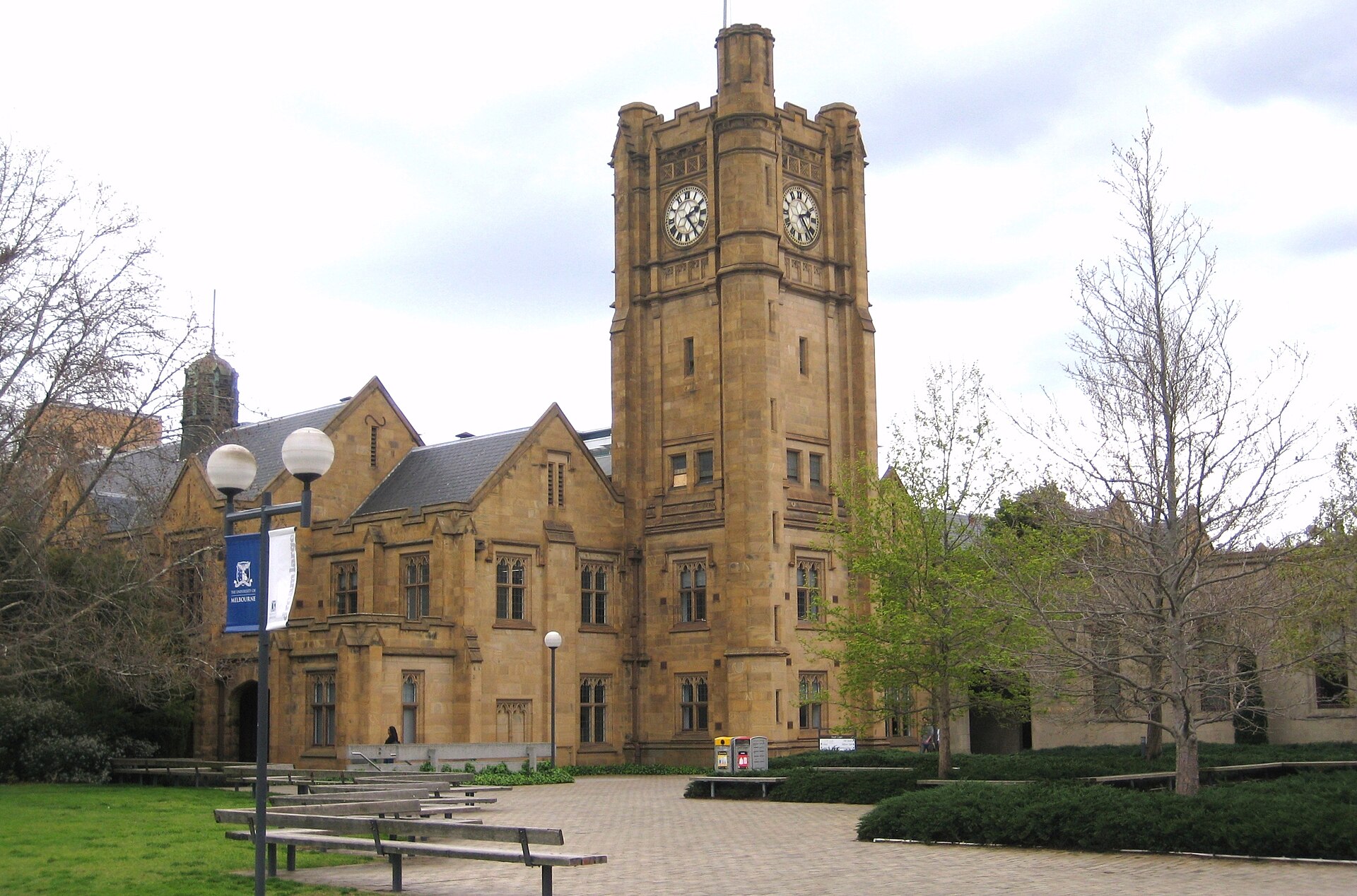
The University of Melbourne was founded in 1853, which makes it the oldest university in Victoria, and its main campus at Parkville sits just north of the city centre. For a prospective student, that location is the whole story: a compact, walkable campus of sandstone and modern buildings, a row of residential colleges on one side, the cafés of Carlton on the other, and a tram line that runs straight into the city. This guide walks through what to see and how to plan the day.
Getting your bearings
Parkville is bounded roughly by Swanston Street to the east, Grattan Street to the south, Royal Parade to the west and College Crescent to the north. Most of what a first-time visitor wants is in the older, eastern half of the campus, so a sensible walk starts near Swanston Street and works inwards.
The campus mixes 19th-century stone buildings, interwar brick and a good deal of contemporary architecture, especially around the newer design and engineering buildings. Signs and campus maps are frequent, and the university publishes a downloadable map that's worth saving to your phone before you arrive.
Old Arts and the Old Quad
The clock tower of the Old Arts building is the campus landmark and the image most people associate with the university. It stands near the centre of the older campus, surrounded by lawns and paths.
A short walk away is the Old Quad, the university's oldest building. It no longer holds lecture rooms; today it's used for exhibitions and events, and when it's open to visitors it's a good place to get a sense of the university's early history. Nearby, the Baillieu Library is the main library for the humanities and social sciences, and the campus also has specialist libraries spread across the faculties.
The South Lawn and what lies beneath it
The South Lawn is where students gather when the sun is out, between classes and at lunchtime. It's a broad, open space framed by buildings, and it tends to be the busiest spot on a weekday.
Few visitors realise it sits on top of an underground car park. The car park's rows of vaulted concrete columns are unusual enough that it was used as a filming location for the original Mad Max film. The lawn above was designed as a landscaped roof, which is why the trees and paths look so deliberately laid out.
The residential colleges
Along the northern edge of campus, on and around College Crescent, a line of residential colleges houses many undergraduates. Ormond is one of the best known, with a grand Gothic Revival main building, and there are several others, each with its own dining hall, traditions and academic tutorial programme alongside university classes.
Colleges are separate institutions affiliated with the university, and each runs its own application process and visits. If living in a college interests you, look at the individual college websites as well as the university's own housing pages, since the university also offers student accommodation that isn't part of the college system.
Carlton and Lygon Street
The university's eastern neighbour is Carlton, and a few minutes' walk brings you to Lygon Street, Melbourne's Italian quarter. It's lined with cafés, pizza places, gelato shops and bookshops, and it's where many students eat when they're not on campus.
Carlton is also home to the Royal Exhibition Building and the Carlton Gardens, a UNESCO World Heritage Site, with the Melbourne Museum beside them. They're about a 15-minute walk south-east of campus, so it's easy to fit them into the same day as a campus visit.
Visiting: tours and Open Day
The University of Melbourne runs campus tours for prospective students, including student-led walking tours, and it holds an annual Open Day when faculties, colleges and student services set up information stands and talks across the campus. Formats, dates and booking arrangements change from year to year, so check the university's official visitor and future-students pages before you plan your trip.
Outside organised events, the grounds are open and you can walk around on your own. Buildings are a different matter: many need a student or staff card, so plan to see most places from outside unless they're open to the public, such as some museums and galleries.
Travel logistics
- From the airport: Melbourne Airport is at Tullamarine, north-west of the city. The SkyBus express runs to Southern Cross Station in the city centre, and taxis and rideshares are available too.
- By tram: trams run along Swanston Street, beside the campus, straight into the city centre in about 10 to 15 minutes. It's one of the busiest tram corridors in the city, so services are frequent.
- Paying for public transport: Melbourne's trams, trains and buses use the myki card system. Check the current payment options on the official public transport website before you travel.
- On foot: from the northern end of the city centre, such as around the State Library or Melbourne Central, the walk to campus takes around 20 minutes.
Choosing a base for the visit
- The city centre (CBD): the widest choice of accommodation, with trams up Swanston Street to campus. Good if you also want to see the rest of Melbourne.
- Carlton: quieter, residential and walkable to both campus and Lygon Street. A good choice for a visit focused on the university.
- Parkville and North Melbourne: close to the western side of campus and to the Royal Melbourne Hospital and research precinct, with smaller-scale options.
- Southbank or Docklands: further out but still a direct tram ride away, and handy if you have other plans in the city.
Practical tips for the day
- Allow half a day for the campus itself, and add time for Lygon Street and the Carlton Gardens.
- Bring layers. Melbourne's weather is famously changeable, and a warm morning can turn cool and wet by afternoon.
- Time your visit. Term-time weekdays show the campus at its liveliest; weekends and holidays are quieter and easier for photographs.
- Save the map offline. The campus is compact, but building names and numbers can be confusing on a first visit.
- Check before you go. Tour times, visitor rules and open-day formats change; the university's official visitor page has the current details.
If you're comparing Australian universities, the University of Sydney campus tour and the ANU campus tour cover two other long-established campuses.
Bloiq is reader-supported. Some links may earn us a commission; it never affects what we write. How we make money.
Cover photo: Polly clip, CC BY-SA 3.0, via Wikimedia Commons
.JPG)