Home / Travel / United States · Campus tours
UC Berkeley campus tour: the Campanile, Sproul Plaza and more
A visitor's guide to UC Berkeley: Sather Tower, Sather Gate and Sproul Plaza, Doe Library, Memorial Stadium, Telegraph Avenue, BART and where to stay.
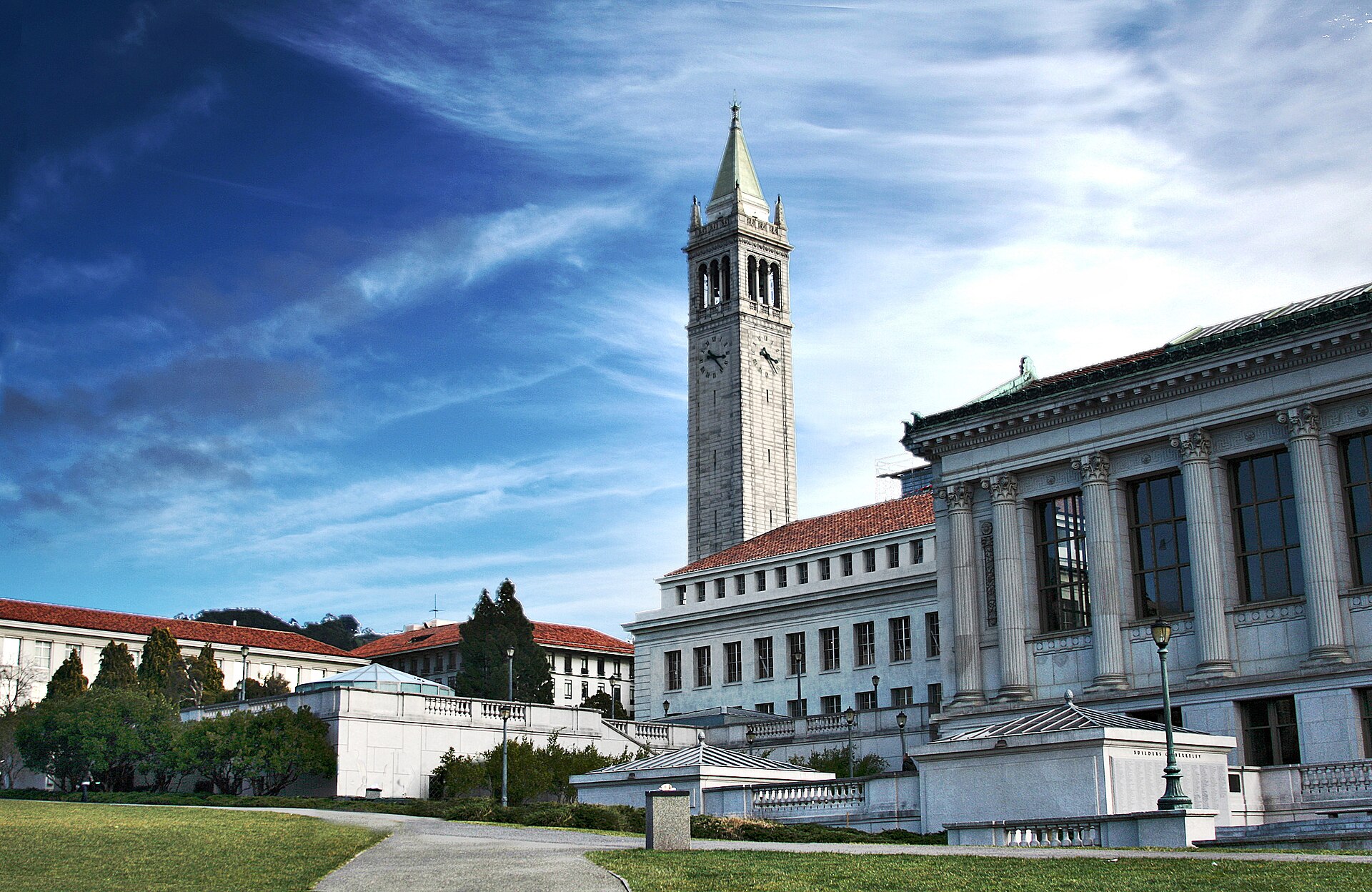
The University of California, Berkeley was founded in 1868, which makes it the oldest campus of the University of California. It climbs from the flat streets of downtown Berkeley up into the wooded Berkeley Hills, and from its higher points you can look west across the bay to San Francisco and the Golden Gate. It's a busy, urban campus with a strong sense of history, and nearly everything a visiting family wants to see lies within a 20-minute walk. Here's how to plan the day.
Getting your bearings
Think of the campus as a slope. The western edge meets downtown Berkeley and its BART station; the core, with the libraries and the Campanile, sits in the middle; and the stadium, the Greek Theatre and the research institutes spread up into the hills to the east. Strawberry Creek winds through the campus in a wooded ravine, with footbridges and a eucalyptus grove near the west entrance that make pleasant shortcuts. The residence halls are mostly just south of campus, on the Southside, with a smaller group on the Northside.
A good loop starts at the west entrance, heads up to the Campanile, drops south through Sather Gate to Sproul Plaza and finishes on Telegraph Avenue.
Sather Tower
Sather Tower, which everyone calls the Campanile, is the landmark you'll see from almost everywhere. Completed in 1914, it rises above the central esplanade, and its carillon bells ring out over campus at set times of day. An elevator takes visitors to an observation level with wide views of the bay and, on a clear day, the Golden Gate Bridge. Access hours and ticketing change, so check before you go, and time your visit for a morning if you want the clearest views before the afternoon fog rolls in.
Sather Gate and Sproul Plaza
South of the Campanile, the ornate Sather Gate marks the traditional southern entrance to campus. Beyond it, Sproul Plaza is the busiest open space at Berkeley, lined with tables where student clubs recruit members and hand out flyers. In 1964 it was the birthplace of the Free Speech Movement, and the steps of Sproul Hall remain a place for rallies and speeches. On a weekday around midday, this is where you get the quickest sense of what campus life is like.
Libraries and Memorial Glade
Doe Library, the main library, is a grand classical building on the north side of the central campus. Its reading rooms and the undergraduate library beside it are among the most-used study spaces. In front of Doe, Memorial Glade is a big open lawn where students study, nap and meet friends when the sun is out. It's also a good place to pause with a picnic from one of the cafés nearby.
Up the hill: Memorial Stadium
At the eastern edge of campus, Memorial Stadium sits right on top of the Hayward Fault and has been extensively retrofitted to cope with earthquakes. It's the home of Cal football, and the annual Big Game against Stanford is the highlight of the season. If you're also planning to see Stanford, our Stanford campus tour guide covers the other side of the rivalry. Beyond the stadium, the road continues into Strawberry Canyon, with the UC Botanical Garden and hillside trails.
Student life and the Southside
Most first-year students live in the residence halls on the Southside, a few blocks from Sproul Plaza. Telegraph Avenue, running south from the plaza, is their high street: cafés, cheap eats, bookshops, record stores and street vendors, with a lively, sometimes gritty feel. North of campus, the streets around Euclid Avenue are quieter, and the North Shattuck area is known for its restaurants and food shops.
The campus is busiest during the academic year. In summer, many students leave and the pace slows, which makes it easier to explore but gives a less typical picture.
Visiting and taking a tour
Berkeley typically offers student-led campus tours and admissions information for prospective students, with in-person and self-guided options. Tours usually need to be registered ahead, and times vary through the year, so check the university's official visitor pages before you travel. It helps to arrive early, as finding the meeting point on a hilly campus can take longer than expected.
Getting there and getting around
- BART: the Downtown Berkeley station is a short walk from the west side of campus, and trains reach downtown San Francisco quickly.
- Airports: Oakland airport is the closest; San Francisco International is also reachable by BART with a change.
- By car: parking near campus is limited and mostly metered or permit-only. Public garages downtown are the simplest option.
- On foot: the best way to see the campus. Wear comfortable shoes; the eastern side is steep.
Which area to stay in
- Downtown Berkeley: close to BART and the west entrance, with restaurants and theatres nearby.
- Southside, near Telegraph: the closest you can get to the student neighbourhoods; lively and walkable.
- North Berkeley and the hills: quieter and more residential.
- Oakland or San Francisco: more hotel choice, a BART ride away; useful if you're combining the visit with sightseeing.
Before you go
- Rooms fill quickly around graduation, move-in and big football weekends; book early for those dates.
- Pack a layer: mornings and evenings are often cool and foggy even in summer.
- Plan roughly half a day for the central campus and Telegraph Avenue, more if you add the Campanile, the stadium or the botanical garden.
- Check the official visitor pages again the week before your trip for any changes.
Bloiq is reader-supported. Some links may earn us a commission; it never affects what we write. How we make money.
Cover photo: brainchildvn on Flickr, CC BY 2.0, via Wikimedia Commons