Home / Travel / United States · Campus tours
Stanford campus tour: what to see on a visit to Stanford
Plan a visit to Stanford: Palm Drive and the Oval, the Main Quad, Memorial Church, Hoover Tower, the Rodin garden, the Dish trail and where families stay.
Stanford is one of the largest university campuses in the United States, spread across the flat land and golden foothills between San Francisco and San Jose. Leland and Jane Stanford founded it in memory of their only son, who died as a teenager, and it opened in 1891. For a visiting family, the scale is the first thing to plan around: the historic core is compact and walkable, but the sights at the edges are best reached by bike, shuttle or car. This guide follows a natural route from the main entrance to the hills and covers the practical side of a visit.
Arriving on Palm Drive
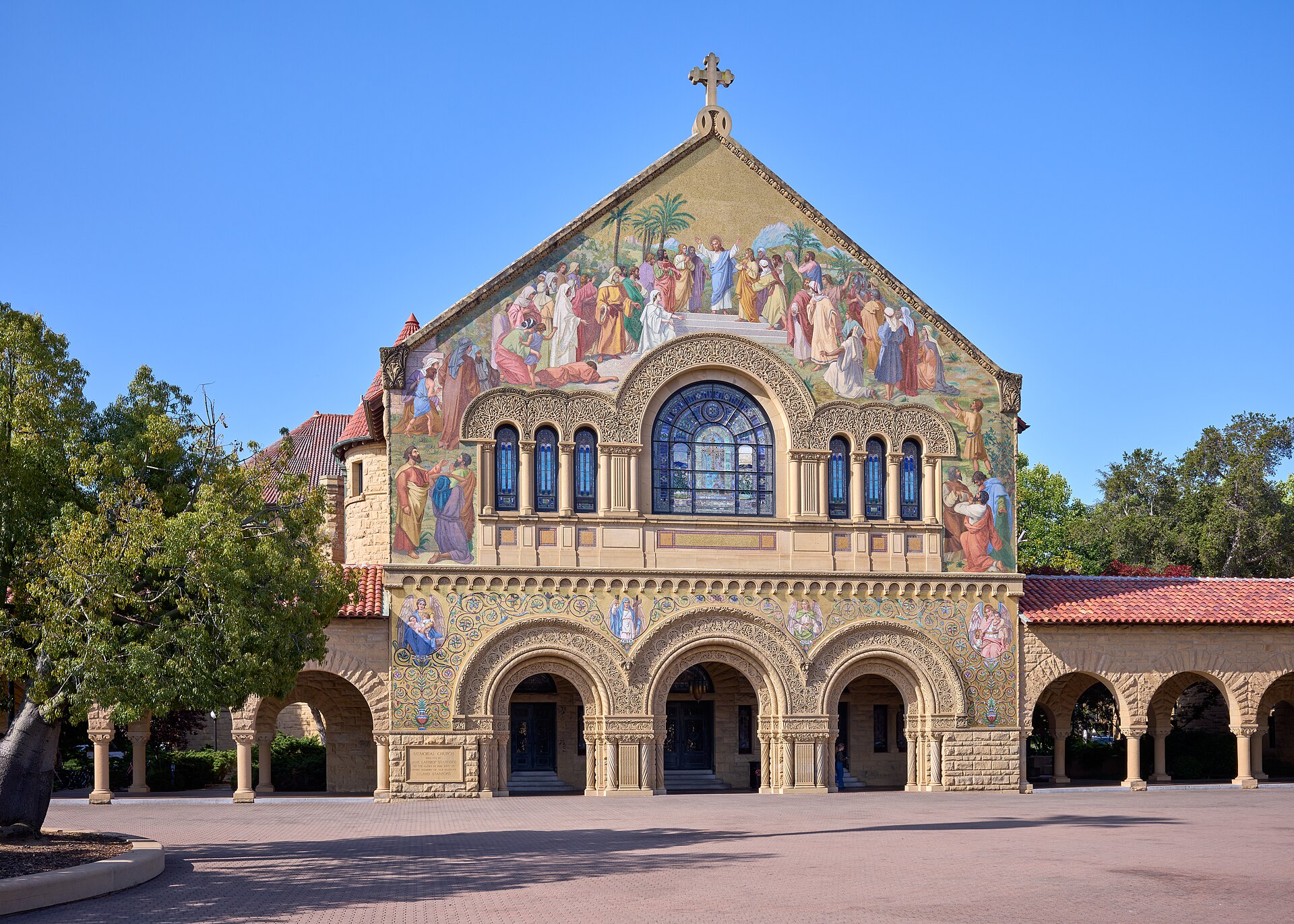
Most visitors enter from El Camino Real along Palm Drive, a straight avenue lined with tall palms that frames the first view of the campus. It ends at the Oval, a big elliptical lawn where students study, sunbathe and throw frisbees between classes. The Oval is also where many families take their first photograph, with the Main Quad and the mosaic front of Memorial Church straight ahead.
The Main Quad and Memorial Church
The Main Quad sets the look of the whole university: long arcades of buff sandstone, round Romanesque arches and red tile roofs, laid out in the original campus plan associated with Frederick Law Olmsted. Classrooms and departmental offices still fill the buildings, so the Quad is a working place rather than a museum.
At its centre stands Memorial Church, which Jane Stanford built in memory of her husband. Its façade is covered with a large gold-toned mosaic, and the interior is richly decorated with more mosaics and stained glass. The church was damaged in the earthquakes of 1906 and 1989 and restored both times. It's usually open to visitors outside services; step inside quietly if a service or event is under way.
Hoover Tower and the view
A short walk east of the Quad, Hoover Tower rises above the campus. It houses part of the Hoover Institution's library and archives, and its observation deck, when open, gives a sweeping view over red roofs and oak-dotted hills to the bay. Opening days and access can change, so check before planning your route around it.
Art on campus
The Cantor Arts Center, near Palm Drive, holds one of the largest collections of Auguste Rodin's bronzes outside Paris. The outdoor Rodin Sculpture Garden, next to the museum, includes The Gates of Hell and can be explored at any time of day. Nearby, the Anderson Collection focuses on modern and contemporary American art. A visit to either fits neatly before or after a campus tour.
The Dish and the foothills
The Stanford Dish, a large radio antenna in the foothills above campus, gives its name to a popular paved loop trail used by runners and walkers from all over the area. It's hilly, largely unshaded and closes in the evening, so go in the morning, bring water and check the posted hours. The views across the Santa Clara Valley and the bay are worth the climb.
What student life looks like
Most undergraduates live on campus throughout their studies, in residence halls grouped into neighbourhoods, and dining halls are part of daily life. Bikes are the main way to get around; at class change the paths near the Quad fill with cyclists, so walk carefully and keep to the pedestrian side. White Plaza, near the bookshop and Tresidder Union, is the everyday meeting point, with student groups staffing tables and events on sunny afternoons. The large Green Library serves most humanities and social science students, and athletics facilities, including Stanford Stadium, sit on the east side of campus.
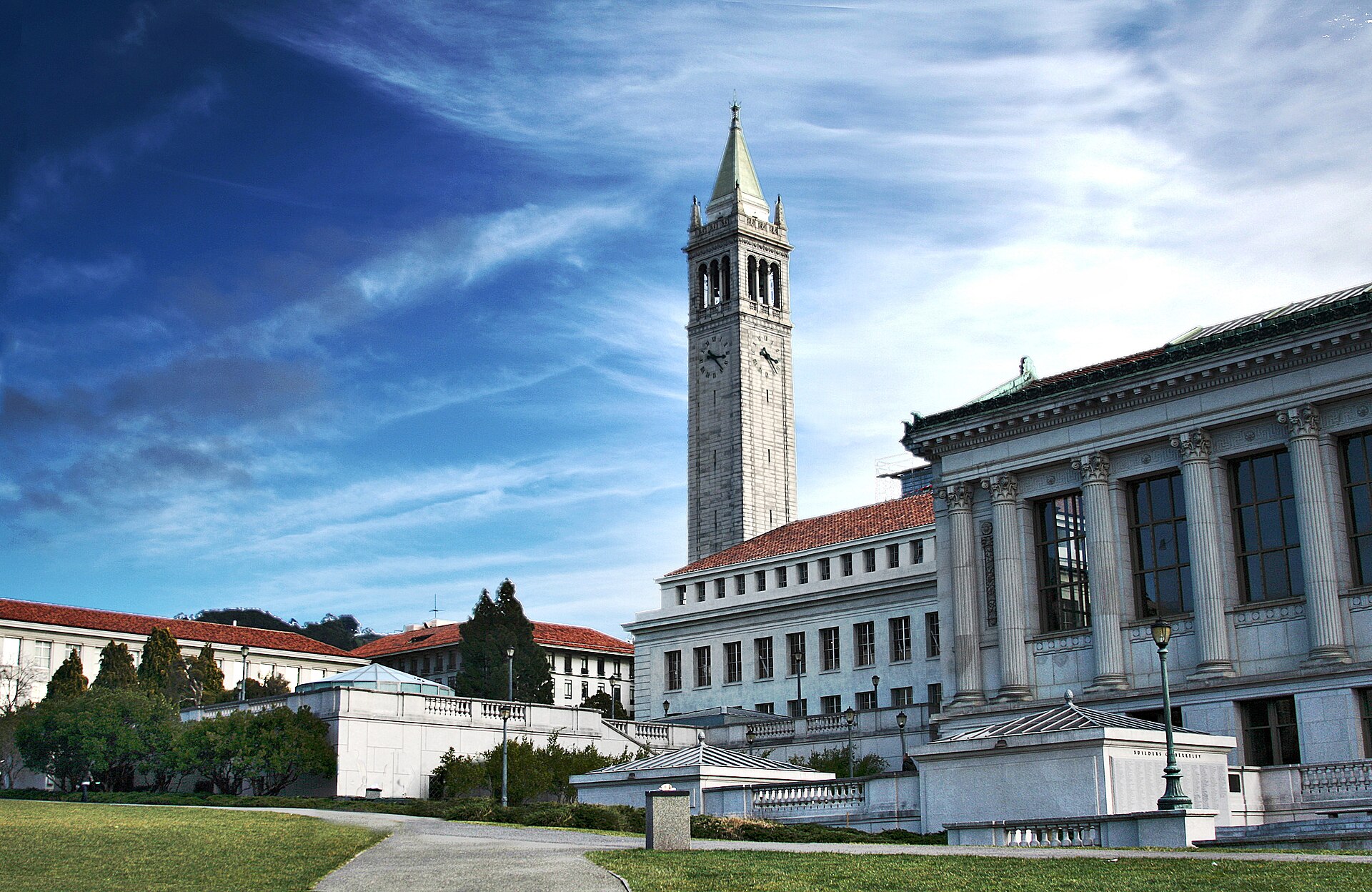
Stanford's long-standing rival is UC Berkeley, across the bay; many families visit both on the same trip.
How visits work
Stanford's admissions office typically runs information sessions and student-led walking tours of the central campus for prospective students. Places are usually limited and need to be registered in advance, and schedules change with the academic calendar, so check the university's official visitor and admissions pages for current times. Self-guided tours are also offered. Summer, winter holidays and exam periods feel very different from term time, when the campus is at its liveliest.
How to get there
- By air: San Francisco International and San José airports are both roughly half an hour to an hour by car, depending on traffic.
- By train: Caltrain stops at Palo Alto station, next to the campus edge at the end of University Avenue.
- On campus: Stanford's Marguerite shuttle, open to the public, links the station, the main academic areas and nearby parts of Palo Alto. Parking on campus is mostly paid and time-limited; read the signs carefully.
- By bike: rental bikes and scooters are common in the area, and the campus is flat except for the foothills.
Choosing a base for the visit
- Downtown Palo Alto: the most convenient base, around University Avenue's cafés and restaurants, a short shuttle ride or walk to Palm Drive, and close to Caltrain.
- El Camino Real: hotels line this road through Palo Alto, Menlo Park and Mountain View; handy with a car.
- Menlo Park and Mountain View: quieter and sometimes easier to find rooms, with Caltrain stations and their own small downtowns.
- San Francisco: a good choice if the trip combines several campuses and city sightseeing, but allow at least an hour each way.
Rooms near campus fill quickly around big weekends such as Commencement, move-in and home football games, so book early for those dates.
Practical tips for your visit
- Wear comfortable shoes and sun protection; distances are longer than they look and shade can be scarce.
- Start at the Oval and Main Quad in the morning, then add the museums, Hoover Tower and the Dish as time allows.
- Allow at least half a day for the core, or a full day if you want the foothills and Palo Alto too.
- Check the university's official visitor pages shortly before you go, as tour times and access rules change.
Bloiq is reader-supported. Some links may earn us a commission; it never affects what we write. How we make money.
Cover photo: Frank Schulenburg, CC BY-SA 4.0, via Wikimedia Commons
-L1007381.jpg)