Home / Travel / United Kingdom · Campus tours
University of Oxford campus tour: a walking route for future students
A walking tour of Oxford for applicants and parents: the Radcliffe Camera, Bodleian, colleges, the science area, student life, open days, transport and where to stay.
The University of Oxford is not a campus you can see from one spot. Teaching has taken place here since the late 11th century, making it the oldest university in the English-speaking world, and its colleges, libraries and departments are spread across the centre of a busy city. The best way to understand it is to walk. This guide suggests a route through the landmarks, explains how college life works, and covers the practical side of a visit for future students and their families.
Colleges and the university: the two halves of Oxford
Oxford is a collegiate university. There are roughly three dozen colleges plus a few smaller permanent private halls, and every undergraduate belongs to one. The university runs the faculties, lectures, labs, libraries and exams; the college is home, with its own accommodation, dining hall, chapel, library, clubs and tutors. Much undergraduate teaching happens in tutorials, where one or two students meet an academic to discuss their work. Choosing a college is part of applying, so many visitors use their day to compare a few.
A walk through the centre
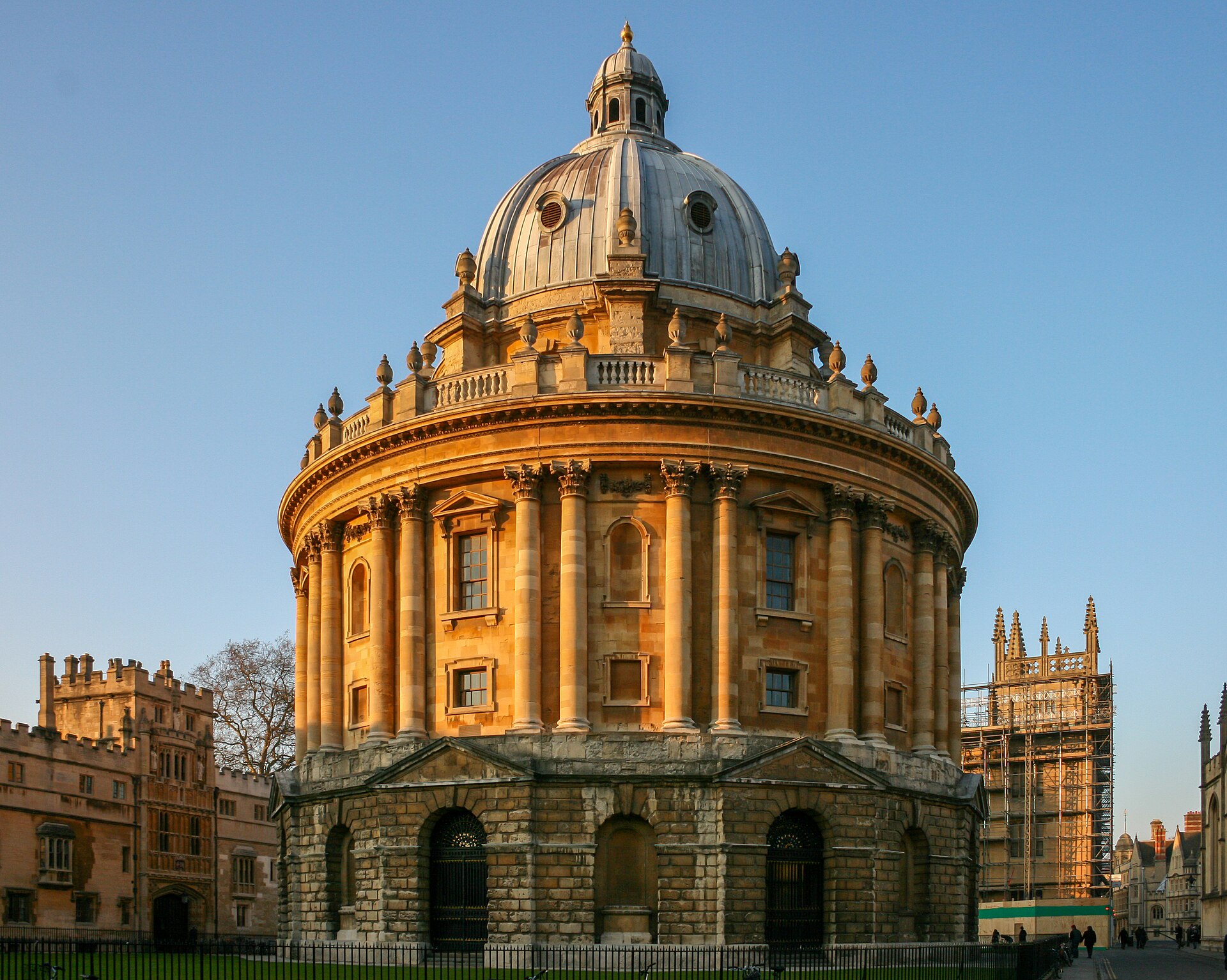
Radcliffe Square. Start at the Radcliffe Camera, the round, domed 18th-century building that has become the symbol of Oxford. It is a reading room of the Bodleian Libraries, used by students rather than open to casual visitors. Around the square stand All Souls College, Brasenose College and the University Church of St Mary the Virgin, whose tower gives one of the best views of the "dreaming spires".
The Bodleian and the Divinity School. North of the square, the Old Schools Quadrangle leads into the Bodleian Library, one of the oldest libraries in Europe. The 15th-century Divinity School, with its elaborate stone vaulted ceiling, can be seen by visitors, and guided tours take in more of the historic library. Across Broad Street, the Weston Library has public exhibition space and a café.
The Sheldonian and the Bridge of Sighs. Next door, the Sheldonian Theatre, designed by Christopher Wren, hosts matriculation and degree ceremonies. A few steps away, Hertford College's bridge over New College Lane is known as the Bridge of Sighs.
Christ Church and the meadow. Head south down St Aldate's to Christ Church, one of the largest colleges, whose chapel is also the city's cathedral. Its Tom Tower, Tom Quad and grand dining hall draw many visitors. Behind it, Christ Church Meadow runs down to the river.
Magdalen and the High. Walk east along the High Street to Magdalen College, with its bell tower by the bridge and Addison's Walk, a riverside path around a meadow. On May Morning, 1 May, a choir sings from the tower at dawn to crowds below.
North of the centre: museums and science
Parks Road leads north to the Science Area, where most laboratory subjects are based. On its edge, the Oxford University Museum of Natural History, a Victorian Gothic hall under a glass roof, is full of dinosaur skeletons, and the Pitt Rivers Museum behind it is packed with anthropology collections. Beyond lies University Parks, a large green space used for walking, cricket and running. Back towards the centre, the Ashmolean on Beaumont Street is the university's museum of art and archaeology, founded in the 17th century.
What student life looks like
College life shapes the week: meals in hall, college bars, societies, sports teams and, for many, formal dinners. The three terms, Michaelmas, Hilary and Trinity, are each eight weeks long and busy. Rowing is huge: college crews race in Torpids in winter and Summer Eights in the summer term on the stretch of the Thames known in Oxford as the Isis, and the university crew meets Cambridge each spring in the Boat Race in London. The Oxford Union hosts debates and guest speakers.
Around the colleges are markets, bookshops, pubs and cafés. The Covered Market, Jericho's canal-side streets and the Cowley Road area in East Oxford are popular with students.
Visiting as an applicant
The university holds open days, usually in summer and early autumn, with subject talks, admissions sessions and college tours led by current students. Outside open days, colleges decide their own visiting hours. Many open to the public at set times, some charge admission, and many close during exams, which fall mainly in the summer term, and at other times without much notice. Check the university's official visitor and open-day pages, and the websites of the colleges you care about, before you go.
Getting to Oxford and getting around
- By train: direct trains run from London Paddington and London Marylebone, taking around an hour. Oxford station is a 10 to 15-minute walk from the centre.
- By coach: frequent coaches link Oxford with central London and with Heathrow and Gatwick airports.
- By car: central Oxford has tight traffic restrictions and little parking. Use the park-and-ride sites on the ring road and take the bus in.
- On foot: the central colleges are within 20 minutes' walk of each other. Many students cycle, and buses reach areas further out.
Where to base yourself
- The city centre, close to the colleges, though space is limited and it books up fast around open days and graduations.
- Jericho and around the station, walkable to both the centre and the trains.
- Summertown and North Oxford, residential and leafy, with frequent buses along the Banbury Road.
- Headington and East Oxford, further out but well served by buses.
- London, for families combining Oxford with a wider trip; see our day trips from London guide.
Practical tips for the day
- Arrive early: the centre gets busy with tour groups from mid-morning.
- Choose a few colleges to see properly rather than rushing through many.
- Climb a tower (St Mary's or the Carfax Tower) to see how the colleges fit together.
- Wear good shoes; much of the city is best seen on foot, including uneven cobbles.
- If you are also weighing up the other collegiate university, our Cambridge campus tour covers the same ground there.
Bloiq is reader-supported. Some links may earn us a commission; it never affects what we write. How we make money.
Cover photo: Photograph by Mike Peel (www.mikepeel.net)., CC BY-SA 4.0, via Wikimedia Commons