Home / Travel / United Kingdom · Campus tours
University of Cambridge campus tour: colleges, the Backs and a visit
Visiting Cambridge as a future student: King's Parade, the colleges and the Backs, libraries and museums, college life, getting there from London and where to stay.
Cambridge has no campus gate and no single quad. The university grew up after 1209, when scholars leaving Oxford settled beside the River Cam, and today its colleges, faculties and labs are woven through a small, flat market town. That makes it one of the easiest universities in the world to explore on foot or by bike, and one of the more confusing to understand at first. This guide explains how the place fits together and how to plan a useful visit as a future student or parent.
How Cambridge is organised
Every undergraduate belongs to one of 31 colleges as well as to the university. The university sets the courses, gives lectures and runs exams and labs; the college is where you live, eat, get pastoral support and, for most subjects, have supervisions, the small-group sessions with an academic that sit at the heart of Cambridge teaching. Colleges vary a lot in age, size, architecture and atmosphere, from medieval courts in the centre to modern buildings on the edge of town, which is why many applicants use a visit to get a feel for several of them.
King's Parade and the historic core
Start on King's Parade, the street that runs past the most famous buildings in town:
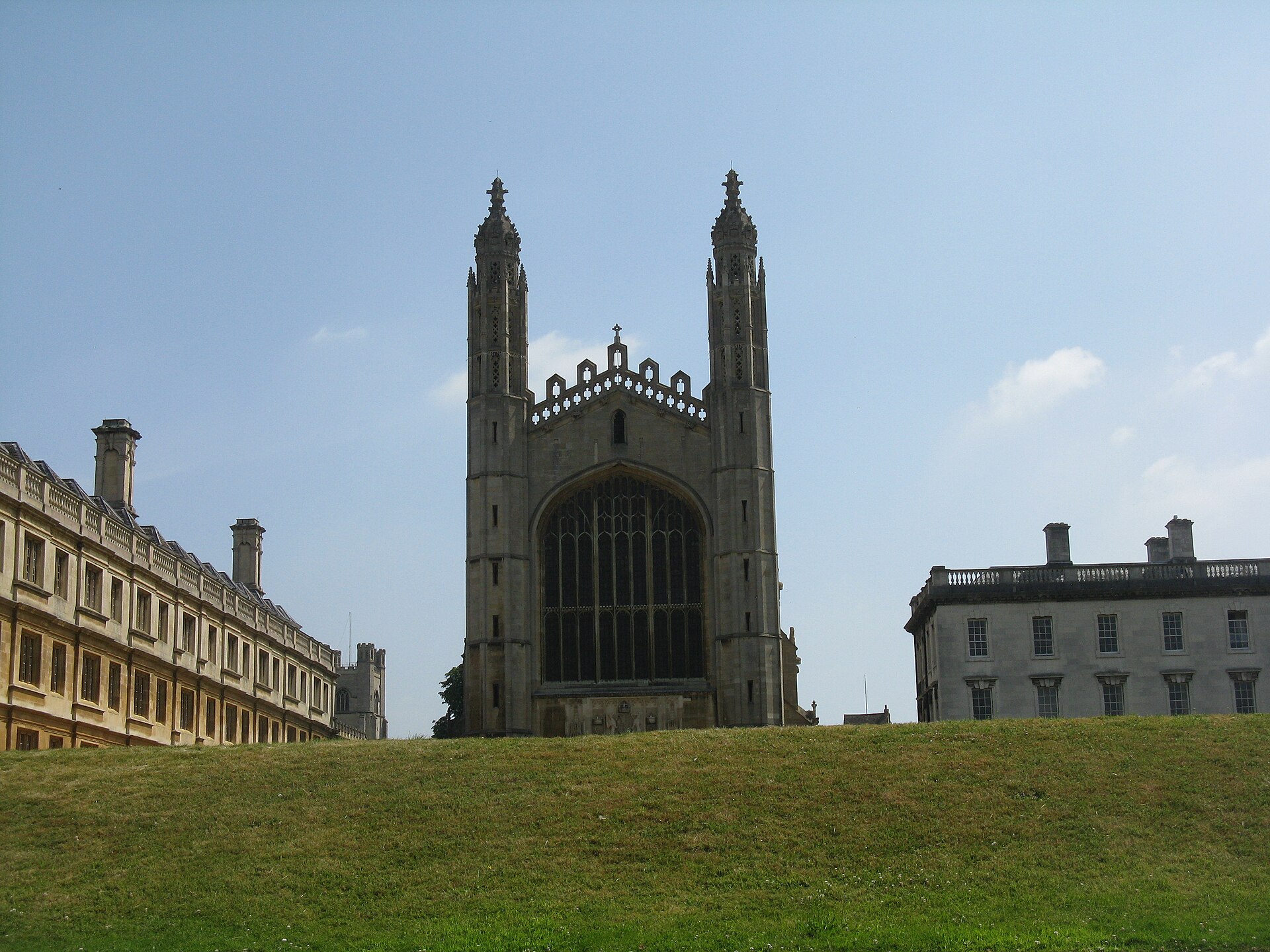
- King's College Chapel, begun in 1446 under Henry VI, with a vast fan-vaulted ceiling and some of the finest medieval stained glass in England. Its choir is known worldwide for the Christmas Eve service of Nine Lessons and Carols.
- The Senate House, the white classical building where degree ceremonies are held.
- Great St Mary's, the university church, whose tower gives a good view over the market square and the colleges.
- The Corpus Clock, a golden clock with a grasshopper-like creature on top, on the corner of Corpus Christi College.
A short walk north brings you to Trinity College, the largest college, with its huge Great Court and the Wren Library designed by Christopher Wren. Next door is St John's, whose Bridge of Sighs crosses the Cam. Further south, Queens' College has the wooden Mathematical Bridge.
The Backs and the river
Behind the colleges on the west side, lawns and gardens slope down to the Cam. This stretch, the Backs, is the classic Cambridge view: King's Chapel across the grass, college bridges and willows along the water. You can see much of it from public paths and from Queen's Road on the far side, or from a punt. Punting, self-hired or with a guide who points out the colleges, is the most popular way for visitors to see the river.
Beyond the Backs stands the University Library, a tall brick building with a central tower, one of the UK's legal deposit libraries. Every faculty and college also has its own library, so students rarely have to go far to find a desk.
Beyond the centre: science, medicine and new colleges
Much of the science happens away from the old courts. The West Cambridge site holds large departments including the Cavendish Laboratory for physics. The Cambridge Biomedical Campus, around Addenbrooke's Hospital in the south, is the base for clinical medicine. Newer colleges, such as those along Huntingdon Road and in the north-west of the city, have more modern rooms and more space.
Student life
Life revolves around the college: its hall for meals, its bar, its library and its clubs. Terms are short and intense, with three eight-week terms named Michaelmas, Lent and Easter. Most colleges have their own boat club, and the river's bumps races, in which crews try to catch the boat in front, are a big part of the sporting year. After exams in June comes May Week, the season of college balls, garden parties and concerts. University-wide clubs and societies cover almost every sport and interest, and the Cambridge Union hosts debates and visiting speakers.
The town itself is compact: markets, bookshops, cafés and pubs sit among the colleges, and green spaces such as Jesus Green, Midsummer Common and Parker's Piece are used for sport and summer evenings. A riverside path leads south to the village of Grantchester, a favourite walk.
The Fitzwilliam Museum on Trumpington Street has a major collection of art and antiquities. Kettle's Yard shows modern art in a former house, and the Museum of Zoology and Sedgwick Museum of Earth Sciences are popular with science applicants.
How visits work
The university holds open days, usually in summer, with subject talks and admissions sessions, and many colleges run their own open days and tours for prospective students. Outside those events, colleges set their own visiting rules. Some admit the public at set hours, some charge an admission fee, and most close their grounds to visitors during the exam period in late spring and early summer. Check the official undergraduate visitor pages and individual college websites before you plan the day.
Transport to and around campus
Trains from London King's Cross or Liverpool Street take roughly 50 to 80 minutes. Cambridge station is about a 25-minute walk from the centre, with frequent buses, and Cambridge North station serves the northern side of the city. London Stansted airport has a direct train to Cambridge. Driving into the centre is slow and parking is limited, so the park-and-ride sites around the edge are the easier option. Once there, walk or cycle; Cambridge is flat and one of the UK's most bike-friendly cities.
Choosing a base for the visit
- The city centre, for walking to everything, though rooms fill quickly on open days and graduation weekends.
- Around the station and Hills Road, handy for trains and a short bus or walk into town.
- Chesterton and the riverside to the north-east, quieter, near the river and Cambridge North.
- Newnham and the west, close to the Backs and the University Library.
Many visitors also combine Cambridge with London: the day trips from London guide covers the train options, and applicants comparing collegiate universities can read our Oxford campus tour.
Practical tips for your visit
- Pick three or four colleges to walk through rather than trying to see them all.
- Check open days and exam-period closures before you set a date.
- Wear comfortable shoes: the distances are short, but you will cover a lot of ground.
- Leave time for the Backs and a walk along the river; it shows how students actually use the city.
Bloiq is reader-supported. Some links may earn us a commission; it never affects what we write. How we make money.
Cover photo: M J Richardson, CC BY-SA 2.0, via Wikimedia Commons