Home / Travel / South Korea · Campus tours
KAIST campus tour: visiting Korea's science university in Daejeon
A visitor's guide to KAIST in Daejeon: the main campus, its ponds and geese, dorm and lab life, Daedeok Innopolis, getting there from Seoul by KTX and where to stay.
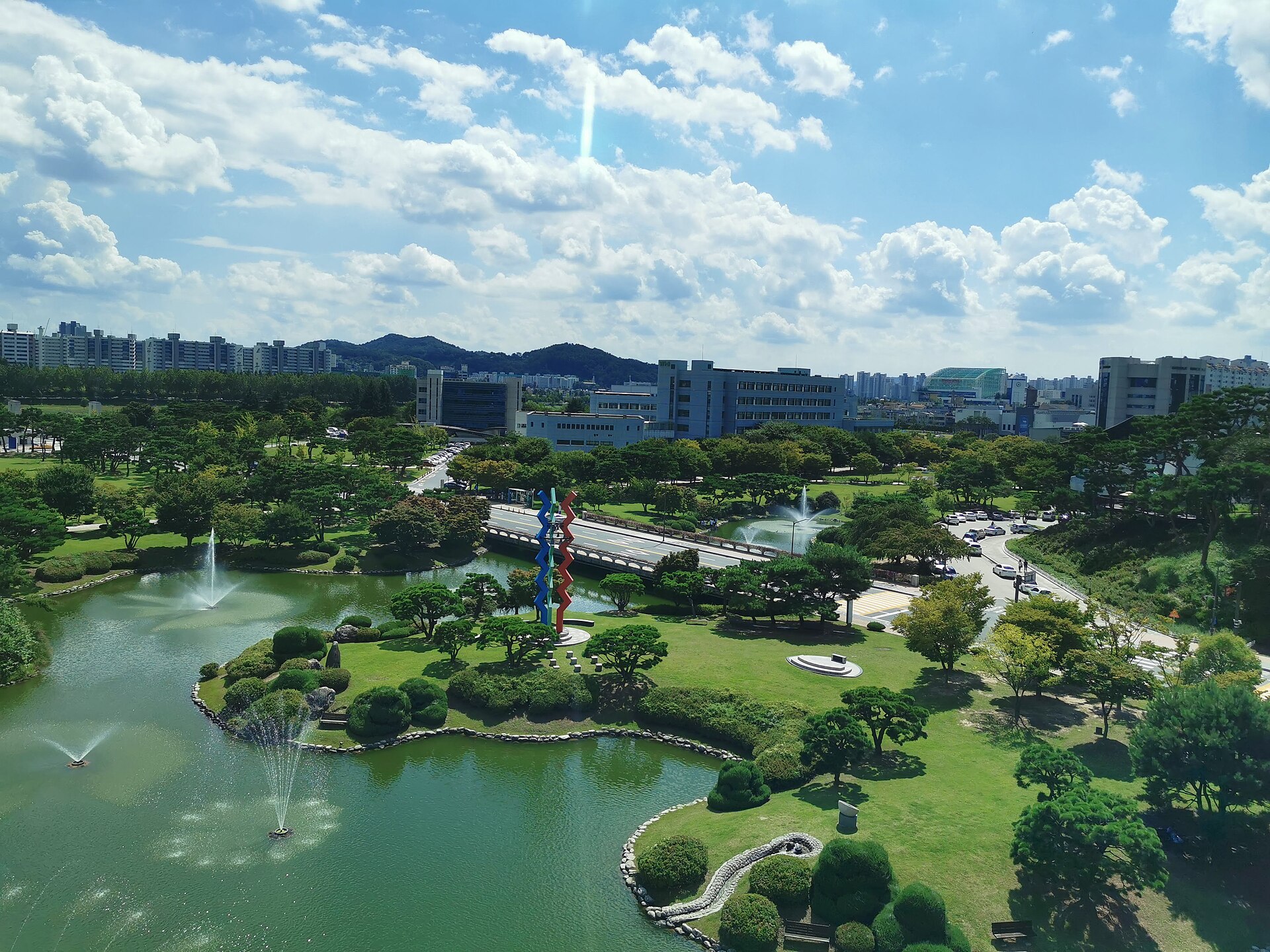
KAIST, the Korea Advanced Institute of Science and Technology, is South Korea's leading public university for science and engineering. Its main campus is in Daejeon, a city in the centre of the country, about an hour south of Seoul by high-speed train. The campus is flat, green and self-contained, set in the middle of a national research district. For prospective students it gives a clear picture of a residential, research-focused university; for families it makes an easy day trip or overnight stop from Seoul.
What makes KAIST different
KAIST was founded in 1971 as a graduate school to train scientists and engineers for Korea's industrial development, and later added undergraduate education. It moved its main operations to Daejeon in the late 1980s and early 1990s, into the heart of Daedeok Innopolis, the country's largest cluster of government research institutes and technology companies.
A few features stand out for international applicants:
- Many courses are taught in English, and the campus has a large international community.
- Undergraduates typically begin without a fixed major and choose their department after their first year, having taken a broad foundation in science and mathematics.
- The emphasis is on laboratories, research and start-ups, with close links to the institutes around the campus.
A walk around the main campus
The main campus is compact enough to cover on foot in two to three hours.
The main gate and the central avenue. From the main gate on Daehak-ro, broad roads lined with trees lead into the campus, with departmental buildings on either side. Numbered building codes help you find your way.
The pond and the geese. Near the centre of campus, a pond with fountains, lawns and landscaped gardens is the favourite spot for photographs and for students taking a break. KAIST is known for the geese and ducks that live around the campus's ponds and wander freely across the lawns and roads; drivers stop for them, and they have become an informal campus mascot.
The academic buildings. Engineering, natural sciences, computing and business are housed in modern blocks, some with public atriums. The main library and the student centre are good places to look in on everyday life, as far as visitors are allowed.
Sports and green spaces. A running track, playing fields, courts and a sports complex sit around the edges of campus, and the flat terrain makes it easy for students to get around by bicycle.
Campus life
KAIST is largely residential: most undergraduates live in dormitories on campus, and life revolves around classes, labs, cafeterias and clubs. With a heavy workload, study spaces and libraries stay busy late into the evening. Clubs cover sport, music and robotics as well as start-up and entrepreneurship groups, which are unusually active given the research institutes and companies next door.
The surrounding area is quieter than a big-city campus. Eoeun-dong, near the main gate, has cafés and restaurants that serve students; the Yuseong district, a short ride away, is known for its hot springs and has more restaurants and hotels. Central Daejeon, with its older downtown and markets, is further east.
Things to see nearby
- Expo Science Park, a short distance away, the site of the 1993 Daejeon Expo, with its landmark Hanbit Tower and riverside open space.
- The National Science Museum, in the same area, a natural stop for families interested in science.
- Yuseong hot springs, where public foot baths along the streets are a local pleasure.
- Gyejoksan, a hill with a well-known barefoot red-clay walking trail, for a gentle hike.
How to visit
The campus is generally open to visitors walking through its grounds, while labs and most buildings are for students and staff. KAIST runs admissions information sessions, open campus events and, at times, campus tours for prospective students and school groups, including information for international applicants. Check the current programme on KAIST's official admissions and visitor pages before you go, and register if a tour requires it.
Getting there
- By KTX from Seoul: high-speed trains run frequently from Seoul Station and Yongsan to Daejeon Station, and some services stop at Seodaejeon Station; journey times are about an hour.
- From the station to campus: a taxi is simplest, about 20 to 30 minutes depending on traffic. City buses also serve the campus area, and Daejeon's metro line runs across the city with stations in Yuseong.
- By express bus: buses from Seoul arrive at terminals in Daejeon, including one in Yuseong not far from the campus.
- From Incheon Airport: direct limousine buses run to Daejeon, or take the train via Seoul.
Choosing a base for the visit
- Yuseong: the most convenient base, close to campus, with hot spring hotels and plenty of restaurants.
- Dunsan: Daejeon's modern administrative district, with business hotels, malls and a large park, a short ride from KAIST.
- Seoul, as a day trip: many families stay in Seoul and take an early KTX. It works well if you're also visiting Seoul National University; see our Seoul National University campus tour and where to stay in Seoul.
Practical tips
- Spring and autumn are the most comfortable seasons; summers are humid, winters cold and dry.
- The campus is flat and bike-friendly; wear comfortable shoes for the distances between buildings.
- Give the geese right of way.
- Buy KTX tickets in advance at busy times such as weekends and holidays.
- Confirm tour dates and visitor information on KAIST's official site shortly before you travel.
Bloiq is reader-supported. Some links may earn us a commission; it never affects what we write. How we make money.
Cover photo: AhmadElq, CC BY-SA 4.0, via Wikimedia Commons