Home / Travel / South Korea · Campus tours
Seoul National University campus tour: Gwanak, the gate and the mountain
Planning a visit to Seoul National University? The Gwanak campus and its famous gate, the libraries and museums, student life, transport and where to stay in Seoul.
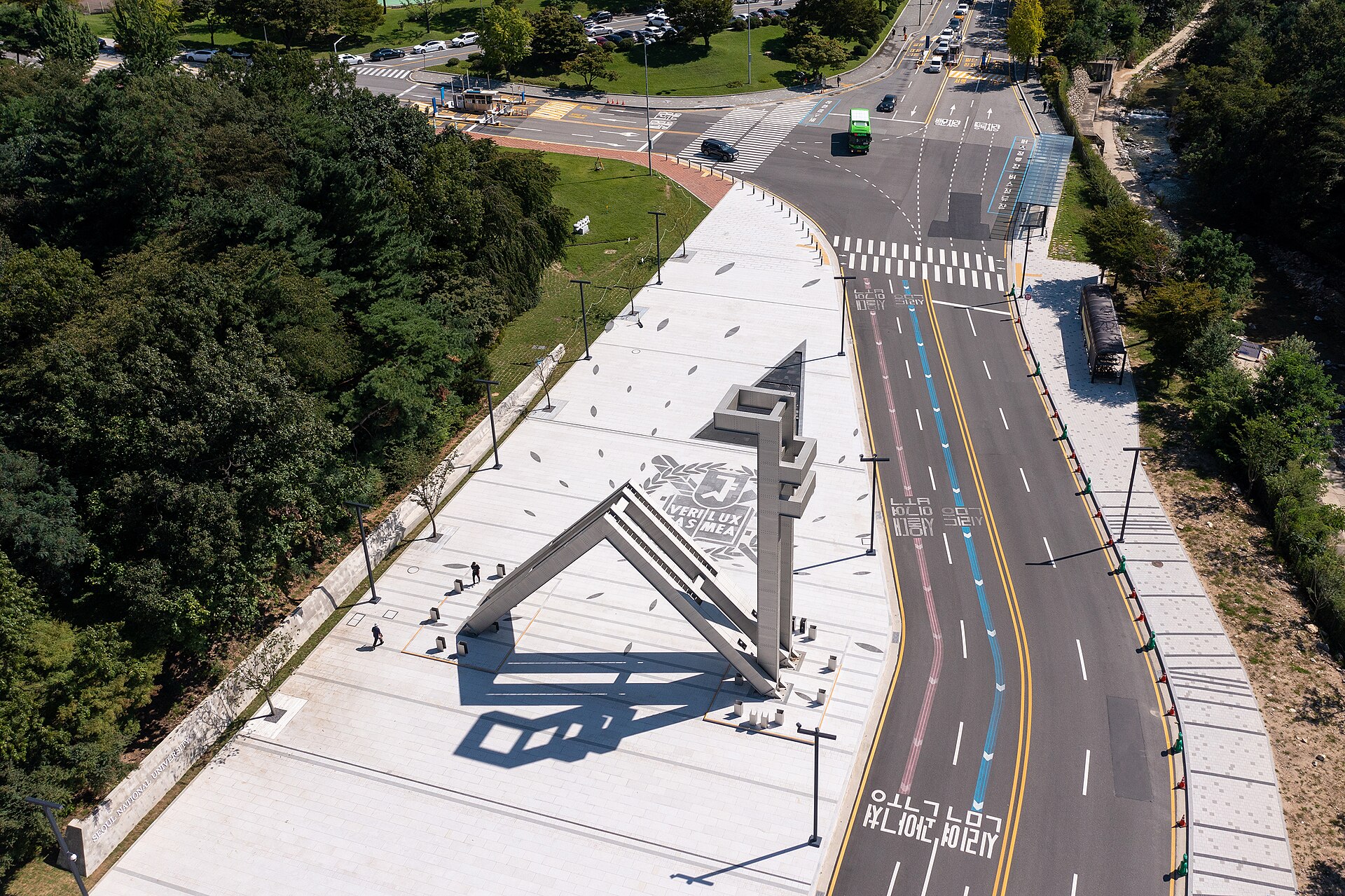
Seoul National University's main campus is not in the old centre of Seoul but in Gwanak, in the south of the city, set against the forested slopes of Gwanaksan mountain. It is a big, hilly campus of more than a hundred buildings, and for many Korean families its main gate is the most recognisable image of academic ambition in the country. If you're a prospective student visiting Seoul, a half day here is well spent. This guide covers the layout, what to see, how visits are organised and how to get there.
Why SNU is in Gwanak
Seoul National University was established in 1946 as Korea's first national university, bringing together several existing colleges. For its first decades, many of its colleges were in central Seoul, around the Daehak-ro area. In the 1970s most of the university moved to a new, purpose-built campus in Gwanak, which is why the campus feels planned, spacious and very much of its surroundings: a valley between the city and the mountain.
The old Daehak-ro site still has a link to the university: the College of Medicine and Seoul National University Hospital remain at the Yeongeon campus in Jongno, and nearby Marronnier Park keeps the memory of the former campus.
The Gwanak campus, from the gate uphill
The campus rises from the main gate in the north towards the mountain in the south, so most walks are gently uphill.
The main gate. The large, angular sculpture at the entrance is formed from the Korean letters of the university's name, and many people think it also resembles a key. It stands on a broad plaza, the natural meeting point and the obvious photo stop.
The central library. The university's main library complex includes the modern Kwanjeong Library, a large building that seems to hover over the road beneath it. It dominates the middle of campus.
The museums. Two are worth a look: the Seoul National University Museum, with collections of Korean archaeology, history and art, and the Museum of Art (MoA), a striking, cantilevered building designed by the Dutch practice OMA, near the main gate. Both are generally open to the public; check opening days in advance.
Ponds and green spaces. Small ponds, lawns and wooded paths break up the rows of college buildings. In spring the campus is full of blossom, and in autumn the hillsides turn red and gold.
Towards the mountain. At the top of campus, trails lead into Gwanaksan's hiking routes. Students and local residents alike use them, and the views back over the campus and city are rewarding.
Student life
SNU's colleges are spread across the campus, and students spend long days moving between lecture halls, libraries and the many cafeterias, which serve Korean set meals and are busy at lunchtime. The dormitory complex, Gwanaksa, sits on the slopes within the campus and houses many undergraduates, graduate students and international students.
Clubs are an important part of social life, from sport and music to volunteer groups, and the university's festivals in spring and autumn bring stalls, concerts and performances.
Off campus, the neighbourhoods around Seoul National University station and Nakseongdae on Line 2 are full of cafés, study rooms, barbecue restaurants and inexpensive flats, and the Sillim area nearby is one of the city's busiest student and young-worker districts.
Visiting
The campus is open for visitors to walk around, and buildings are generally for students and staff. The university runs campus tours and admissions information programmes at times, mostly aimed at Korean high-school students, with separate information for international applicants on its admissions pages. Programmes, languages and booking arrangements change, so check the university's official website before you go.
Getting there
- Subway Line 2: Seoul National University station and Nakseongdae station are the classic routes. From either, a short bus ride (city and local buses run frequently) takes you up to the main gate and through campus.
- Sillim Line: the light rail line that opened in 2022 ends at Gwanaksan station, next to the main gate area. It connects with Line 2 at Sillim and with other lines further north.
- Getting around campus: buses run through the campus, stopping at the main colleges, which helps on the steeper sections.
From central Seoul, allow about 45 minutes to an hour by subway and bus. From Incheon Airport, the airport railroad or an airport limousine bus into the city is the usual start.
Where families usually stay
- Gangnam and around: modern, well connected on Line 2, and a reasonable ride to Gwanak. Good for families who also want Seoul's southern districts.
- Sadang and Nakseongdae: closest practical area to campus, residential and less touristy, with transport links in every direction.
- Central Seoul (Myeongdong, Jongno, around the palaces): best for combining the visit with sightseeing, with a longer commute to campus.
Our guide to where to stay in Seoul compares these and other areas.
Planning tips
- Spring (April) and autumn (October) are the most pleasant times; summers are hot and wet, winters very cold.
- Wear comfortable shoes: the campus is hilly and larger than it looks from the gate.
- A transit card such as T-money makes subway and bus transfers simple.
- If you're also considering Korea's leading science and engineering institute, see our KAIST campus tour; Daejeon is about an hour from Seoul by high-speed train.
- Confirm tours and information sessions on the official site shortly before you travel.
Bloiq is reader-supported. Some links may earn us a commission; it never affects what we write. How we make money.
Cover photo: 서어현, CC BY-SA 4.0, via Wikimedia Commons