Home / Travel / Germany · Campus tours
Heidelberg University campus tour: old town, river and science campus
Visiting Heidelberg University: the Old and New University, the student prison, the library, the Neuenheimer Feld campus, student life and where to stay.
Heidelberg is the picture many people have of a German university town: a baroque old town squeezed between the Neckar River and a wooded hill, a ruined castle above and students on bikes everywhere. Ruprecht-Karls-Universität Heidelberg, founded in 1386, is the oldest university in present-day Germany, and it still fills the old town's lanes. It also has a large modern science and medical campus across the river. This guide shows how to see both in a day and what prospective students should know about living here.
The shape of the university
Think of Heidelberg University as two halves:
- Campus Altstadt, in and around the old town, holds the humanities, law, theology and social sciences, the historic buildings and the main library.
- Campus Im Neuenheimer Feld, on the north bank of the Neckar west of the old town, is a big, modern site for natural sciences, medicine and the university hospital, with the botanical garden and research institutes.
A third, smaller cluster sits in Bergheim, between the old town and the station, where some social sciences and economics are based. Most visitors spend the morning in the old town and cross the river in the afternoon.
Universitätsplatz: the Old and the New University
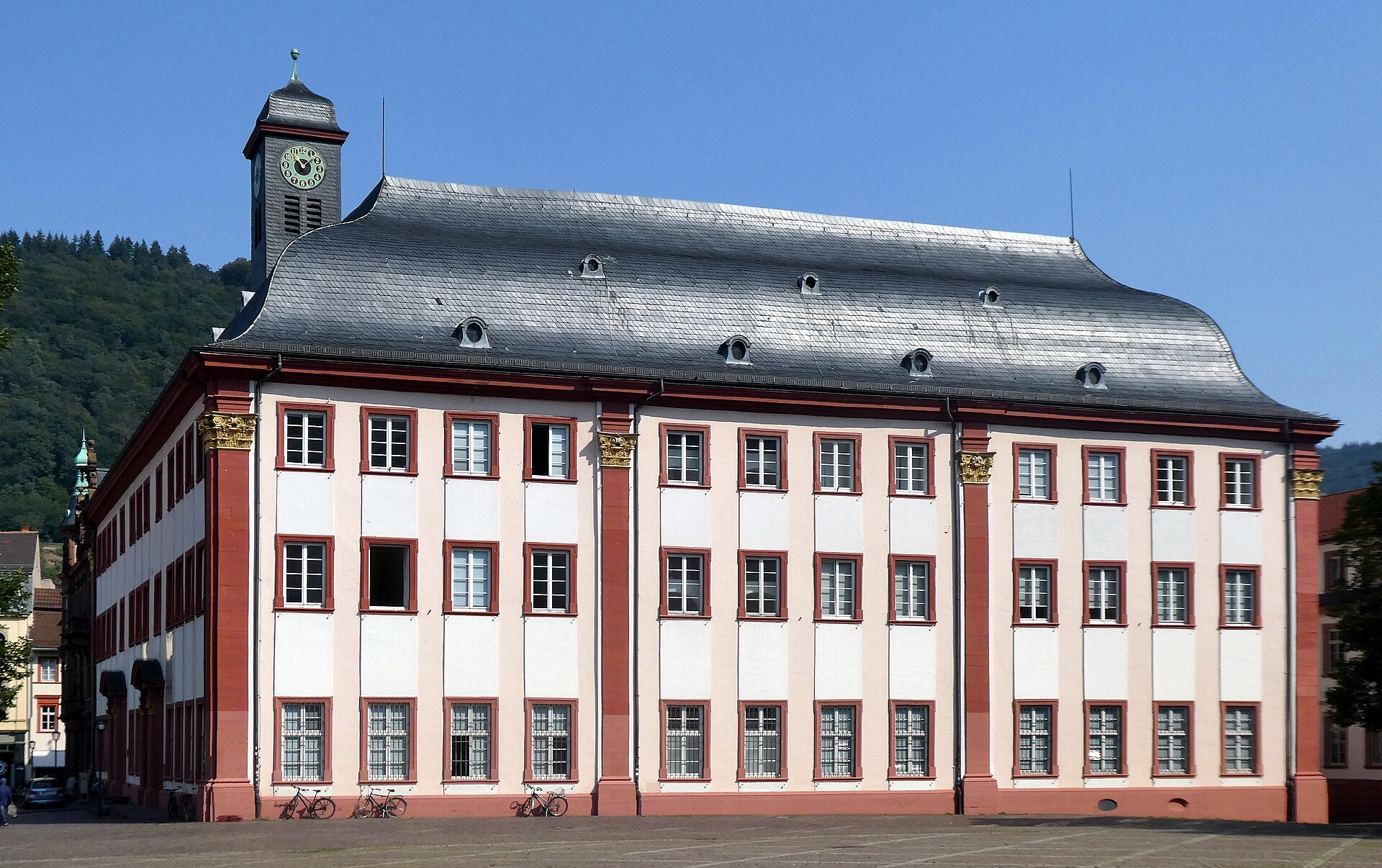
Start at University Square. On one side stands the Old University, a baroque building from the early 18th century. Inside, the university museum covers six centuries of history, and the Old Assembly Hall (Alte Aula), richly decorated in the late 19th century, is still used for ceremonies. Opening depends on events, so check before you go.
Facing it across the square is the New University, built around 1930 with substantial donations from the United States. Above its entrance, a statue of Athena stands over the words Dem lebendigen Geist, "to the living spirit". The building still houses lecture halls and is busy during term.
The student prison
Around the corner in Augustinergasse, the Studentenkarzer is the university's former student prison, used until 1914 to lock up students for offences such as disturbing the peace or duelling. A spell inside became something of a badge of honour, and generations of inmates covered the walls and ceilings with drawings, names and silhouettes. It's small, a little absurd and one of the most memorable stops in town. It's usually visited on a combined ticket with the university museum.
The university library and Hauptstraße
Just south of the square, the red sandstone University Library on Plöck, opened in the early 20th century, is one of Germany's great historic research libraries. The reading rooms are for users, but the building is worth seeing from the outside, and it hosts exhibitions from its historic collections.
A block north, Hauptstraße runs for more than a kilometre through the old town, lined with shops, cafés and student bars. It's the town's spine, and you'll walk it several times a day.
Across the Neckar to the science campus
Cross the Old Bridge for the classic view back to the town and castle, then climb to the Philosophers' Walk on the north bank, a path along the hillside with the best panorama of the old town. It takes its name from the academics who are said to have walked there to think.
Continue west, or take a tram or bus, to the Neuenheimer Feld. It's modern and functional rather than pretty, but if a prospective student wants biology, chemistry, physics or medicine, this is where they will spend their days. Look for the botanical garden and the riverside paths used by runners and rowers.
What student life is like in a small city
Heidelberg is compact, and students make up a large share of its population. Most live in shared flats or in halls run by the student services organisation; housing is tight, so start searching as soon as you have an offer. The Marstall canteen by the river is a well-known student haunt, and the university sports programme and student societies fill the evenings. Bikes are the default transport. Most bachelor's programmes are taught in German, with more master's programmes in English.
Planning a visit
Heidelberg University holds information days for school students, with subject presentations and advice sessions, and its central student advisory office answers questions year-round. Guided town walks often include university sights, and the museum and student prison can be visited independently. Check the university's official pages for prospective students for current events and formats.
Getting there and around
- From Frankfurt Airport: allow about an hour by train (often with a change in Mannheim) or by airport shuttle.
- By train: Heidelberg Hauptbahnhof is in the west of the city; trams and buses run to Bismarckplatz, the gateway to the old town, in a few minutes.
- In town: walk the old town, and use trams or buses for Neuenheimer Feld. Many visitors rent bikes.
Picking a neighbourhood for your stay
The old town is the most atmospheric base, walkable to everything on Universitätsplatz. Bergheim, around Bismarckplatz and towards the station, is practical and well connected. Neuenheim, across the river, is quieter and residential, handy for the science campus. Mannheim, a short train ride away, is an option when Heidelberg is full.
Tips before you go
- Visit on a weekday in term to see the lecture halls and library busy; weekends bring day-trippers instead.
- Wear good shoes: the Philosophers' Walk and the castle are both uphill.
- Allow time for the castle; its terrace gives a view of the whole university town from above.
- Touring several German universities? Munich, a few hours away by train, has two large ones: see the TUM and LMU Munich campus tours.
Bloiq is reader-supported. Some links may earn us a commission; it never affects what we write. How we make money.
Cover photo: Renardo la vulpo, CC BY-SA 4.0, via Wikimedia Commons