Home / Travel / Germany · Campus tours
TUM campus tour: visiting the Technical University of Munich
How to visit the Technical University of Munich: the Arcisstraße main campus, Garching and its famous slides, Weihenstephan, student life and where to stay.
The Technical University of Munich is really several campuses in one. Its historic heart is in the city's museum quarter, most of its engineering and natural sciences are on a research campus north of the city, and its life sciences sit in a hilltop town near the airport. Knowing which site matters for your subject is the first step in planning a visit. This guide walks through each, then covers student life, open days, transport and places to stay.
Which TUM site should you see?
| Site | Where | What's there |
|---|---|---|
| Main campus (Stammgelände) | Arcisstraße, Maxvorstadt, central Munich | Architecture, parts of engineering, central administration, the main library |
| Garching research campus | North of Munich, on the U6 underground | Mechanical engineering, informatics, mathematics, physics, chemistry and many institutes |
| Weihenstephan | Freising, near Munich Airport | Life sciences, agriculture, food and brewing science |
The university also has sites elsewhere in Munich and in other Bavarian cities, including a management campus in Heilbronn. If a prospective student is set on one programme, find out where its first-year lectures take place before you choose a day.
The main campus in the museum quarter
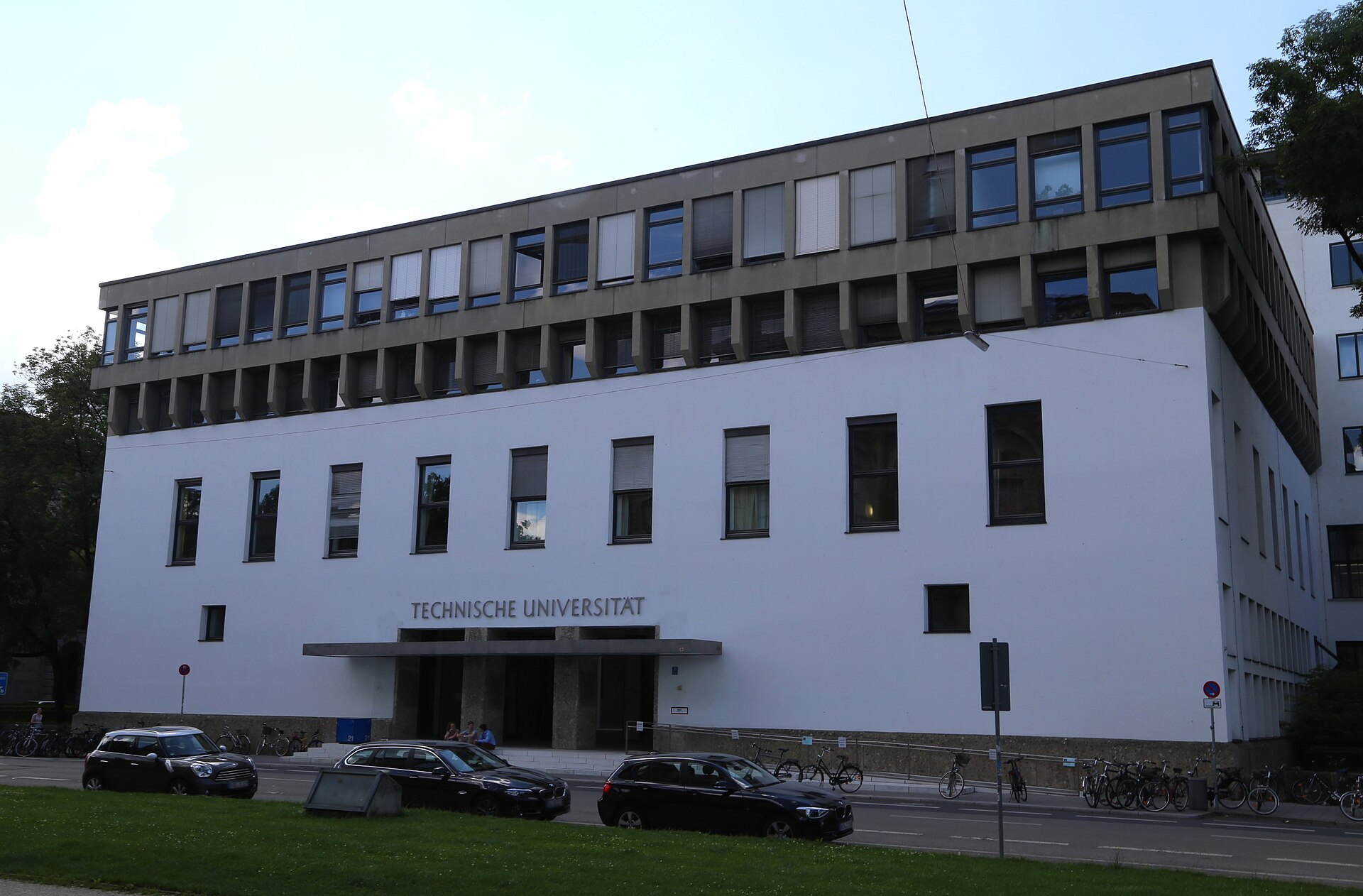
TUM was founded in 1868 as a polytechnic school by King Ludwig II of Bavaria. The main campus on Arcisstraße is a block of buildings from several eras, from the old clock tower to the plain post-war front that faces the street. It's woven into Maxvorstadt, Munich's university and museum district, so a visit here comes with the city's best galleries on the doorstep: the Alte Pinakothek, the Pinakothek der Moderne, the Museum Brandhorst and the neoclassical Königsplatz are all a few minutes away.
Look out for the rooftop café of the architecture faculty, the Vorhoelzer Forum, which opens its terrace over the city's rooftops. On clear days the view reaches the Alps; access and opening depend on the university calendar, so treat it as a bonus rather than a plan.
Garching: the slides and the research campus
Garching is a small town, but the research campus beside it is one of the largest science sites in Germany, shared by TUM, several Max Planck institutes and other research centres. The building everyone asks about is the one housing mathematics and informatics: its long atrium has two parabolic slides that drop from the upper floors to the ground. They're a genuine way down, and a favourite photo for visiting students.
The campus is built on a big scale, with wide walkways, lawns and modern halls. Allow time to walk between buildings, and note that the U6 has a stop directly at the research centre.
Weihenstephan in Freising
On Weihenstephan hill above Freising, TUM's life-sciences campus shares the slope with the Bavarian state brewery, which traces its history back to a Benedictine monastery here. It's a quieter, greener setting, and the old town of Freising below is attractive in its own right. It suits a half-day visit combined with an airport arrival or departure.
Life as a TUM student
There are no US-style dorm campuses. Students rent rooms in halls run by the regional student services organisation or other providers, share flats or commute from outside the city. Munich's housing market is notoriously tight, so admitted students should apply for halls and start searching early.
Around the main campus, student life blends into Maxvorstadt and Schwabing: cafés, cheap lunch spots, cinemas and the lawns of the English Garden. Mensa canteens serve each campus. The university sports centre offers a wide programme, and student councils and clubs run events through the year. Most bachelor's programmes are taught in German, with a growing number in English; master's programmes are more often in English. Check the programme page for the language and admission requirements.
Open days and information events
TUM runs information days and taster events for school students, with departmental talks, lab tours and student advice, and many sessions are also offered online. The main campus is open city ground, so you can walk around its courtyards at any time, but labs are not open to casual visitors. Dates and formats change, so check the university's official pages for prospective students before you travel.
Getting there
- From Munich Airport: the S-Bahn runs into the city centre in about 40 minutes. For Weihenstephan, Freising is a short hop by bus or train from the airport.
- To the main campus: the U2 stops at Theresienstraße and Königsplatz, both within a few minutes' walk; trams and buses also serve the area.
- To Garching: take the U6 north to Garching-Forschungszentrum, roughly half an hour from the centre.
- To Freising: regional trains and the S-Bahn run from the Hauptbahnhof; the campus is uphill from the station, so allow for a walk or a local bus.
Choosing a base for the visit
Maxvorstadt is the obvious base: walkable to the main campus and museums, with direct underground links to Garching. Schwabing is a little quieter and close to the English Garden. Around the Hauptbahnhof is practical for train arrivals and trips to Freising. For more detail on each area, see our guide on where to stay in Munich.
Practical tips
- Many families visit TUM and its neighbour on the same trip; our LMU Munich campus tour covers the other big university, a ten-minute walk from Arcisstraße.
- Avoid Oktoberfest dates if you can: rooms become scarce and expensive across the city.
- Term runs roughly October to February and April to July; visit during the lecture period to see the campuses busy.
Bloiq is reader-supported. Some links may earn us a commission; it never affects what we write. How we make money.
Cover photo: Rufus46, CC BY-SA 3.0, via Wikimedia Commons