Home / Travel / Germany · Where to stay
Where to stay in Munich: the neighbourhoods compared
Altstadt, Maxvorstadt, Schwabing, Haidhausen, Glockenbach and the station area: how Munich's neighbourhoods differ, who each suits and how Oktoberfest changes everything.
This guide contains affiliate links, marked as such. If you book through them, Bloiq may earn a commission at no extra cost to you.
Munich is compact, safe and easy to get around, so there are few truly bad places to stay. The real decisions are how much you'll pay to be in the historic centre, whether you want museums, parks or nightlife on your doorstep, and when you're travelling. For about two and a half weeks each autumn, Oktoberfest fills the city and changes every calculation. Here's how the main neighbourhoods compare.
The quick answer
- First visit, everything on foot: the Altstadt, around Marienplatz.
- Museums and good value near the centre: Maxvorstadt.
- Parks, cafés and a relaxed, residential feel: Schwabing.
- Village charm across the river: Haidhausen.
- Bars, restaurants and the Isar riverbanks: the Glockenbachviertel and Gärtnerplatz.
- Early trains, Oktoberfest and practical rooms: around the Hauptbahnhof.
How they compare at a glance:
| Area | Feel | Walk to Marienplatz | Best for |
|---|---|---|---|
| Altstadt and Lehel | Historic, busy | 0–15 min | First visits |
| Maxvorstadt | Studenty, cultural | 10–25 min | Museums, value |
| Schwabing | Leafy, residential | U-Bahn ride | Parks, slower pace |
| Haidhausen | Village-like | 20–30 min | Local feel, restaurants |
| Glockenbach and Gärtnerplatz | Lively, stylish | 5–15 min | Bars, food |
| Hauptbahnhof area | Practical, busy | 15–20 min | Trains, Oktoberfest |
Altstadt: the historic centre
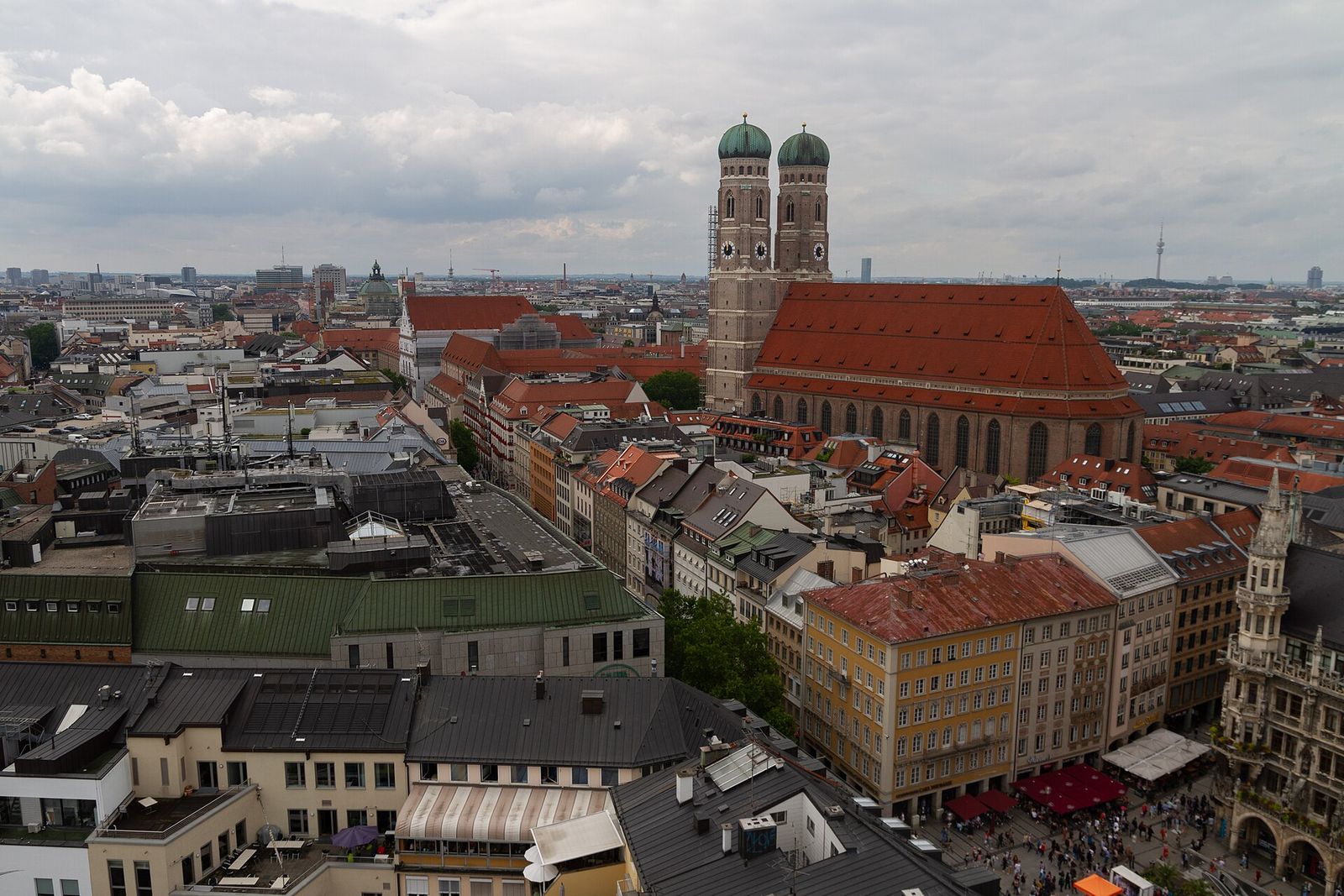
The Altstadt is the old town inside the line of the medieval walls, with Marienplatz and the New Town Hall at its heart. The Frauenkirche, St Peter's Church, the Viktualienmarkt food market, the Hofbräuhaus and the vast Residenz palace are all within a few minutes' walk, and the main shopping streets are pedestrianised. The neighbouring Lehel district, just to the east, is quieter and more elegant, with easy access to the Englischer Garten.
Good for: first-time visitors, short stays and anyone who wants to walk everywhere. Consider: it's the most expensive area, crowded by day, and the main shopping streets empty out in the evening once the shops close. Rooms facing busy squares can be noisy.
Maxvorstadt: museums and students
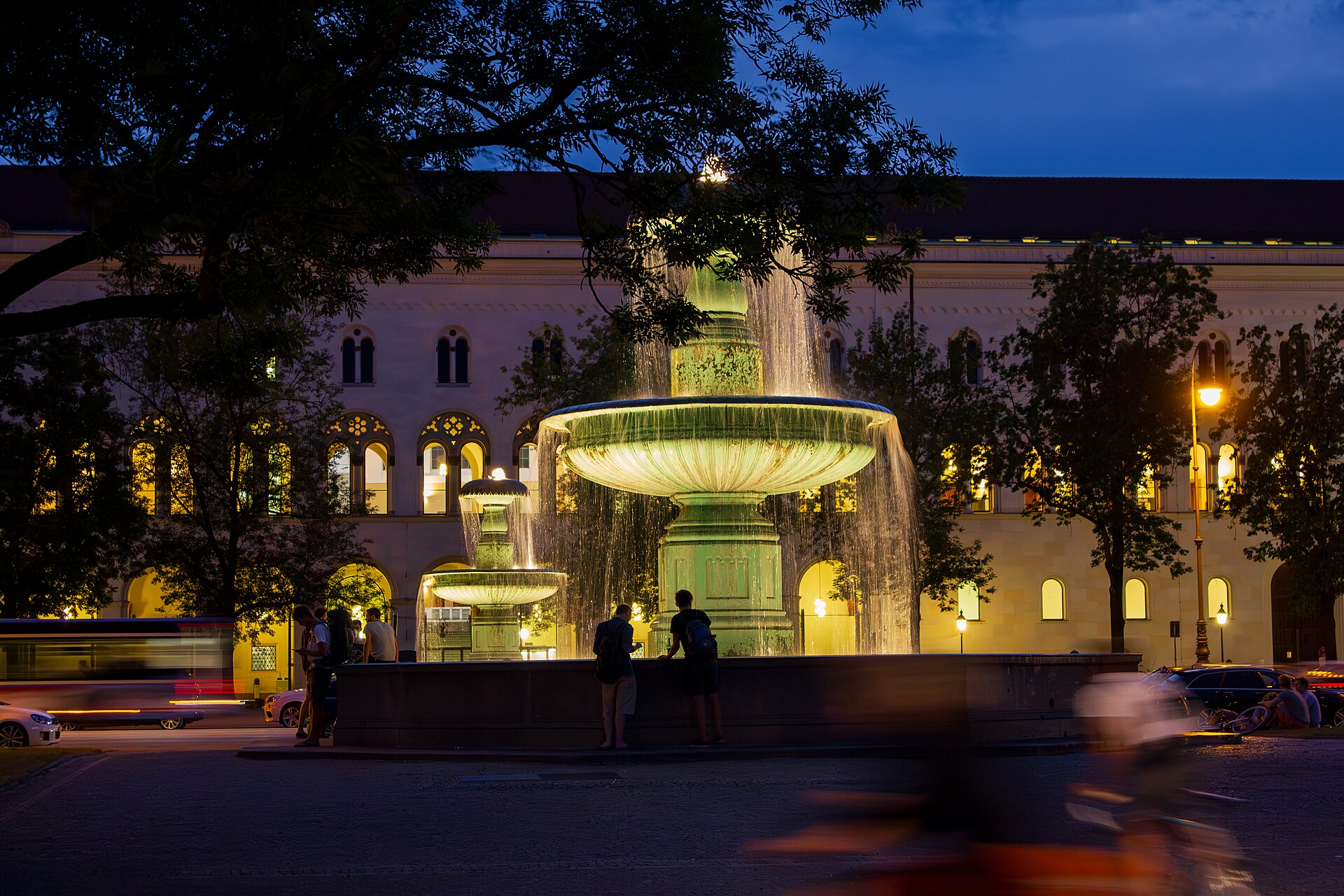
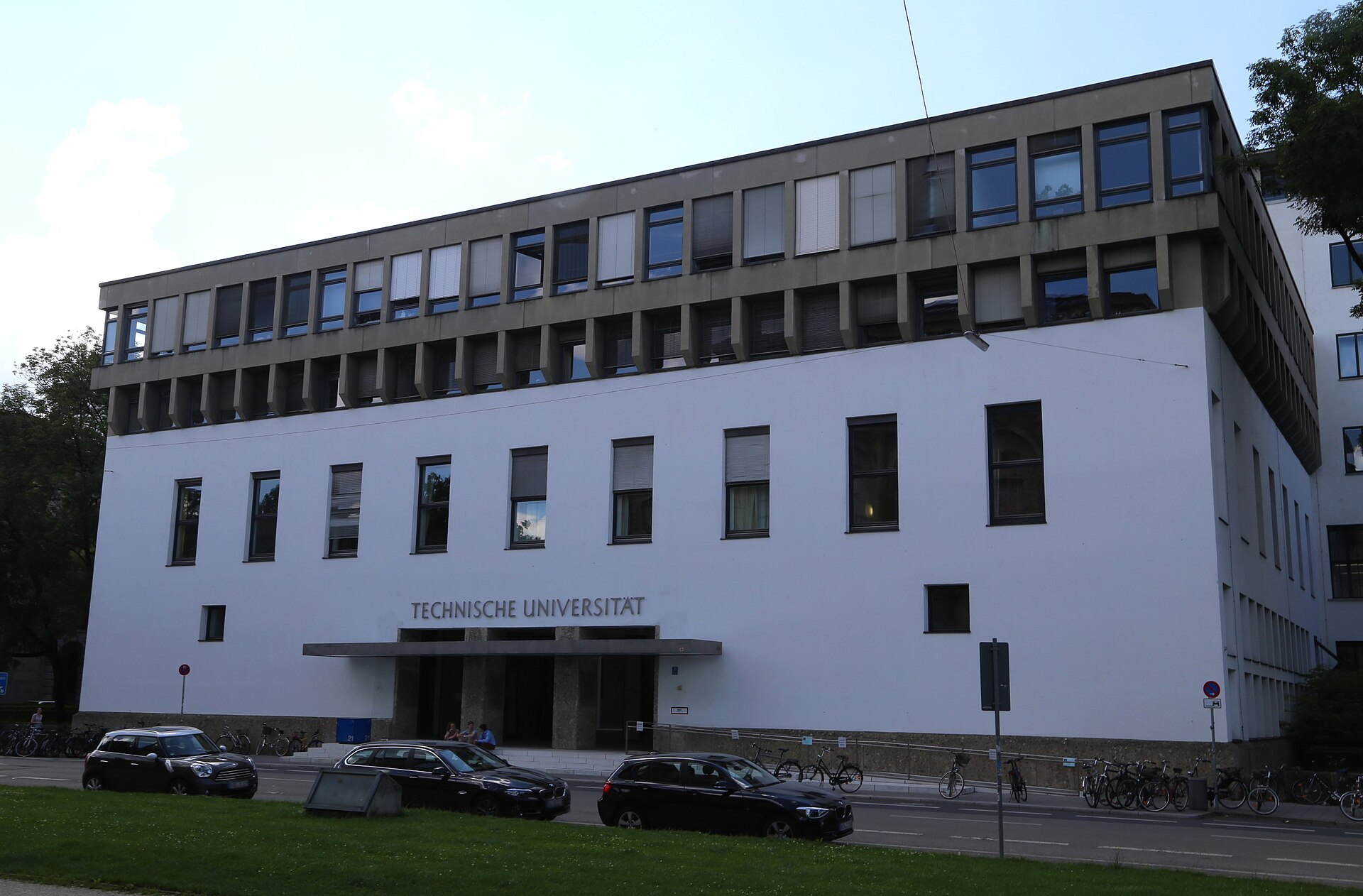
North and west of the Altstadt, Maxvorstadt is home to Munich's two big universities and the Kunstareal, the museum quarter. The Alte Pinakothek, the Pinakothek der Moderne, the Lenbachhaus and the classical buildings around Königsplatz are all here. Streets such as Türkenstraße and Amalienstraße are lined with inexpensive cafés, bookshops and bars.
Good for: culture lovers, budget-conscious travellers and anyone who wants the centre within a 10- to 20-minute walk. Consider: it's a working, lived-in district rather than a picturesque one, and its southern edge runs into the busier streets near the main station.
Schwabing: parks and a relaxed pace
Schwabing, further north, was once Munich's artists' quarter and is now a prosperous residential area. Leopoldstraße, its main boulevard, has plenty of cafés and restaurants, and the side streets are leafy and quiet. The Englischer Garten, one of the largest city parks in Europe, runs along its eastern side, with beer gardens, meadows, streams and long paths along the Isar.
Good for: couples, families, repeat visitors and anyone who enjoys walking or running in parks. Consider: the centre is a short U-Bahn ride away rather than a stroll, and the choice of hotels is smaller than in the central districts. The northern parts are quieter still.
Haidhausen: village charm across the Isar
Across the river east of the centre, Haidhausen is one of Munich's most attractive residential neighbourhoods. The so-called French Quarter has handsome 19th-century streets named after places in France, and the little square at Wiener Platz keeps an almost village atmosphere. The Deutsches Museum, on its island in the Isar, is a short walk away, and the Ostbahnhof gives fast S-Bahn connections into the centre and to the airport.
Good for: travellers who want a local base with good restaurants and pubs, and easy transport. Consider: it's a 20- to 30-minute walk to Marienplatz, and there are fewer hotels here than west of the river, so book early.
Glockenbachviertel and Gärtnerplatz: bars and the river
South of the Altstadt, in the Isarvorstadt district, the Glockenbachviertel and the streets around Gärtnerplatz form Munich's liveliest neighbourhood for eating and drinking. It has independent shops, cocktail bars, a long-established LGBTQ+ scene, and quick access to the riverbanks, where locals gather on summer evenings. The Viktualienmarkt is on its northern edge.
Good for: couples, younger travellers and food lovers. Consider: some streets are busy and noisy late at night, especially on warm weekends. Ask for a room at the back if you're a light sleeper.
Around the Hauptbahnhof: practical and well connected
The streets around the main station, in the Ludwigsvorstadt district, have one of the largest concentrations of hotels in the city, from budget chains to business hotels. Almost every S-Bahn line and several U-Bahn lines stop here, and the Oktoberfest grounds at the Theresienwiese are about 15 minutes' walk away. The Westend, just beyond the fairground, is a more residential alternative.
Good for: early trains, day trips, short stopovers and Oktoberfest visitors. Consider: the area has little charm, the streets immediately south of the station can feel seedy at night, and the station itself is in the middle of a long rebuilding project, with construction work around it.
Oktoberfest and other busy times
Oktoberfest runs for about 16 to 18 days, typically starting on a Saturday in mid- to late September and ending on the first Sunday in October, or on 3 October if that falls later. During the festival, hotels across the city fill up and rates rise sharply, often several times over. If you're going for the festival:
- Book as early as you can, ideally many months ahead.
- Stay on a direct transit line rather than insisting on walking distance. The U4 and U5 stop at Theresienwiese, and the fairground is walkable from the Hauptbahnhof.
- Expect crowds and noise on transit and in the Hauptbahnhof area late into the night, especially at weekends.
If you're not going to the festival, it's usually better to avoid those weeks altogether. Major trade fairs at the exhibition centre in the east of the city, and the Christmas market season in December, also push prices up. Check the official festival and fair calendars before you book.
Rule of thumb: check the dates of Oktoberfest and the big trade fairs before you choose your travel dates, not after. The same room can cost a fraction as much a week earlier.
Getting around
- From the airport: Munich Airport is well north-east of the city. The S1 and S8 S-Bahn lines run to the centre in roughly 40 to 45 minutes. Check current fares and which ticket zones your journey needs.
- S-Bahn: most lines share a central trunk route from the Hauptbahnhof through Karlsplatz (Stachus) and Marienplatz to the Ostbahnhof, so central stations have very frequent trains.
- U-Bahn and trams: the U-Bahn reaches every area in this guide, and trams fill the gaps. Day tickets and group tickets can be good value; check the current options.
- Walking and cycling: the centre is flat and compact, and Munich is a very bike-friendly city, with bike hire widely available.
Practical tips before you book
- Check the exact location. "Munich" in a hotel name can mean the airport, the exhibition centre or a suburb. Look for a short walk to an S-Bahn or U-Bahn station.
- Local taxes: check whether any local charge on overnight stays applies when you book.
- Sunday closures: most shops close on Sundays and public holidays, though restaurants, museums, beer gardens and station shops stay open.
- Air conditioning isn't standard in older buildings. Check if you're travelling in July or August.
- Day trips: if you plan trips to the Alps, the lakes or the castles of southern Bavaria, a base near the Hauptbahnhof saves time each morning.
Stay in the Altstadt for convenience, in Maxvorstadt or Haidhausen for value and local life, in Schwabing for parks and calm, and near the Hauptbahnhof when trains or Oktoberfest shape your trip. For other German cities, see our guide to where to stay in Berlin, and for a train-friendly next stop, where to stay in Vienna.
Bloiq is reader-supported. Some links may earn us a commission; it never affects what we write. How we make money.
Cover photo: Maksym Kozlenko, CC BY-SA 4.0, via Wikimedia Commons