Home / Travel / China · Campus tours
Fudan University campus tour: visiting the Handan campus in Shanghai
How to visit Fudan University in Shanghai: the Handan campus and Guanghua twin towers, the other campuses, student life around Wujiaochang and where to stay.
Fudan University is Shanghai's most famous university, and its main campus sits in Yangpu District in the north-east of the city, far from the Bund and the tourist centre. That matters when you plan a visit: you'll spend a day in a busy, very local part of Shanghai rather than among the landmarks. This guide covers what the campus looks like, how Fudan's several campuses divide the work, how public visits generally work, and how to fit it into a trip.
Where the name comes from
Fudan was founded in 1905 by the scholar and educator Ma Xiangbo. Its name comes from a line in an ancient Chinese text praising the sun and moon that rise "day after day", a reference to renewal that the university still uses in its identity. It grew from a small private college into one of China's leading comprehensive universities, strong in the humanities, social sciences, sciences and, through its medical school, medicine.
One university, several campuses
Before you go, work out which campus matters to you:
| Campus | Where | What's there |
|---|---|---|
| Handan | Yangpu District, north-east Shanghai | The historic main campus, most undergraduate teaching and the best-known landmarks |
| Jiangwan | Further north in Yangpu | A newer, spacious campus with several schools and modern buildings |
| Fenglin | Xuhui District, south-west | Shanghai Medical College and teaching hospitals |
| Zhangjiang | Pudong | Science, technology and research institutes |
For a first visit, the Handan campus is the one to see.
The Handan campus: what to look for
The main gate on Handan Road. The front entrance, facing Handan Road, is the traditional place for photos and the starting point for most walks.
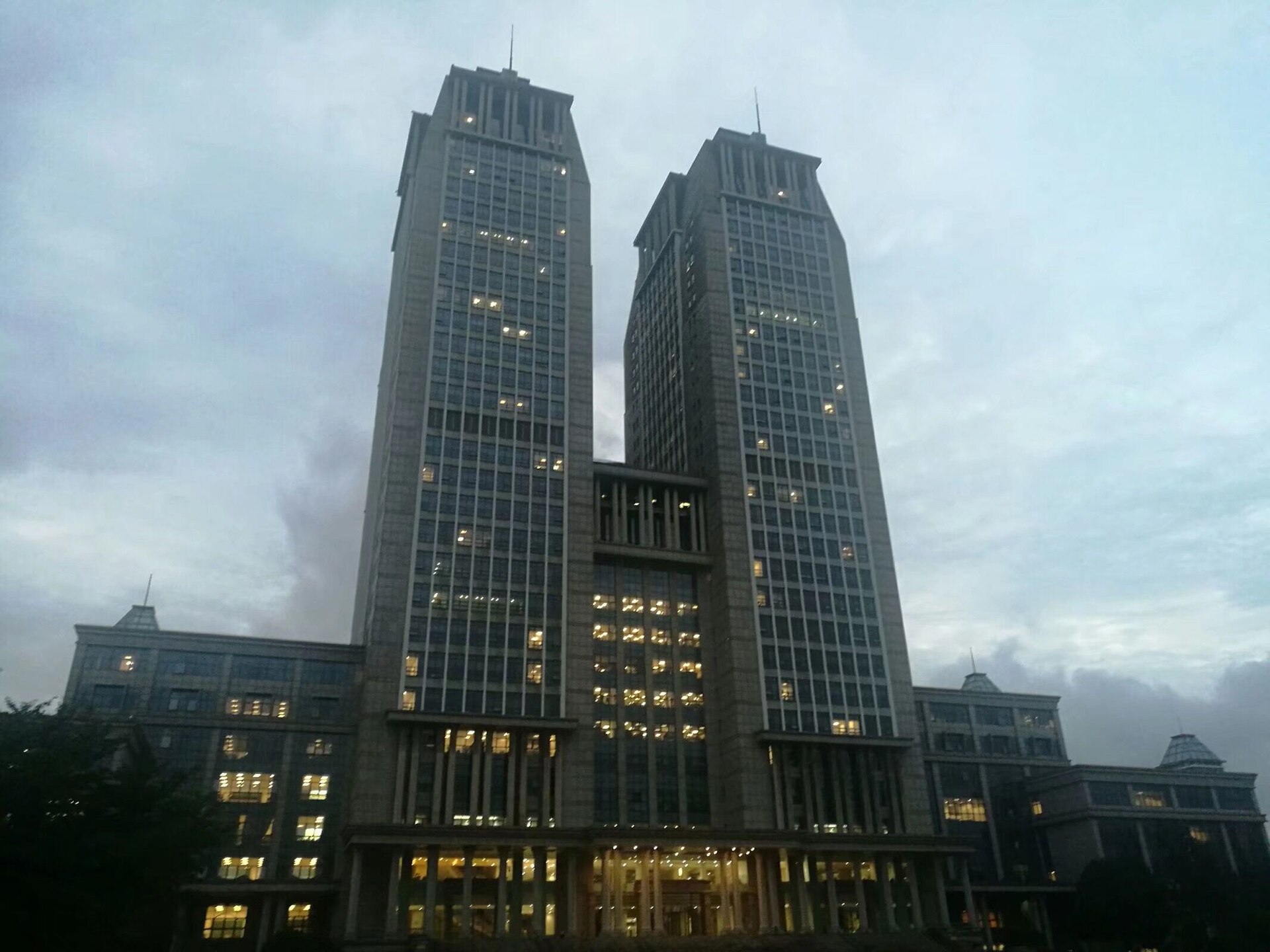
Guanghua Building. You'll see it long before you reach it: two tall towers joined at the base, rising over the campus. Opened in the 2000s, it houses humanities and social science departments and has become the modern symbol of Fudan. The lawn in front is the campus's main open space.
Xianghui Hall and the older quarter. Xianghui Hall, the historic auditorium, and the lower, older buildings of the campus hold much of Fudan's early history. Tree-lined avenues run between them, with the libraries and teaching buildings close by.
Gardens and quiet corners. Small gardens, ponds and shaded paths are scattered between buildings, and in spring and autumn the campus is far greener and calmer than the streets outside.
A loop of the main sights takes about two hours on foot.
Student life in Yangpu
Fudan's students live mostly in dormitory areas at the edge of the campuses, and daily life centres on canteens, libraries, sports grounds and hundreds of student societies. The university has a reputation for an open, debating culture and a strong tradition of student publications and arts.
The surrounding district is one of the densest university areas in China, with Tongji University and Shanghai University of Finance and Economics nearby. Wujiaochang, a major commercial hub just north-east of the Handan campus, is where students go for shopping malls, cinemas and restaurants; the surrounding streets fill with small, inexpensive eateries. Riverside parks along the Huangpu in Yangpu are also within reach for a walk.
How visits usually work
Public access to universities in mainland China is controlled, and Fudan is no exception. In recent years members of the public have generally needed to register ahead through the university's official channels and show ID at the gate (a passport for foreign visitors), with rules that can tighten around holidays, exams and special events.
Prospective students should start with the admissions pages. Fudan runs open days and information sessions, and its international student office handles enquiries from overseas applicants. Check the current visitor and admissions information on the official site before you go; don't assume you can simply walk in.
Travel logistics
- Metro Line 10 serves the area around Wujiaochang and the Jiangwan Stadium, a short walk from the Handan campus. The same line runs through central Shanghai, including stations near East Nanjing Road and Xintiandi.
- Metro Line 18 has a station named after Fudan University, convenient for parts of the Handan campus.
- Taxis and ride-hailing are plentiful; from the Bund, allow roughly half an hour to an hour depending on traffic.
- Between campuses, the university runs shuttle buses for students and staff; visitors will usually take the metro or a taxi.
Picking a neighbourhood for your stay
- Wujiaochang: closest to Handan, modern and practical, with malls and plenty of places to eat. Best when the visit is the main event.
- Along Line 10 in central Shanghai: areas around East Nanjing Road, People's Square and Xintiandi put you near the Bund and the old French Concession while keeping a direct metro ride to campus.
- North Bund and Hongkou: between the two, with good river views and shorter journeys north.
Tips for a smooth visit
- Register in advance if the university requires it, and carry the same ID you registered with.
- Plan on half a day for Handan; add Jiangwan only if a school you're interested in is based there.
- Shanghai summers are hot and humid, and early summer is the rainy season; spring and autumn are more comfortable.
- Allow time for the metro: Shanghai is large, and cross-city journeys often take close to an hour.
- Confirm open days and any access changes on the official site shortly before you travel.
- If your trip also takes in Beijing, the Tsinghua and Peking University campus tours explain how visits work at the two neighbouring universities there.
Bloiq is reader-supported. Some links may earn us a commission; it never affects what we write. How we make money.
Cover photo: 谢宇杰, CC BY-SA 4.0, via Wikimedia Commons