Wet/dry shop vacuums: peak HP, airflow, sealed lift and filters
Why peak horsepower tells you little, how airflow and sealed lift describe real suction, and which filters and accessories turn a shop vac into dust control.
A wet/dry vacuum is the workhorse of garages and workshops: it picks up sawdust, screws, spilled water and building debris that would wreck a household vacuum. Choosing one is harder than it should be, because the biggest number on the box, peak horsepower, is the least useful. This guide explains the specifications that actually describe suction, how to choose filters, and how to use a shop vac for dust extraction.
Why "peak horsepower" is misleading
Many shop vacs advertise figures such as 5 or 6.5 peak HP. That figure is typically measured briefly under test conditions that don't reflect normal use, such as the motor's output at the moment it's loaded to a stall.
A simple check shows the problem. One horsepower is about 746 watts. A standard North American 120 V, 15 A circuit can supply at most about 1,800 W, or roughly 2.4 hp of electrical input, and a motor's useful output is lower still. A vacuum on a household plug can't sustain 6 hp.
Peak HP can still hint at which models in one brand's range are bigger, but it's not a sound way to compare brands or predict cleaning performance. Look at airflow and sealed lift instead, and at wattage or amperage as a rough guide to motor size.
Airflow and sealed lift: the two numbers that matter
Suction has two parts, and a good vacuum needs both.
Airflow (CFM), in cubic feet per minute, is the volume of air the vacuum moves. High airflow carries light, bulky material such as sawdust, wood shavings and leaves, and it's what captures dust at the source of a power tool. Metric figures are often given in litres per second or cubic metres per hour: 100 CFM is roughly 47 L/s or 170 m³/h.
Sealed lift (water lift) is the maximum suction pressure when the inlet is completely blocked, measured in inches of water (or kPa or mbar). High sealed lift pulls heavy material like gravel, screws and water, and keeps pulling through long, narrow hoses. Many home and garage units quote figures somewhere in the 50–80 in range; higher is stronger.
Rule of thumb: high airflow moves light, bulky debris; high sealed lift moves heavy debris and works through small hoses. Compare both, measured the same way.
Be aware that these figures are usually measured at the motor, without hose or filter. Real performance at the nozzle is lower, and drops further as the filter clogs. Air watts, a figure some manufacturers publish, combines airflow and suction into one number and is a useful comparison where available.
Tank size and build
Tank capacity (in gallons or litres) sets how much you can collect before emptying. It says nothing about power.
- Small (2–5 gal, 8–20 L): portable, good for cars, spills and quick clean-ups.
- Medium (6–12 gal, 23–45 L): the usual garage and workshop size.
- Large (14 gal / 50 L and up): for renovation debris and big wet clean-ups. Remember water is heavy: 10 gallons weighs about 83 lb (38 L is about 38 kg). A drain port near the base saves lifting a full tank.
Other points to check: sturdy castors, a long power cord and on-board storage for hose and accessories. Some models detach into a hand-held blower.
Hose diameter and length
Common hose sizes are about 1-1/4 in (32 mm), 1-7/8 in (48 mm) and 2-1/2 in (63 mm).
- Wide hoses carry bulky debris without clogging and give the best airflow for general clean-up.
- Narrow hoses are lighter, fit power-tool dust ports, and need higher sealed lift to work well.
- Longer hoses reduce suction at the nozzle; use no more length than you need.
Anti-static hoses reduce the shocks and dust clinging that come from moving fine, dry dust through plastic hose.
Filters: the key to fine dust
The filter decides what goes back into the air you breathe.
| Filter | Use |
|---|---|
| Foam sleeve | Wet pickup; protects the motor |
| Standard pleated cartridge | General dry debris |
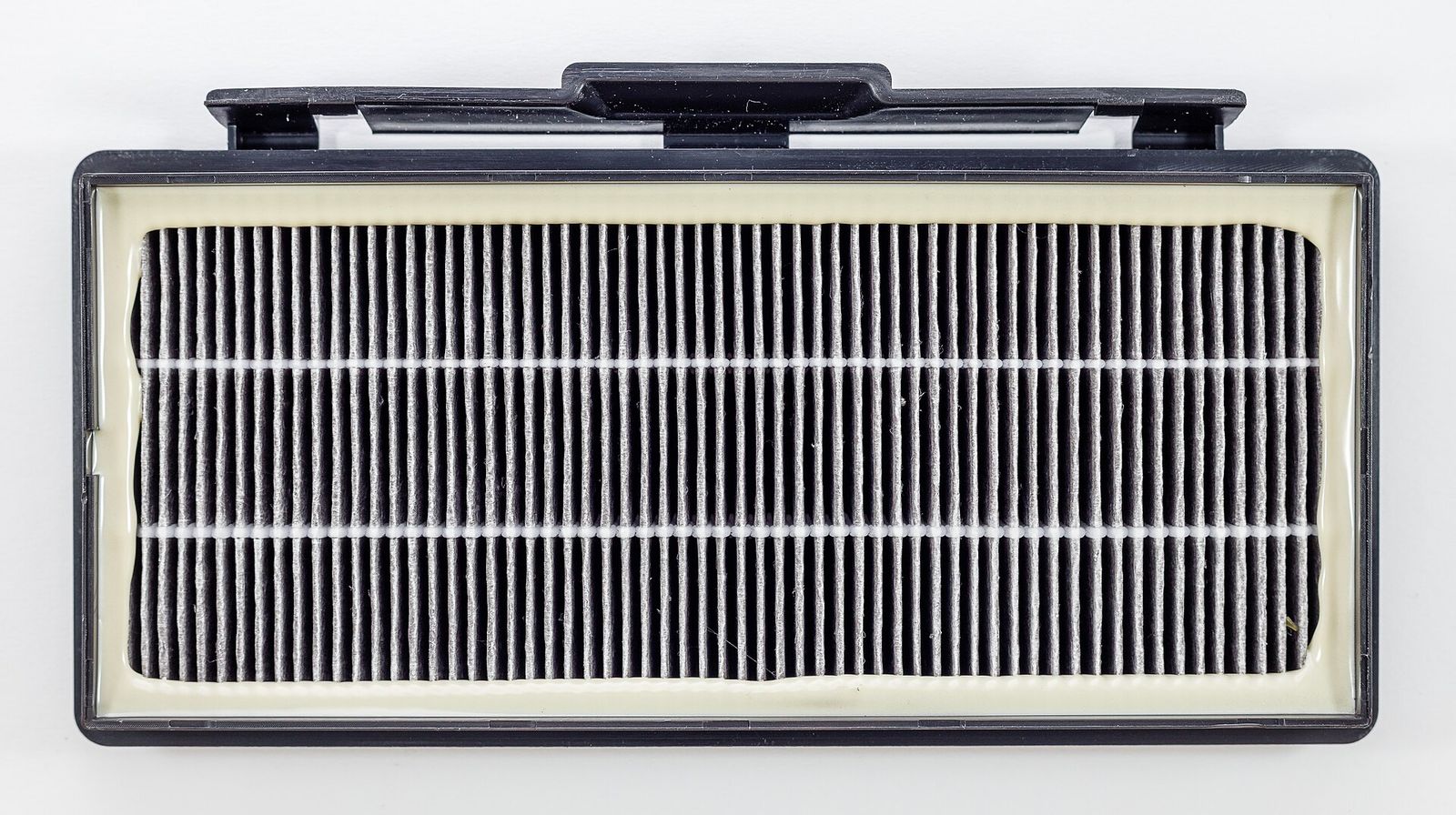
| Fine-dust or HEPA-rated cartridge | Drywall dust, fine sanding dust, ash |
| Collection bag (inside the tank) | Captures fine dust before the filter; easier, cleaner emptying |
Some points worth knowing:
- Wet pickup. Many paper cartridges must be removed or swapped for a foam sleeve before vacuuming water. A float valve shuts off suction when the tank is full of liquid.
- Fine dust clogs filters quickly. Drywall and concrete dust can blind a standard cartridge in minutes and pass the finest particles straight through. A bag plus a fine filter works much better.
- Filter cleaning. Some models have a manual or automatic filter-cleaning system that knocks dust off the cartridge to restore suction during a job.
- Dust classes. In Europe, extractors for hazardous dust are classified L, M or H under the standard IEC/EN 60335-2-69. Class L suits low-hazard dust; class M is intended for dusts such as wood and crystalline silica; class H is for the most hazardous dusts. Similar classifications are used elsewhere.
Using a shop vac for dust extraction
Connected to a sander, saw or multi-tool, a shop vac captures dust at the source, which is far more effective than sweeping up afterwards.
- Power-tool outlet (auto-start). The vacuum switches on with the tool and runs on a few seconds to clear the hose. Check the outlet's maximum wattage.
- Adapters. Dust ports vary in size; universal stepped or rubber adapters bridge the gap.
- Pre-separators. A cyclone separator between the tool and the vacuum drops most of the debris into a separate bucket before it reaches the filter, keeping suction high and filters clean.
- Shop vac or dust collector? A shop vac has high sealed lift and suits small ports on handheld tools. A dedicated dust collector moves much more air at low pressure through wide ducting and suits stationary machines like table saws and planers.
For more on dust-producing tools, see our guides to sanders and grits and circular, mitre and table saws.
Safety
- Never vacuum flammable liquids or vapours such as petrol, paint thinners or solvents, as the motor can ignite them.
- Never vacuum hot ashes, embers or cigarette ends. Wait until ash is completely cold, and use a fine filter.
- Don't vacuum asbestos, or material that might contain it, with a standard shop vac. Asbestos needs specialist handling and equipment.
- Silica and hazardous dusts need a correctly classified extractor and a respirator.
- Wet pickup and electricity: keep the plug and cord out of water, use a GFCI (RCD) protected outlet, and unplug before emptying or changing filters.
The short version
- Ignore peak HP; compare airflow (CFM) and sealed lift, measured the same way.
- Tank size is capacity, not power; a drain port helps for wet work.
- Wide hose for clean-up, narrow hose for power tools.
- Add a fine filter and a bag for drywall and sanding dust; use a foam sleeve for water.
- Auto-start outlet plus a cyclone separator turns a shop vac into effective dust extraction.
- Never vacuum flammable liquids, hot ash or asbestos.
Bloiq is reader-supported. Some links may earn us a commission; it never affects what we write. How we make money.
Cover photo: Friedrich Haag, CC BY-SA 4.0, via Wikimedia Commons