Robotic, suction or pressure pool cleaners: how to choose one
How suction-side, pressure-side and robotic pool cleaners work, which pools and surfaces each suits, and what to check on filters, cables, batteries and upkeep.
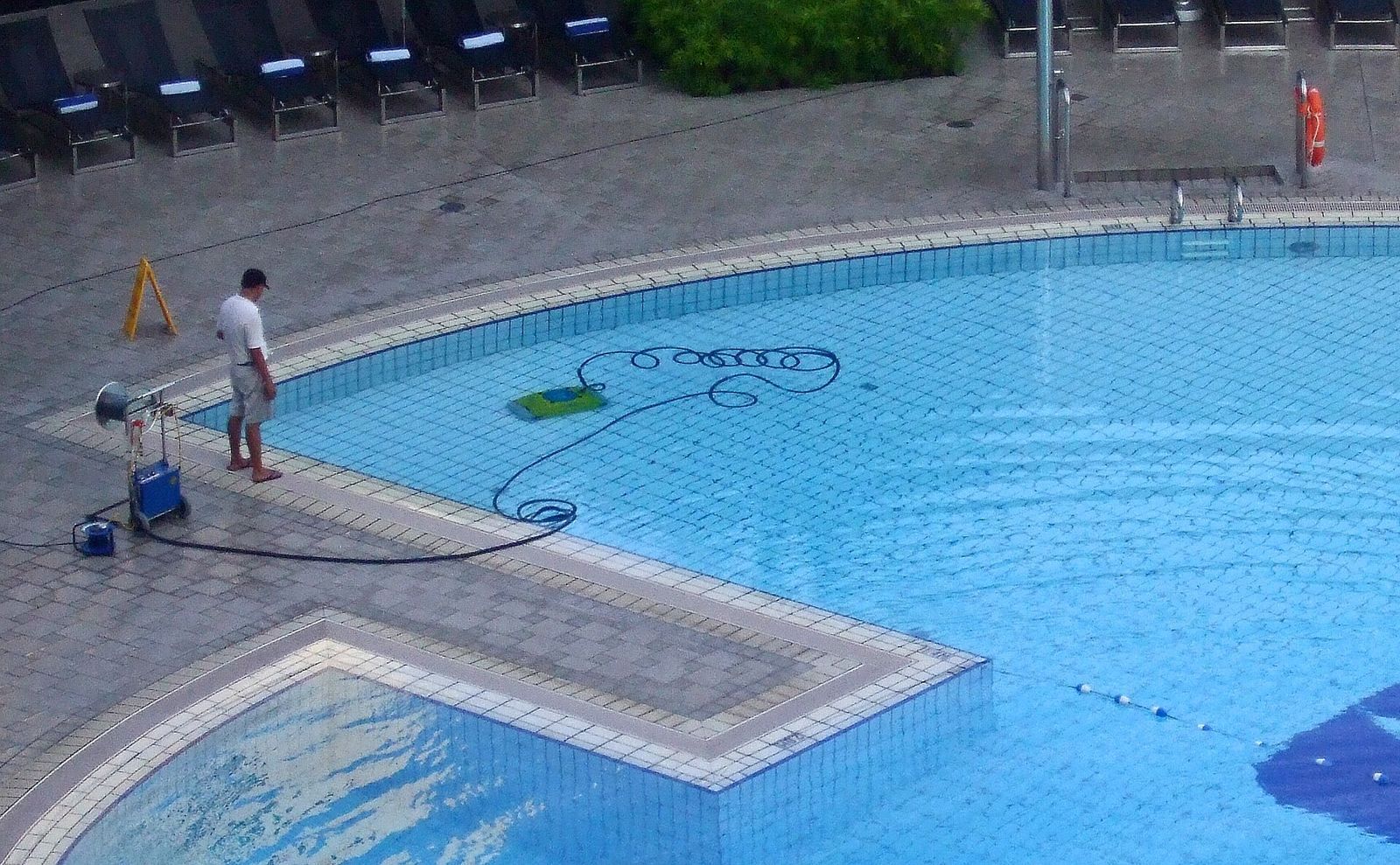
An automatic pool cleaner takes over the least enjoyable job in pool ownership: vacuuming the floor and brushing the walls. There are three main designs, and they differ in how they're powered, where the dirt goes, and how much they rely on your pool pump. This guide explains each type, which pools and surfaces they suit, and the specifications worth reading before you buy.
The three types at a glance
| Suction-side | Pressure-side | Robotic | |
|---|---|---|---|
| Power source | Your pool pump's suction | Your pump's return flow (sometimes a booster pump) | Its own electric motor |
| Where debris goes | Pump basket and pool filter | Cleaner's own bag | Cleaner's own filter basket |
| Load on pool filter | Adds to it | Reduced | Reduced |
| Cleaning pattern | Usually random | Usually random | Often programmed or systematic |
| Upfront cost | Lowest | Middle | Highest |
| Running cost | Pump must run | Pump must run (and booster if fitted) | Low-voltage motor only |
Suction-side cleaners
A suction cleaner connects by hose to the skimmer or a dedicated suction port. The pump pulls water through the cleaner, which wanders the pool floor and sometimes the walls, picking up dirt that ends up in the pump's strainer basket and the pool filter.
Good for: budget setups, fine dirt and sand, and pools with enough pump capacity.
Watch for:
- They depend on your pump and filter. A small pump may not move the cleaner well, and the filter will need cleaning or backwashing more often. On above-ground pools with small pumps, check the cleaner's minimum flow; our guide to above-ground pool pumps and sand filters explains flow ratings.
- Large leaves can clog the hose or pump basket. An inline leaf canister helps.
- Some models use a flexible diaphragm or turbine that wears and needs occasional replacement.
Pressure-side cleaners
A pressure cleaner connects to a return line, where water flows back into the pool. That flow drives the cleaner and lifts debris into an attached bag. Some models need a separate booster pump to work properly; others run on the main pump's return pressure.
Good for: in-ground pools with lots of leaves, twigs and larger debris, since the bag is separate from the filter.
Watch for: the extra cost and energy use of a booster pump if yours needs one, and the need to empty the bag regularly. These are mostly designed for in-ground pools.
Robotic cleaners
A robotic cleaner is self-contained. It has electric motors for driving and suction, its own filter, and a low-voltage cable running to a power supply beside the pool. The power supply converts mains power to a safe low voltage for the robot. Newer cordless robots run on rechargeable batteries instead.
Good for: most pool types, owners who want the pool pump and filter to do less work, and anyone who wants walls and the waterline cleaned as well as the floor.
Things to compare:
- Coverage: floor only, floor and walls, or floor, walls and waterline. Floor-only models are cheaper and fine for many above-ground pools.
- Navigation: basic models change direction when they hit a wall; better ones use gyroscopes or other sensors to cover the pool in a systematic pattern and avoid missing spots.
- Cycle options: typical cycles run from about one to a few hours. Programmable cycles, weekly scheduling and a "floor only" quick mode are useful.
- Filters: robots use baskets or cartridges rated for different debris sizes. A fine filter catches silt and pollen; a coarse one handles leaves without clogging. Some models come with both.
- Cable length and swivel: the cable must reach the farthest point of the pool, including down the walls, from where the power supply will sit. A swivel helps prevent the cable twisting and tangling.
- Weight and lifting: a wet robot full of water and debris is heavy. Look for fast-draining designs, a sturdy handle, and whether a caddy is included.
- Cordless models: no cable to tangle, but runtimes are shorter, and some are limited to floor cleaning. Check how the robot is retrieved when it finishes and how long a charge takes.
Match the cleaner to your pool
- Pool type: make sure the cleaner is designed for above-ground or in-ground pools, as appropriate. In-ground cleaners may struggle with the soft floors and tight dimensions of above-ground pools, while small above-ground models may not climb in-ground walls.
- Size: check the maximum pool length or area the cleaner is rated for.
- Surface: vinyl liners, fibreglass, plaster or concrete, and tile each have compatible brush types. Softer rubber or foam brushes grip smooth fibreglass and vinyl; stiffer PVC brushes suit rougher plaster. The wrong brush can slip, or wear a surface.
- Shape and features: steps, benches, steep slopes and main drains can trap simple cleaners. Check that the cleaner handles your pool's shape.
- Debris type: leaf-heavy gardens suit pressure-side cleaners or robots with large baskets; fine dust suits fine filters.
Rule of thumb: a cleaner handles debris on the floor; it doesn't replace skimming, chemistry or a working filtration system. Keep the pump, filter and water balance in order, and the cleaner has much less to do.
Using a robotic cleaner safely
- Plug the power supply into an outlet protected by an RCD or GFCI, and position it as far from the water as the manual specifies (often several metres).
- Never swim while a corded cleaner is in the pool, and never handle the power supply with wet hands.
- Lift the robot out by its handle, not by pulling on the cable.
- Don't run it out of the water; many robots depend on water to cool their motors.
Care and maintenance
- Empty and rinse the filter after every cycle. A clogged filter is the most common cause of poor cleaning and motor strain.
- Take the robot out between cycles rather than leaving it in the pool, and store it out of direct sun. Constant exposure to chlorinated water and sunlight shortens its life.
- Untangle the cable by laying it out in the sun occasionally.
- Check brushes, tracks and tyres each season; they are wear parts, and replacements should be easy to get.
- Suction and pressure cleaners: inspect hoses for cracks, and replace diaphragms, bags and tyres as they wear.
- Winter: clean, dry and store the cleaner indoors when you close the pool.
The short version
- Tight budget and a strong pump: a suction-side cleaner, accepting more filter cleaning.
- In-ground pool with lots of leaves: a pressure-side cleaner, ideally one that doesn't need a booster pump.
- Least work, walls and waterline too, and less load on the pool filter: a robotic cleaner with the right coverage, filter options and cable length.
- Before buying: check pool type and size, surface compatibility, and how easy the filter is to empty.
Bloiq is reader-supported. Some links may earn us a commission; it never affects what we write. How we make money.
Cover photo: Martin Cooper from Ipswich, UK, CC BY 2.0, via Wikimedia Commons

.jpg)