Electric kettle buying guide: capacity, temperature control and scale
How to choose an electric kettle by capacity, power, temperature control and materials, plus how to deal with limescale in hard-water areas.
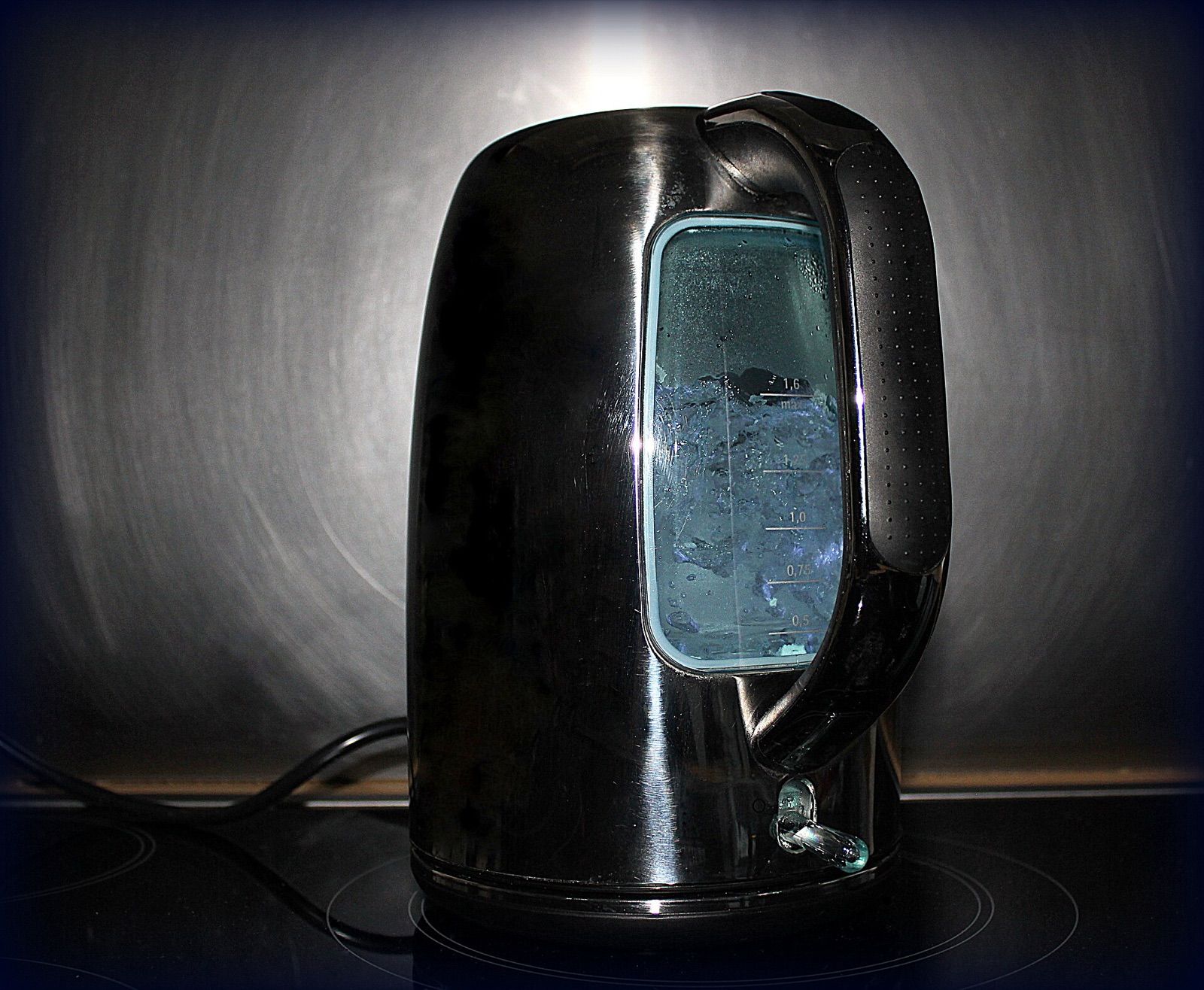
An electric kettle looks like the simplest appliance in the kitchen, and a basic one does its job well. But the differences between models matter more than you might expect if you make green tea or pour-over coffee, live in a hard-water area or want to avoid the taste of plastic. This guide covers capacity and power, temperature control, materials and how to keep limescale under control.
Capacity: how much water you need
Most full-size kettles hold 1.5 to 1.8 litres, which is enough for six or more mugs. Compact models of 0.5 to 1 litre suit one or two people, small kitchens and travel.
Two numbers matter:
- Maximum capacity: how much it can boil at once.
- Minimum fill: often around 0.25 to 0.5 litres. A low minimum is useful if you often make a single cup.
A bigger kettle isn't more wasteful in itself, as long as you only boil the water you need. Heating extra water is the biggest avoidable energy use for kettles, so a clear water gauge with cup markings is worth having.
Power and boiling speed
Kettle speed depends mainly on wattage and on your mains voltage.
- In the UK, Ireland and much of Europe (230 V), kettles are commonly 2.2 to 3 kW and boil a litre in roughly two to three minutes.
- In North America (120 V), kettles are usually limited to about 1,500 W, so boiling the same amount takes roughly twice as long.
A higher wattage boils faster but uses about the same energy to heat a given amount of water, because the energy needed depends on the amount of water, not the speed. For the same reason, boiling water in a kettle is generally more efficient than using a hob, where more heat escapes around the pan.
Temperature control: who needs it
A standard kettle heats to boiling and switches off. A variable-temperature kettle lets you stop at a lower temperature, either with presets or in single-degree steps. This matters for:
- Green and white tea, which can taste bitter with boiling water; many people brew them at about 70 to 85 °C.
- Oolong tea, often brewed at about 80 to 95 °C.
- Pour-over and plunger coffee, typically brewed at about 90 to 96 °C.
- Baby formula, where following the official guidance for your country is important; some kettles have a dedicated setting.
Useful related features:
- Keep warm holds water at your chosen temperature, usually for 30 to 60 minutes.
- Hold/reboil memory remembers the last setting when you lift the kettle off the base.
- Gooseneck spouts give a slow, precise pour for pour-over coffee; they typically hold less (around 0.8 to 1 litre) and pour more slowly for everyday use.
If you only drink black tea, instant coffee or use boiling water for cooking, temperature control adds cost without much benefit.
Materials: stainless steel, glass, plastic or ceramic
| Material | Pros | Consider |
|---|---|---|
| Stainless steel | Durable, doesn't stain, no plastic taste | Outside gets hot unless double-walled; heavier |
| Glass (usually borosilicate) | See the water boil; easy to spot scale | Shows scale; can be heavier; handle with care |
| Plastic | Light, cheap, cooler outside | Some people notice a taste; can discolour |
| Ceramic | Attractive; stays warm | Heavy; slower; can chip |
Look at what actually touches the water. Some "stainless" kettles still have plastic lids, water windows or filters inside. If you want to minimise plastic contact, check the interior, not just the exterior. For stainless steel, a stated food-grade alloy is reassuring.
Double-wall or "cool-touch" kettles have an insulated outer shell, which makes the exterior safer to touch and keeps water hot longer.
Safety features
Nearly all modern kettles include:
- Automatic shut-off when the water boils (or reaches the set temperature).
- Boil-dry protection, which switches off if the kettle is run empty or boils dry.
- A cordless 360° base, so you can lift the kettle off without a cable attached.
Also worth checking: a lid that opens smoothly away from your hand, a handle that stays cool, a secure lid lock and a recognised safety certification mark for your region.
Limescale: why it forms and how to remove it
In hard-water areas, heating water makes dissolved calcium and magnesium come out of solution as limescale, the chalky white layer that builds up inside kettles. It isn't harmful, but it can:
- flake into your drinks;
- slow heating slightly and make the kettle louder;
- clog spout filters and shorten the life of the heating element.
Prevention:
- Empty the kettle rather than leaving water standing in it.
- Look for a removable mesh filter at the spout to catch flakes.
- A concealed (flat-plate) element is much easier to clean than an exposed coil.
- Using filtered water reduces scale build-up.
Descaling: fill the kettle partway with a solution of citric acid or diluted white vinegar (or a commercial descaler), bring it to the boil or let it soak according to the instructions, then empty it and rinse and boil fresh water a couple of times. In very hard water, many people find they need to descale every month or so; in soft water, a few times a year may be enough. Always follow the manufacturer's guidance, as some coatings and materials need gentler treatment.
If limescale is a problem throughout the house, our guide to water softeners and whole-house filters explains the options.
Other details that make a difference
- Noise: some kettles are marketed as quiet-boil; scale build-up makes any kettle louder.
- Lid design: a wide opening makes filling and cleaning easier.
- Cord storage in the base keeps the counter tidy.
- Pouring: a well-balanced kettle pours without drips when full.
The short version
- Choose capacity by household size, and check the minimum fill.
- Expect faster boiling from higher wattage, especially in 230 V countries.
- Get variable temperature if you drink green tea or brew coffee by hand.
- Check what material touches the water if taste or plastic matters to you.
- Look for auto shut-off, boil-dry protection and a removable scale filter.
- Descale regularly in hard-water areas, and boil only what you need.
Bloiq is reader-supported. Some links may earn us a commission; it never affects what we write. How we make money.