Personal, full-size or high-performance: choosing the right blender
How the three main types of blender differ in power, jug size and results, and which one suits smoothies, soups, frozen drinks, nut butters or crushed ice.
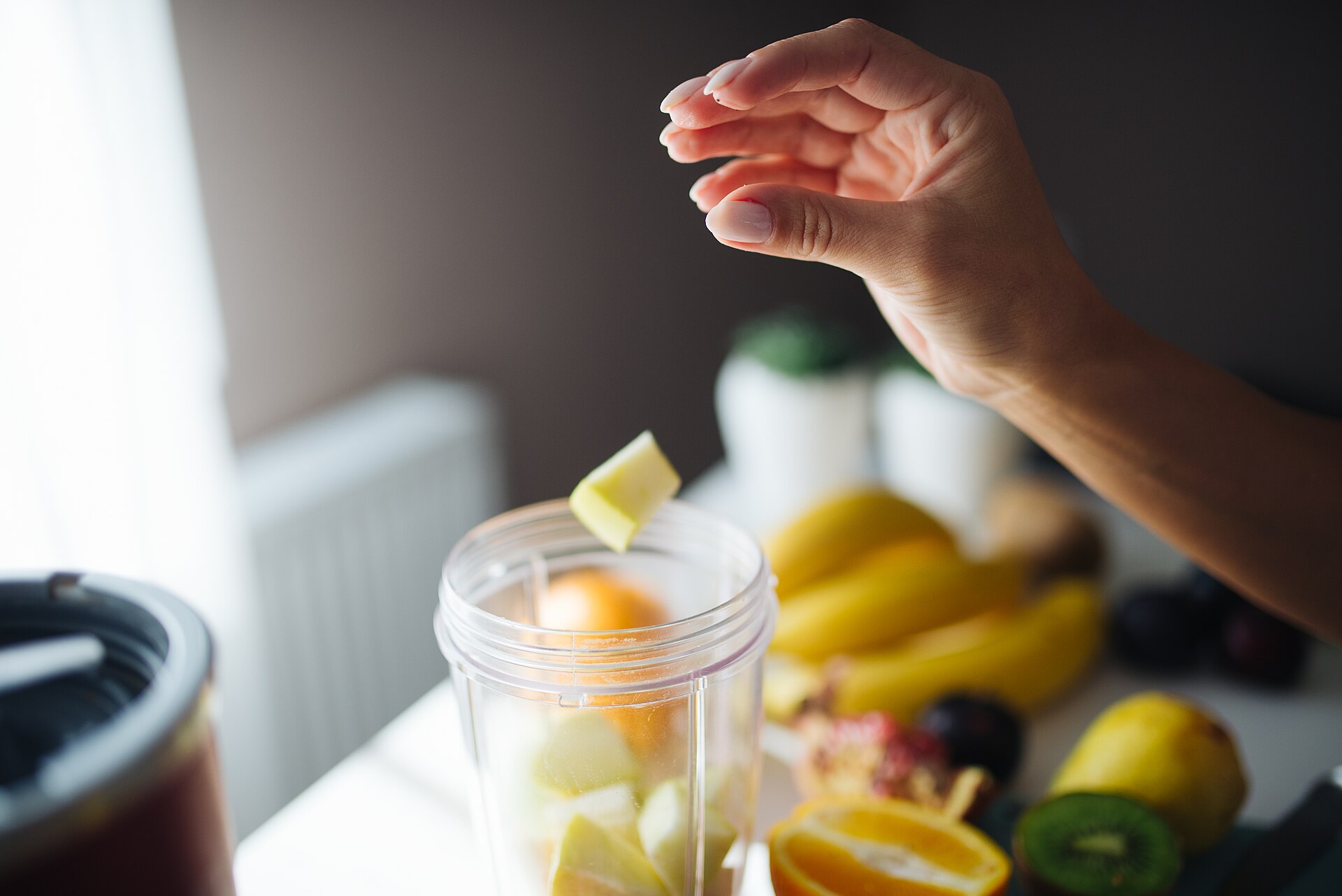
Blenders range from compact machines that blend a single smoothie in the cup you drink from to powerful countertop units that can turn nuts into butter and heat soup through friction alone. The price range is wide, and a higher wattage figure doesn't always mean a smoother result. This guide compares the three main types and explains which specifications matter for what you want to make.
The three main types at a glance
| Personal | Full-size | High-performance | |
|---|---|---|---|
| Typical power | About 250–1,000 W | About 500–1,200 W | About 1,200–2,200 W |
| Container | Single-serve cups, often 0.5–1 litre | Jug, often 1.5–2 litres | Jug, often 1.4–2 litres, sometimes with extra containers |
| Best for | One or two smoothies, protein shakes | Family smoothies, batters, sauces, crushed ice on many models | Very smooth purées, frozen desserts, nut butters, hot soups |
| Limitations | Small batches; not for hot liquids | Less smooth with fibrous greens and seeds | Size, noise and cost |
These ranges are typical rather than strict; the categories overlap at the edges.
Personal blenders
A personal blender has a motor base and a set of cups. You fill the cup, screw on a blade assembly, turn it upside down onto the base, blend, then swap the blade for a drinking lid. It is quick, easy to clean and takes little space.
Personal blenders are well suited to smoothies and shakes for one or two people. Stronger models handle frozen fruit and ice in small amounts; weaker ones may leave chunks or need extra liquid. Because the cup is sealed during blending, never blend hot liquids in a personal blender: steam pressure can build up and force the lid or blade off.
Full-size blenders
A full-size blender has a jug that sits on top of the motor base, with the blade fixed or removable at the bottom and a lid with a small removable cap. This is the everyday all-rounder: batch smoothies, pancake batter, salsa, sauces, milkshakes and, on many models, crushed ice.
Where full-size blenders can struggle is with very fibrous ingredients such as kale stems, whole seeds and berry pips, and with very thick mixtures that need to be pushed down onto the blades. Results can be good but not perfectly smooth. They can blend warm soup if the lid is vented, but follow the manufacturer's instructions (see below).
High-performance blenders
High-performance blenders pair a powerful motor with a sturdy jug designed to create a strong vortex that pulls ingredients down onto the blades. Many rely more on blade speed than on sharp edges. They typically include a tamper, a stick that fits through the lid to push thick mixtures into the blades safely while the machine runs.
What the extra power buys you:
- Smoother textures with leafy greens, seeds and skins.
- Thick frozen mixtures, such as sorbet-style desserts made with little liquid.
- Nut and seed butters, which need sustained power without overheating.
- Hot soup from cold ingredients on many models: running at high speed for several minutes heats the contents through friction.
The trade-offs are size (check the height under your cabinets), noise and price. Many high-performance blenders also come with longer warranties, which is worth comparing.
Why wattage is only part of the story
Blender wattage is a rough indicator, not a guarantee of results:
- Some brands quote peak power, a brief maximum, rather than the continuous power the motor can sustain. The two can differ considerably.
- Jug shape and blade design decide how well the contents circulate. A well-designed 1,000 W blender can outperform a poorly designed one with a higher rating.
- Horsepower figures sometimes quoted for high-performance models are also peak ratings.
Use wattage to compare models of the same type, and look at what the manufacturer says the blender is designed to do: crush ice, make nut butter, blend hot liquids.
Jug size, shape and material
A narrow-based jug keeps small amounts in contact with the blades, which suits single portions and dressings. A wide-based jug handles large batches and chopping better, but may need more liquid for small quantities. Some high-performance models offer both.
Container materials:
- Glass is heavy, doesn't scratch or absorb odours, and resists staining, but can break if dropped or exposed to sudden temperature changes.
- Plastic, usually a BPA-free copolyester, is lighter and more shatter-resistant, and is used on most high-performance models. It can cloud or scratch over time, especially with frequent ice crushing.
- Stainless steel jugs exist, mainly for drinks, but you can't see the contents.
Blending hot liquids safely
Hot liquids expand and release steam when blended, which can push the lid off. With a full-size or high-performance blender designed for hot contents, the usual advice is:
- Let very hot liquids cool slightly first.
- Fill the jug no more than about half full.
- Remove the small centre cap and cover the opening with a folded cloth so steam can escape.
- Start on the lowest speed and increase gradually.
Always check the manual: some jugs and lids are not rated for hot liquids at all. For puréeing soup in the pan, a hand-held immersion blender is often simpler and avoids transferring hot liquid.
Programmes, controls and cleaning
Many blenders offer preset programmes such as smoothie, ice crush or soup, which vary speed and time automatically. They are convenient, but not essential. Useful controls to look for are a variable speed dial for fine control and a pulse button for chopping.
Cleaning is easiest when you do it straight away: half-fill the jug with warm water, add a drop of washing-up liquid, blend for 30 seconds and rinse. Check whether the jug and blades are dishwasher-safe; some manufacturers advise against it because it can dull or cloud the container over time. Blades are sharp, so handle removable blade assemblies carefully.
Other things to check
- Noise: all blenders are loud; high-powered ones especially so. Some have sound enclosures.
- Footprint and height: measure the space where it will sit, with the jug on.
- Spares: check the availability of replacement jugs, seals and blade assemblies.
- Warranty: compare the length and whether it covers the motor.
If you mainly bake, a stand mixer may be the more useful appliance; see our stand mixer guide.
The short version
- Personal blender if you mostly make one or two smoothies at a time and want something compact.
- Full-size blender for an affordable all-rounder that handles family batches and, on many models, ice.
- High-performance blender if you want very smooth results, nut butters, frozen desserts or hot soups.
- Treat peak wattage with caution; jug design matters as much as power.
- Choose glass for durability against scratches, plastic for light weight and use with powerful motors.
- Never blend hot liquids in a sealed personal cup, and follow the manual's hot-liquid guidance for any jug.
Bloiq is reader-supported. Some links may earn us a commission; it never affects what we write. How we make money.
Cover photo: Shixart1985, CC BY 2.0, via Wikimedia Commons