Bedding materials explained: cotton, linen, bamboo and duvet fills
What cotton types, weaves, linen and bamboo-derived fabrics really offer, why thread count misleads, and how fill power and tog ratings describe duvet warmth.
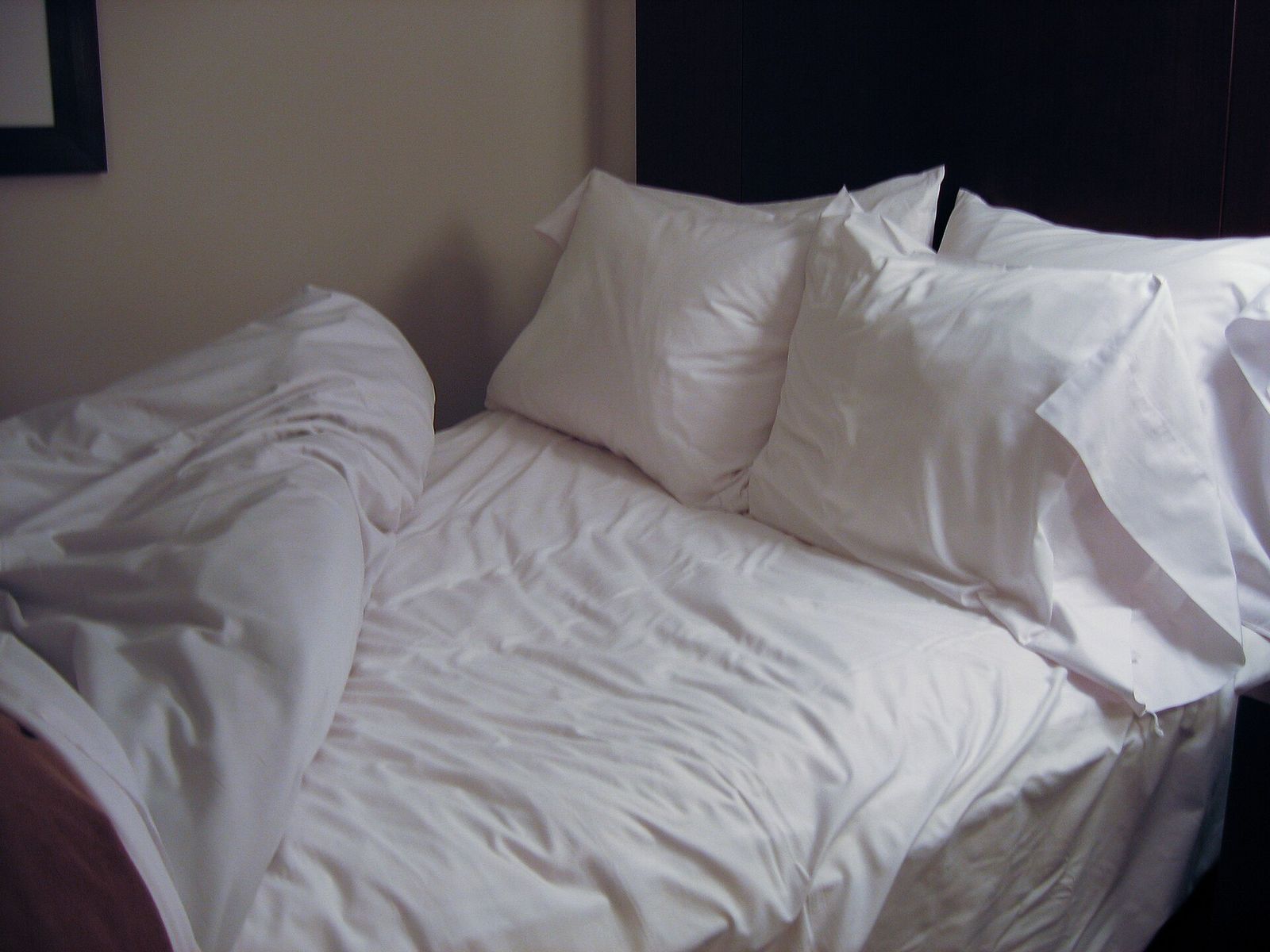
Sheets and duvets are sold on a handful of impressive-sounding numbers and words: 1,000 thread count, Egyptian cotton, bamboo, 800 fill power. Some of these tell you a lot about how bedding will feel and last; others tell you very little. This guide explains the materials, the weaves and the ratings, so you can choose bedding that suits whether you sleep hot or cold.
Cotton: why fibre length matters
Cotton is still the most popular sheet fabric: breathable, absorbent, durable and easy to wash. The biggest quality factor is the length of the fibres, known as the staple.
- Standard (upland) cotton has shorter fibres. It makes perfectly good everyday sheets, but can feel rougher and pill sooner.
- Long-staple and extra-long-staple cotton can be spun into finer, stronger, smoother yarns that soften with washing and resist pilling.
Egyptian and Pima cotton are names associated with long and extra-long staple fibres. Supima is a licensed trademark for American-grown Pima cotton. These labels have sometimes been misused, and "Egyptian cotton" does not automatically guarantee extra-long fibres, so look for clear fibre information and reputable certification or verification rather than the name alone.
Weave: percale, sateen and more
The same cotton can feel completely different depending on how it is woven.
| Weave | Feel | Good for | Consider |
|---|---|---|---|
| Percale (one over, one under) | Crisp, matte, cool | Warm sleepers, warm climates | Can feel stiff at first; wrinkles |
| Sateen (typically four over, one under) | Smooth, silky, slight sheen | Those who like a soft, drapey feel | Warmer; can snag or pill more |
| Flannel (brushed) | Soft, fuzzy, warm | Cold bedrooms and winters | Too warm for many in summer |
| Jersey (knitted) | Stretchy, T-shirt-like | Casual comfort, fitted sheets | Less crisp and less durable |
If you have ever found expensive sheets too warm, the weave, rather than the fibre, is often the reason.
The thread-count myth
Thread count is the number of threads per square inch of fabric, counting both directions. Up to a point, a higher count means a finer, denser weave. Beyond that, it stops being a useful measure.
The main problem is plied yarn: thin strands twisted together. Standard fabric-count methods count a plied yarn as one thread, but some labels multiply the count by the number of plies, which is how you get sheets advertised as 1,000 or more. These can feel heavier and less breathable than a well-made sheet with a much lower count.
Rule of thumb: for cotton sheets, a thread count of about 200 to 400 made from long-staple, single-ply yarn usually beats a much higher count made from short, multi-ply yarn. Judge fibre, yarn and weave first; treat the thread count as a minor detail.
Linen
Linen is woven from flax fibres, among the oldest textiles there are.
- Pros: very breathable and absorbent, dries quickly and is excellent for warm sleepers and humid climates. It is strong and gets softer with every wash.
- Cons: it wrinkles easily (many people like the relaxed look), can feel textured or slightly rough at first, and usually costs more than cotton.
Linen is typically described by weight (grams per square metre) rather than thread count, which is not a meaningful measure for it.
Bamboo-derived fabrics
Most sheets sold as "bamboo" are not woven from bamboo fibres. They are a regenerated cellulose fabric: bamboo pulp is dissolved and extruded into new fibres. In several countries, including the US and Canada, regulators have required such products to be labelled as, for example, "rayon made from bamboo" or "viscose from bamboo" rather than simply "bamboo".
- Viscose (rayon) is soft, drapey and cool to the touch, but the traditional process uses harsh chemicals, and the fabric can be less durable.
- Lyocell is made with a closed-loop solvent process that recovers most of the chemicals, and tends to be stronger.
Both can feel silky and cool, which appeals to warm sleepers. They usually need gentler washing, lower dryer heat and more care to avoid pilling. Environmental claims vary a lot, so look for specific information about the process rather than a general "eco" label.
Other sheet materials
- Microfibre (polyester): inexpensive, soft and wrinkle-resistant, but less breathable, so it can feel warm.
- Cotton-polyester blends: easy care and durable, but less breathable than pure cotton.
- Silk: smooth and luxurious, but delicate and expensive.
For peace of mind about textile chemicals, look for OEKO-TEX Standard 100 (tested for harmful substances) or GOTS (certified organic textile).
Duvets: fill types
| Fill | Feel | Consider |
|---|---|---|
| Down | Light, lofty, very warm for its weight | Expensive; needs careful washing |
| Feather or down-and-feather | Heavier, flatter; cheaper than pure down | Quills can poke through |
| Synthetic (polyester, microfibre) | Affordable and machine-washable | Heavier for the same warmth; can flatten over time |
| Wool | Breathable, regulates temperature well | Heavier; often needs specialist cleaning |
| Silk | Light and drapey, less puffy | Expensive; best for moderate warmth |
For down and feather, look for responsible-sourcing certification such as the Responsible Down Standard (RDS). If you react to feathers, a washable synthetic duvet is a straightforward alternative.
Fill power and tog ratings
Fill power measures how lofty down is: the volume, in cubic inches, that one ounce of down fills. The higher the number, the more air it traps and the warmer it is for its weight. Roughly, 550–650 is good quality, 700 and above is high quality, and 800 or more is premium. Measurement methods differ between regions, so compare figures measured the same way.
Fill power is not warmth on its own. A duvet with high fill power but very little down can be cooler than one with more lower-grade down. Fill weight matters too.
Tog is the UK and European measure of a duvet's overall warmth. In the UK, around 4.5 tog is typical for summer, around 10.5 tog for spring and autumn, and 13.5 tog or more for winter. "All-season" duvets combine two lighter duvets that you can use separately or together.
Construction matters as well. Baffle-box duvets have fabric walls between the top and bottom layers so the fill can loft fully and stay evenly spread; sewn-through duvets are simpler and cooler but can leave cold spots along the seams.
Care tips
- Wash new sheets before use to remove finishes.
- Follow the care label; hot washes and high dryer heat shorten the life of most fabrics.
- Rotate two or three sets of sheets to spread the wear.
- Use a duvet cover and a mattress protector; they are much easier to wash than the duvet or mattress. See our guide to mattress types for choosing what goes underneath.
The short version
- Sleep hot? Try percale cotton, linen or lyocell.
- Sleep cold or want a smooth feel? Consider sateen or flannel.
- Judge cotton by fibre length, yarn and weave; ignore very high thread counts.
- Treat "bamboo" sheets as viscose or lyocell and care for them gently.
- For duvets, look at fill type, fill power and fill weight, or the tog rating.
- Look for OEKO-TEX, GOTS or RDS labels if materials and sourcing matter to you.
Bloiq is reader-supported. Some links may earn us a commission; it never affects what we write. How we make money.
Cover photo: Liz Lawley, CC BY-SA 2.0, via Wikimedia Commons