Home / Travel / United States · Campus tours
Yale campus tour: Old Campus, the libraries and the colleges
A practical guide to visiting Yale in New Haven: Old Campus, Harkness Tower, Sterling and Beinecke libraries, the residential colleges and planning the day.
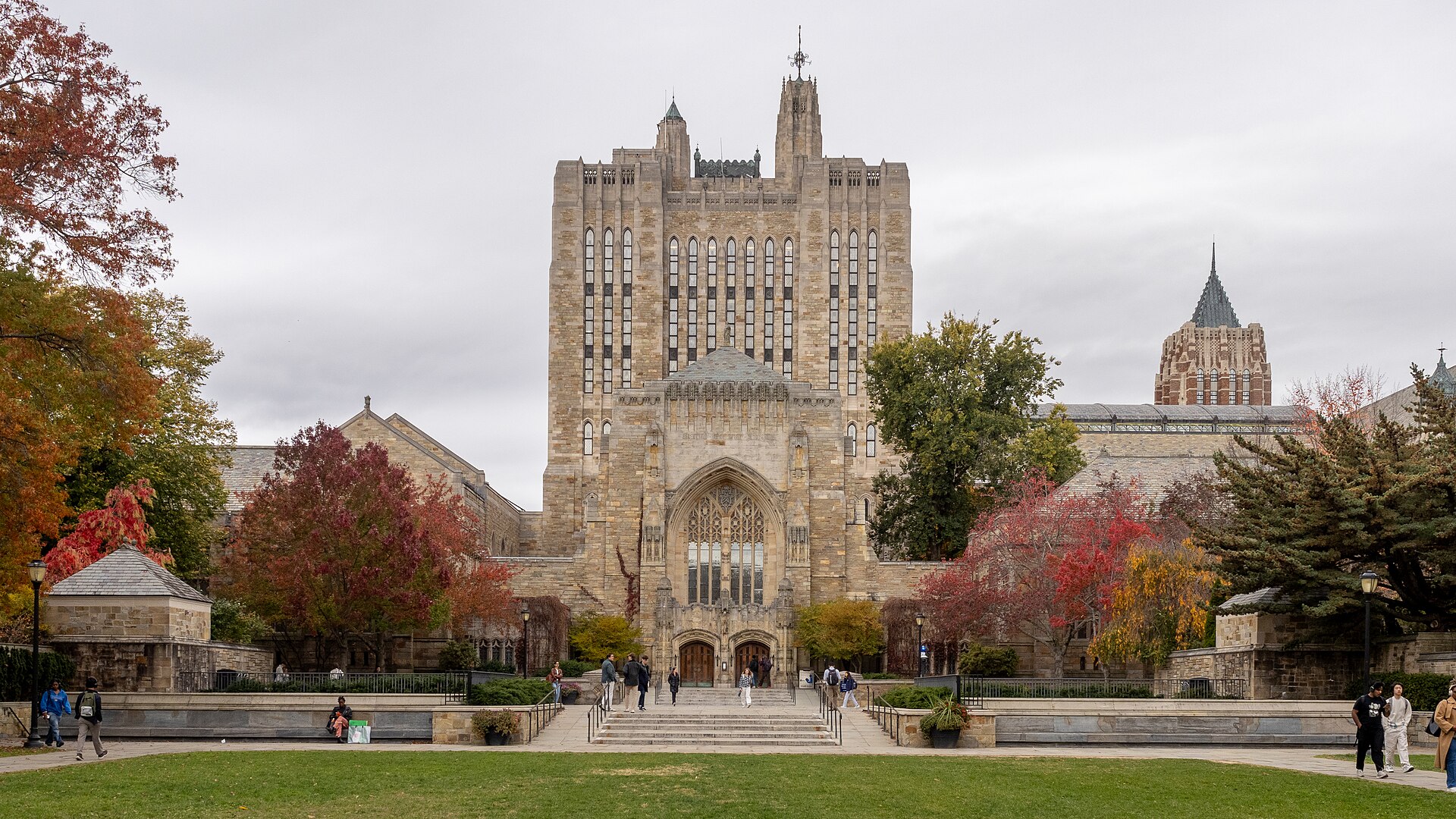
Yale was founded in 1701 and moved to New Haven, Connecticut, in 1716. Three centuries later its Gothic towers and courtyards fill the centre of the city, right beside the New Haven Green, so a campus visit is also a walk through downtown. Because it's an easy train ride from New York, many families fit Yale into a wider trip. This guide explains how to get there, what to see in the order most visitors walk it, and how the residential college system shapes student life.
Getting to New Haven
New Haven sits on the Connecticut shore, roughly halfway between New York City and Providence.
- From New York: commuter trains run from Grand Central Terminal to New Haven's Union Station, typically in about two hours. Intercity trains from Penn Station are a little faster. It's an easy day trip from the city, though an early information session is more relaxed if you stay over.
- From Boston: intercity trains run along the coast to Union Station in roughly two to three hours.
- By air: most visitors fly into one of the New York airports, Hartford's Bradley International or Boston, then continue by train or car.
- From the station: Union Station is about 1.5 km from campus. It's a walk of 20–25 minutes, a short taxi ride, or a local shuttle bus.
Once you arrive, the campus is compact enough to see entirely on foot.
Start on Old Campus
Old Campus is the big, leafy quadrangle between the Green and the rest of the university, ringed by dormitories. Most first-year students live here, so this is where Yale life begins. Its gates open onto the Green and onto Elm and High streets, and its oldest building, Connecticut Hall, dates from the 1750s. Nathan Hale, a Yale graduate, stands in bronze outside it.
Harkness Tower and its bells
Just beyond Old Campus rises Harkness Tower, a richly carved Gothic tower completed in the early 1920s. It houses a carillon of bells played by students in a campus guild, often at set times on weekdays. If you hear bells drifting across the courtyards, they're being played by hand.
Two libraries you shouldn't miss
Sterling Memorial Library was designed to look like a cathedral: the entrance hall is a long nave with stained glass and carved stone, and the circulation desk sits where an altar would be. Outside is the Women's Table, a granite fountain by Maya Lin marking the history of women at Yale.
The Beinecke Rare Book and Manuscript Library, a short walk away on Hewitt Quadrangle, is one of the most unusual buildings in the country. Its walls are made of thin translucent marble panels that glow amber when the sun shines through, and inside, a multi-storey glass tower of rare books rises through the centre. A Gutenberg Bible is among its treasures. The exhibition hall is usually open to visitors; check current hours before you go.
The residential colleges
Every Yale undergraduate belongs to one of fourteen residential colleges from first year to graduation. Each has its own enclosed courtyard, dining hall, library and traditions, along with a head of college and a dean who live in. Students often describe their college as a small community inside the larger university, and intramural sports between the colleges are a big part of the calendar.
The college courtyards are generally locked to the public, but tours usually give a look inside one, and their Gothic and Georgian gateways line the streets around Old Campus.
Art, science and the city
Yale's collections are open to visitors and within a few minutes' walk of each other. The Yale University Art Gallery, on Chapel Street, covers everything from ancient art to contemporary work. Directly across the street, the Yale Center for British Art, in a building by Louis Kahn, holds a major collection of British paintings. North of the central campus, Science Hill and the Peabody Museum of Natural History, known for its dinosaurs, are an easy walk up Whitney Avenue.
Downtown New Haven has theatres, cafés and shops around Chapel and College streets. The city is also famous for its thin, coal-fired pizza, known locally as apizza; Wooster Street, in the old Italian neighbourhood, has several long-established pizzerias, and queues are part of the tradition.
Visiting: tours and information sessions
Yale's admissions office usually runs information sessions followed by student-led campus tours on many weekdays, and during some weekends or seasons. Registration in advance is normally required. The university's visitor centre, near the Green, also offers general tours for the public. Schedules change with the academic calendar, so check Yale's official admissions and visitor pages for times and booking before you travel.
Which area to stay in
- Downtown, near the Green and Chapel Street: the best choice for walking everywhere, with hotels a few minutes from Old Campus.
- Near the station: convenient if you arrive by train, though you'll still walk or ride to campus.
- Along the shoreline or near the highway: more parking and space, better if you're driving and visiting several colleges in New England.
Before you go
- Allow half a day for the tour, the libraries and a walk around the Green; a full day if you add the museums.
- Weekday visits during term show the campus at its liveliest.
- Wear comfortable shoes and bring a layer: New Haven's weather can turn quickly, especially near the coast.
- If you're touring several Ivy League campuses, Columbia is a train ride away in Manhattan, and Princeton is on the other side of New York.
Bloiq is reader-supported. Some links may earn us a commission; it never affects what we write. How we make money.
Cover photo: ajay_suresh, CC BY 2.0, via Wikimedia Commons
.jpg)