Home / Travel / United States · Campus tours
Princeton campus tour: Nassau Hall, Blair Arch and the lake
How to visit Princeton University: Nassau Hall, Blair Arch, the Chapel, Firestone Library, the residential colleges, Lake Carnegie and getting to town by train.
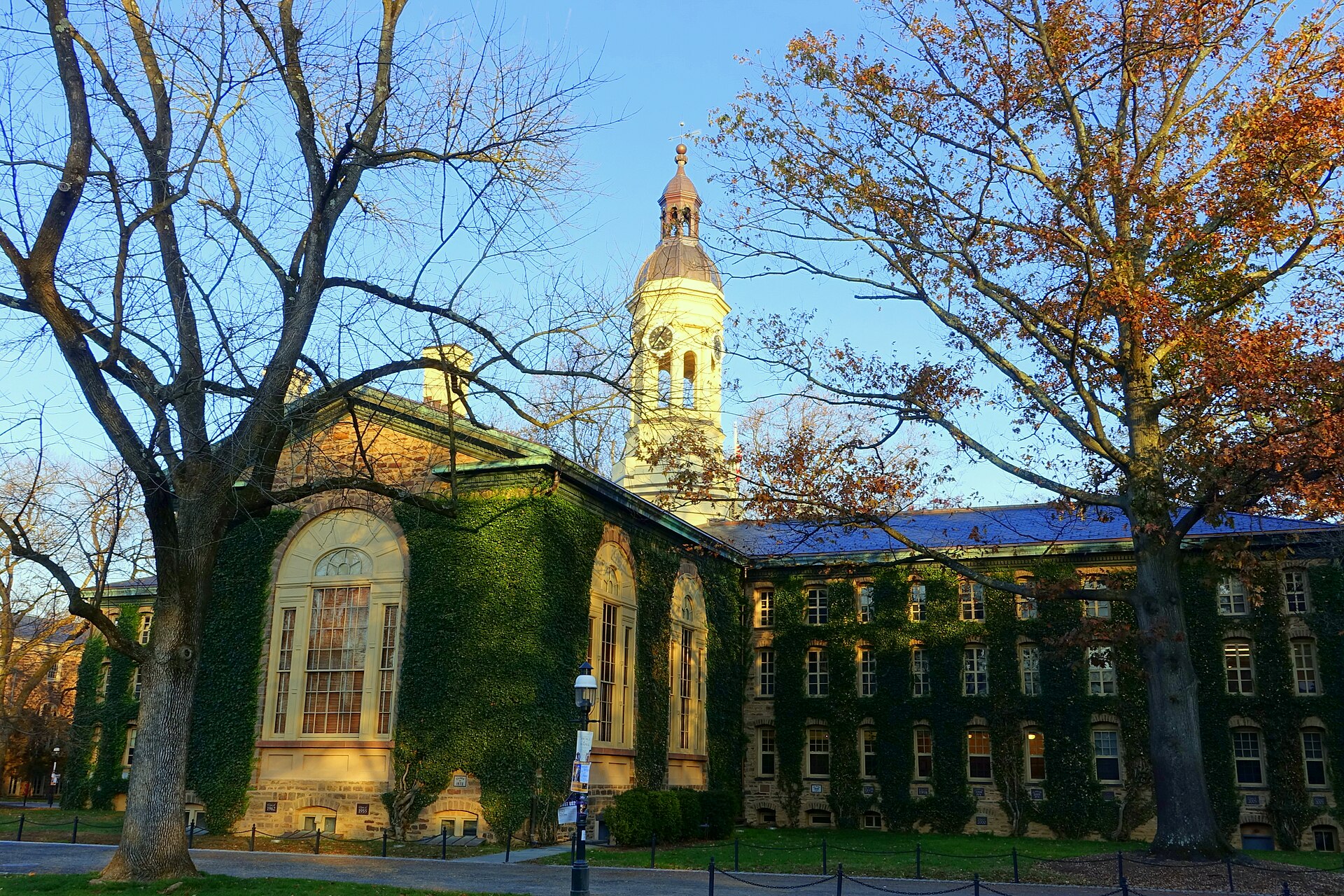
Princeton is the classic small-town university: a leafy campus of stone Gothic buildings and lawns, with a main street of cafés and bookshops running along its northern edge. Founded in 1746 as the College of New Jersey, it moved to Princeton about a decade later and took the town's name in 1896. The town lies roughly halfway between New York and Philadelphia, which makes it easy to combine with other campus visits. Here's what to see, how the place works for students, and how to plan the day.
The shape of the campus
The campus is long and fairly narrow. Nassau Street marks the north edge, and the grounds slope gently south for well over a kilometre to Lake Carnegie. The oldest buildings are near Nassau Street; the residential colleges, athletic fields and newer science buildings spread out to the south and east. Almost everything is walkable, and cars are largely kept off the central paths, which makes it a pleasant place to wander.
Nassau Hall and FitzRandolph Gate
Start where the university started. Nassau Hall, completed in 1756, was at the time the largest academic building in the American colonies. It was damaged during the Revolutionary War, and in 1783 the Continental Congress met here for several months, making Princeton briefly the nation's capital. Today it holds the university's main administrative offices, and two bronze tigers guard its steps.
Facing Nassau Street, the ornate FitzRandolph Gate is the ceremonial entrance. A long-standing student superstition holds that walking out through the gate before graduation brings bad luck, so seniors save it for Commencement.
Blair Arch and the Gothic core
Walk south-west to Blair Arch, the grand stone archway at the top of a flight of steps. Its acoustics are excellent, so student a cappella groups often perform beneath it on warm evenings, a much-loved campus tradition. The surrounding dormitories and courtyards are in the Collegiate Gothic style that defines much of the campus.
The Chapel and Firestone Library
The Princeton University Chapel is one of the largest university chapels in the world, a soaring Gothic church with a great deal of stained glass. It is used for concerts and services, and for the ceremonies that open and close each student's years at Princeton: Opening Exercises in the autumn and Baccalaureate before graduation.
Next door, Firestone Library is the main library. Much of its collection is kept on levels below ground, so the building is far larger than it looks from the lawn.
How students live: colleges and eating clubs
Undergraduates are assigned to a residential college, each with its own dining hall, staff and programme of events; newer colleges have been added in recent years at the south end of campus. The college provides the base of social life, especially in the first two years.
Many juniors and seniors also join one of the eating clubs on Prospect Avenue, private clubs in large houses where members take meals and hold social events; others stay in the college dining system or cook for themselves. Beyond that, sport, the arts and hundreds of student organisations fill evenings and weekends.
Down to Lake Carnegie
At the southern edge of campus, Lake Carnegie stretches along the valley. It was created in the early 20th century with a gift from Andrew Carnegie, and its calm, narrow water is ideal for rowing; the crews train from a boathouse on its shore. The towpath of the Delaware and Raritan Canal runs alongside, a flat and peaceful route for a walk or a run.
Getting there
- By train: commuter and intercity trains on the Northeast Corridor stop at Princeton Junction. From there, a short shuttle train, known locally as the Dinky, runs to Princeton station at the edge of campus. New York Penn Station to Princeton Junction usually takes about an hour to an hour and a half.
- By air: Newark Liberty is typically the most convenient airport, with trains from its airport station along the same line. Philadelphia's airport is another option.
- By car: Princeton is between the New Jersey Turnpike and US Route 1. Parking in town is limited on busy days, so check the university's visitor parking guidance.
Combining visits is easy: Columbia is an hour or so north by train, and Penn is a similar distance south-west.
Tours and information sessions
Princeton's admissions office generally offers information sessions and student-led campus tours on many days during the academic year, with registration usually required in advance. The university also runs visitor tours, and there are self-guided options if your schedule doesn't match. Times and formats change, so check the official admissions and visitor pages before you go.
Where to stay and eat
Downtown Princeton, around Nassau Street and Palmer Square, is the easiest base: you can walk to campus, and the streets are lined with cafés, bakeries and restaurants. The Route 1 corridor a few kilometres east has more hotels and is practical if you're driving. Some families base themselves in New York or Philadelphia and come for the day by train.
Practical tips
- Aim for a weekday in term for the full atmosphere, but check the academic calendar for exam periods and breaks.
- Allow time for Nassau Street after the tour; the town is part of the experience.
- The campus is large for a small town: comfortable shoes help, especially if you walk down to the lake.
- Spring blossom and autumn colour make those seasons especially good for photos.
Bloiq is reader-supported. Some links may earn us a commission; it never affects what we write. How we make money.