Home / Travel · Where to stay
Where to stay in Kraków: the Old Town, Kazimierz, Podgórze and Kleparz
Kraków's Old Town, Kazimierz, Podgórze and Kleparz compared: what each area is like, who it suits, how to get around and what to check before you book.
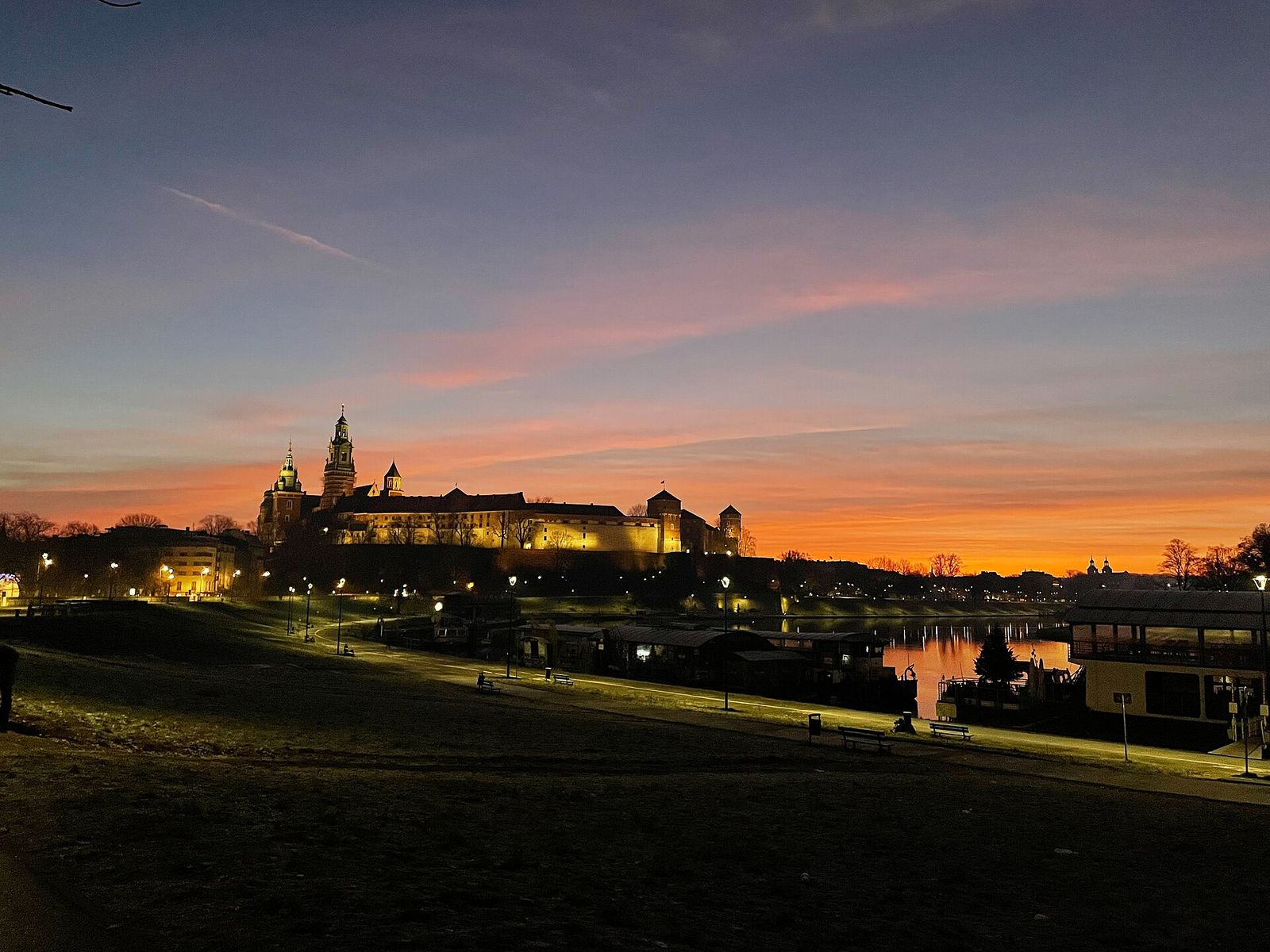
Kraków is one of the easiest cities in Europe to explore on foot. Its medieval Old Town, Wawel Hill and the historic district of Kazimierz sit within a walk of each other, and most visitors never need more than the odd tram ride. The choice of where to stay comes down to atmosphere: grand squares and late-night bustle, cafés and bars, quiet riverside streets, or an easy walk from the station. Here's how the four most useful areas compare.
The quick answer
- First visit, want to be in the middle of everything: the Old Town (Stare Miasto).
- Cafés, bars and character: Kazimierz.
- Quieter streets, museums and good value: Podgórze.
- Arriving by train or leaving early: Kleparz.
The Old Town (Stare Miasto): the medieval heart
The Old Town is a UNESCO World Heritage Site and the centre of Kraków life. At its core is the Main Market Square (Rynek Główny), one of the largest medieval town squares in Europe, with the arcaded Cloth Hall in the middle and the two unequal towers of St Mary's Basilica at one corner. Every hour a trumpet call, the hejnał, is played from the taller tower. The district is ringed by the Planty, a strip of park laid out where the city walls once stood, and the Royal Route leads south along Grodzka Street to Wawel Hill, with its castle and cathedral.
Good for: first-time visitors and short stays, since almost every major sight is a few minutes' walk away. Consider: the square and the streets around it are busy late into the night, especially at weekends, and rooms facing the main streets can be noisy. Many buildings are centuries old, so rooms vary a lot in size, and lifts aren't a given. Streets just inside the Planty, or near Wawel, tend to be calmer.
Kazimierz: history, cafés and nightlife
South of the Old Town, a 15-minute walk away, Kazimierz was founded as a separate royal town in the 14th century and for centuries was the heart of Jewish life in Kraków. Its historic synagogues, cemeteries and squares are now a major part of the city's heritage; the oldest surviving synagogue, on Szeroka Street, houses a branch of the Museum of Kraków. The district also has two large Gothic churches, Corpus Christi and St Catherine's, and the baroque Pauline church on the Skałka rock by the river.
Today Kazimierz is the city's favourite place to eat and drink. Plac Nowy, a small market square with a round former slaughterhouse in the middle, is known for its food stalls, and the streets around it are full of cafés, bars and restaurants in old courtyards.
Good for: couples, food lovers and anyone who wants evenings out on the doorstep. Consider: it can be loud on weekend nights around Plac Nowy and the busiest streets, so ask for a room away from the bars or at the quieter southern and eastern edges. Be respectful at the heritage sites, which are places of memory as well as attractions.
Podgórze: across the river
Over the Vistula from Kazimierz, reached on foot by the Father Bernatek footbridge, Podgórze was once a separate town too. It's mostly residential, with wide streets, a big market square and steep green hills. During the German occupation the Kraków ghetto was set up here; Ghetto Heroes Square, with its memorial of large empty chairs, recalls that history.
The district has some of the city's most important museums. Oskar Schindler's Enamel Factory holds a branch of the Museum of Kraków about the city under occupation, and the MOCAK contemporary art museum stands next door. Further up, the Krakus Mound, an ancient earth mound, has one of the best views over the city, and the former Liban quarry below it is an unusual walk.
Good for: travellers who want calm evenings, a local feel and good value, but still want to walk to Kazimierz and the Old Town. Consider: there are fewer restaurants and bars than across the river, and the walk to the Main Market Square is around 25 to 30 minutes. Trams make it quicker.
Kleparz: by the station and the market
Just north of the Old Town, beyond the Planty, Kleparz is one of Kraków's oldest districts, granted its own town rights in the 14th century. It's centred on Matejko Square, with the Grunwald Monument, and the Stary Kleparz market, one of the oldest markets in the city, where fruit, vegetables, flowers and local produce are sold. The main railway station, Kraków Główny, and the regional bus station are a short walk east.
Good for: travellers arriving by train, short stays, early departures and day trips. The Old Town is only five to ten minutes away. Consider: it's more practical than pretty, the roads around the station are busy, and it has fewer of the evening restaurants and bars that make the Old Town and Kazimierz appealing.
How the areas compare
| Area | Feel | Night noise | Best for |
|---|---|---|---|
| Old Town | Grand, historic, busy | Medium to high | First visits, short stays |
| Kazimierz | Bohemian, lively | Medium to high | Food, bars, history |
| Podgórze | Residential, quiet | Low | Value, museums, calm |
| Kleparz | Practical, central | Medium | Trains, early starts |
Getting around
- From the airport: Kraków's airport at Balice is linked to Kraków Główny by a frequent train that takes around 20 minutes. City buses also run into the centre, and taxis and ride-hailing are widely used. Use a metered, official taxi or agree on the fare first.
- On foot: the Old Town is largely closed to traffic, and walking is the best way to see it, Wawel and Kazimierz. Cobbles and old stairs make comfortable shoes important.
- Trams: the tram network runs around the Old Town and through Kazimierz and Podgórze. Tickets are sold from machines at stops and on board, and through apps; validate a paper ticket when you board, and check the current options.
- Day trips: the Wieliczka Salt Mine and the Auschwitz-Birkenau Memorial and Museum are both popular trips from Kraków. Entry to Auschwitz-Birkenau usually needs a time-slot booked in advance, often well ahead in busy months, so check the official site before you go.
Practical tips before you book
- Currency: Poland uses the złoty, not the euro. Cards are widely accepted. When a card machine or ATM offers to charge you in your home currency, choosing złoty is usually cheaper.
- Check the exact street. A good address in the Old Town or Kazimierz can be quiet or noisy depending on whether it faces a busy street or a courtyard.
- Look for a lift if you have heavy luggage or limited mobility, especially in historic buildings.
- Plan around the seasons. Summer and the December Christmas market on the Main Market Square are the busiest times; spring and early autumn are calmer, and winters are cold.
- Local fees and rules change: check whether any local charge applies to your stay, and how a self-catering apartment expects you to check in.
Stay in the Old Town for convenience, Kazimierz for atmosphere, Podgórze for calm and value, or Kleparz for the trains, and the rest of the city is a short walk away.
Bloiq is reader-supported. Some links may earn us a commission; it never affects what we write. How we make money.
Cover photo: Paul Colin Hennig, CC BY-SA 4.0, via Wikimedia Commons